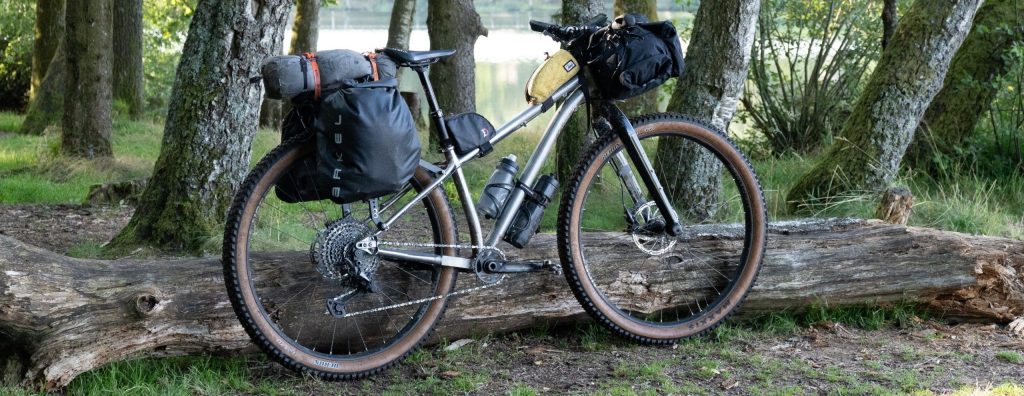

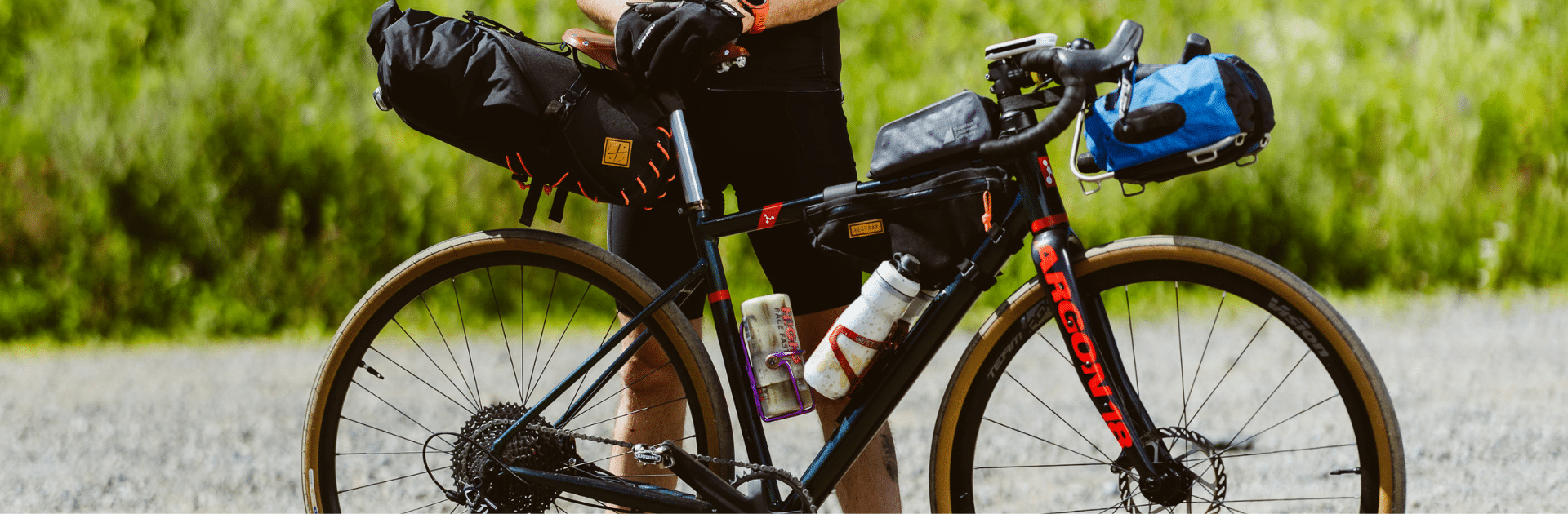
Choosing your touring or adventure bike
Good news: you can go on an adventure with almost any bike. The best adventure bike (bikepacking) to get started is often... the one you already have.
With a few adjustments, the right tires and the right tune-up, it will already take you a long way. There's no need to aim for the top of the range from the outset. A well-maintained bike suited to your riding or travel needs will always be preferable to an expensive, ill-fitting model. For a safe and enjoyable experience, the final choice depends on three main factors:
- Position your bike correctly
- Identify the surface and gradient of paths used
- Quantity of luggage carried.
1- Position your bike correctly
Make sure you're comfortable on the bike: an ergonomic, comfortable position is crucial. A touring or adventure bike trip involves spending several consecutive hours in the saddle, with your hands on the handlebars, in a posture that is unnatural for the body. A few adjustments and parts changes are all it takes to optimize comfort and limit injuries. For more details, visit the positioning on the bike
2- Identify surface type and gradient
To know which bike is best for your adventure, you need to know the type of surface and the gradient of the roads you'll be riding. This will help you choose the right tires, gear ratios and brakes.
Identify surface type and gradient
To know which bike is best for your adventure, you need to know the type of surface and the gradient of the roads you'll be riding. This will help you choose the right tires, gear ratios and brakes.
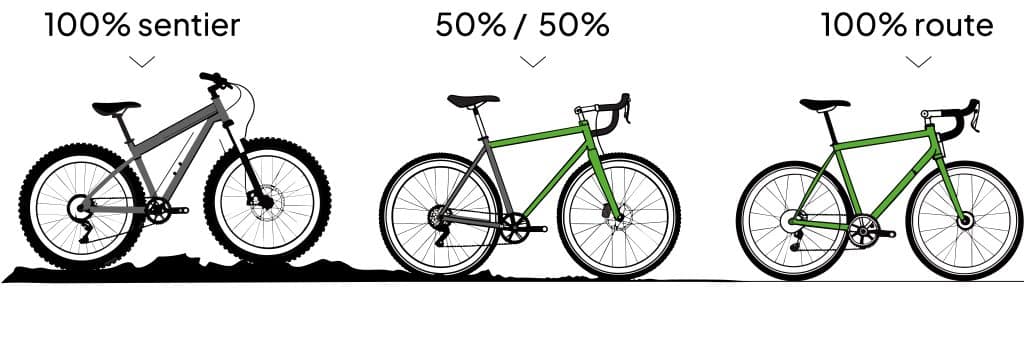
On the road: road bikes
More robust, the adventure model offers wider tire clearance and multiple attachment points so you can carry panniers and explore for days on end.
All-terrain: gravel bike
Perfect for exploring dirt roads, back roads and rolling trails. Versatile, fast and comfortable, it's often the most accessible choice for beginners.
The gravel bike is designed for mixed use and leisure. It offers a balance between comfort and maneuverability, and is equally suited to a day's sport or a short two- or three-day trip.
Technical trails: mountain biking
Single or double suspension, this is the ideal choice if your adventure takes place mainly on mountain trails and includes technical sections. The bike is more stable and better at absorbing shocks, but offers more limited storage space due to the frame triangle and suspension (there are cages adapted to suspension forks).
Soft ground: fatbike
Mostly used on snow, the fatbike is also a wonderful adventure bike for riding on sand or very soft terrain. It provides excellent traction and comfort, but its handling is a little more demanding and slower on rolling terrain or paved roads.
3- Adapting your bike to your adventure
Moving from hostel to hostel and eating out most of the time or, on the other hand, setting off on a completely self-sufficient tour doesn't require the same prerequisites when it comes to choosing your travel mount.
Maintenance and reparability
Depending on the level of isolation of the route and the type of surface, it's a good idea to opt for standard components that are easy to find or replace by most bike shops. A mechanical drivetrain is easier to maintain than an electronic one, not to mention that it will never run out of battery!
Loading capacity
If you're planning to carry all your food and sleeping gear for several days, you'll want to choose a bike that can handle the weight of the load and offers several bag and pannier options.
To do this, check for the presence of attachment points (eyelets) on the frame and fork, so you can easily install luggage racks and other supports. Some bikes have limited load capacity.