

Essential skills in fatbike
Although the fatbike mobilizes certain skills common to mountain biking and cycling in general, it also requires skills specific to soft surfaces.
Here are the main cycling skills required for snow biking:
Balance and stability
- Slippery terrain requires constant micro-adjustments of the body and handlebars to avoid getting stuck or skidding. Keeping a supple, relaxed posture on the bike helps maintain grip on the ground.
Speed management
- Adjusting tire pressure to the surface is essential for good traction and ensure good speed control. Most networks will indicate the ideal pressure for the day's conditions.
- When pedaling uphill, give priority to regular pedaling, i.e. with a gear ratio that doesn't require too much effort. This avoids overpowering pedal strokes that could cause the rear wheel to oversteer or get stuck.
- When going downhill, use both brakes progressively. The aim is not to lock the wheels. Intense or abrupt braking turns the bike into a sledge! Not to mention damaging the trails.
In winter, learning to pace yourself will prevent premature exhaustion, as wide tires and soft terrain require more energy.
Reading the terrain in winter
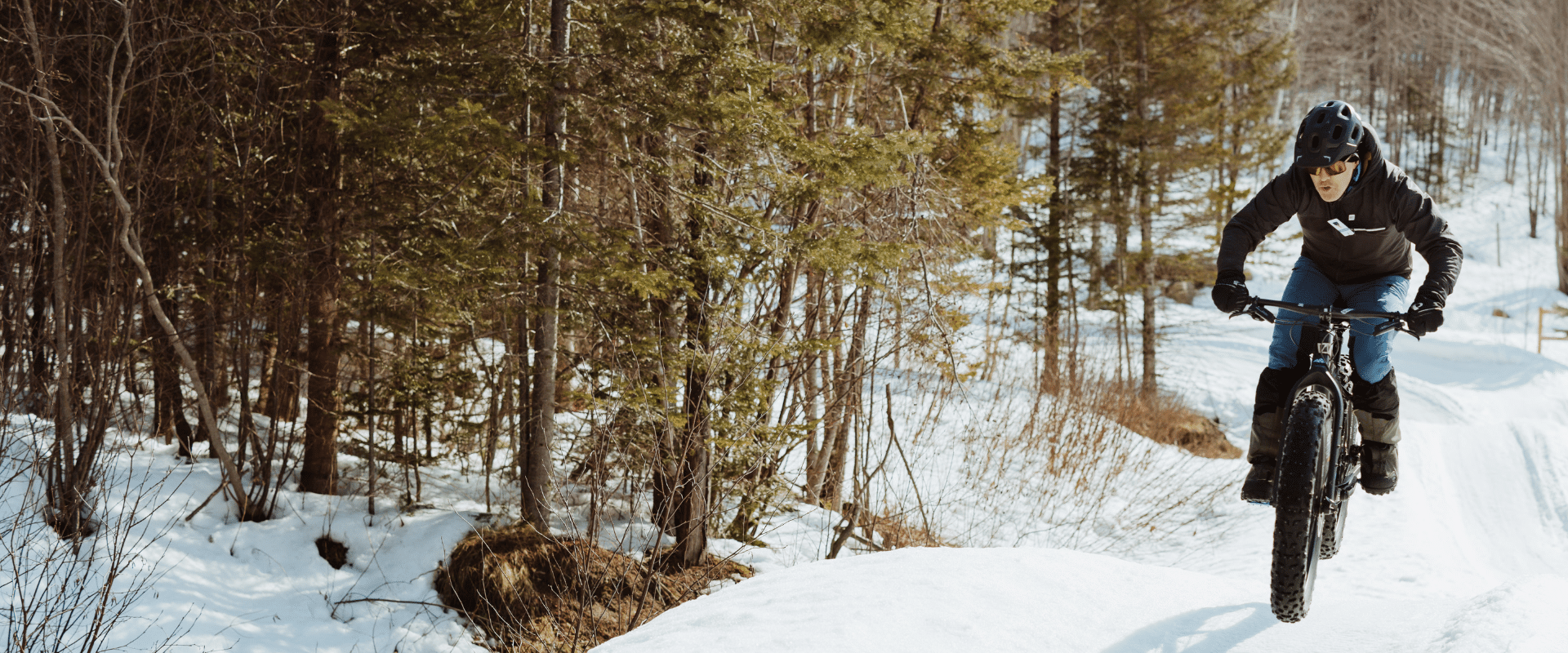
- Stay on groomed sections, firmer snow or existing tracks for better driving control.
- Adjust your driving according to the temperature, as snow can change texture (ice, powder, wet snow) and make surfaces more slippery, faster or more difficult, depending on the context.
Specific turning techniques
- Wide, low-speed turns to avoid skidding on soft snow. When first experimenting, it's advisable to put your foot out on the inside of the turn and use it as a pivot point, for greater stability if necessary.