
What to wear for a mountain bike outing
Mountain biking is a technical and dynamic discipline. As it is both demanding and can involve the risk of falling, it requires a balance between light, breathable clothing and adequate protection, depending on the type of activity.
As recommended by the mountain bike code of conduct, it's essential to always ride in control and respect your own limits. Good equipment is essential, but so is respect for personal progress. Protective gear is no substitute for experience.
To ensure that mountain biking remains a pleasant and enjoyable outdoor activity, choosing the right protective gear for the job means you can enjoy the trails to the full, with complete confidence and responsibility.
Clothing
The mountain biker's wardrobe varies greatly. It's best to start by wearing what you already have in your outdoor wardrobe.
- The jersey or a simple technical shirt The fabric wicks away perspiration and dries quickly. For long-sleeved jerseys, it's more comfortable to choose jerseys with wide arms to leave room for elbow pads. Unless you use ski lifts, cotton is not recommended.
- Shorts (with chamois) are not mandatory for mountain biking, but they do improve comfort and help prevent chafing. Generally shorter and thinner than road or gravel cycling shorts, they can be worn on their own or under other clothing. Some models also offer extra protection for the hips and tailbone.
- Shorts or pants must leave sufficient space at knee level for knee protectors
- The shoes must be chosen according to the pedals selected. You can opt for a model with or without a cleat. Each option has its advantages. The cleat makes the pedal stroke more efficient, enabling more precise positioning and a good connection with the bike during technical passages; conversely, the absence of an automatic cleat allows greater freedom of movement and peace of mind in the event of unexpected falls. Running shoes with a pronounced arch should be avoided on platform pedals, as they offer less grip on the pedal. Instead, opt for flat-soled shoes.
Recommended body protection
Mountain biking on dirt, rock or root trails, in variable conditions and in the presence of other users, involves inherent risks.
Choosing to wear body protection equipment is a bulwark against more serious injuries. Some are compulsory, others strongly recommended, depending on the type of practice chosen.
Bike helmets: maximum protection
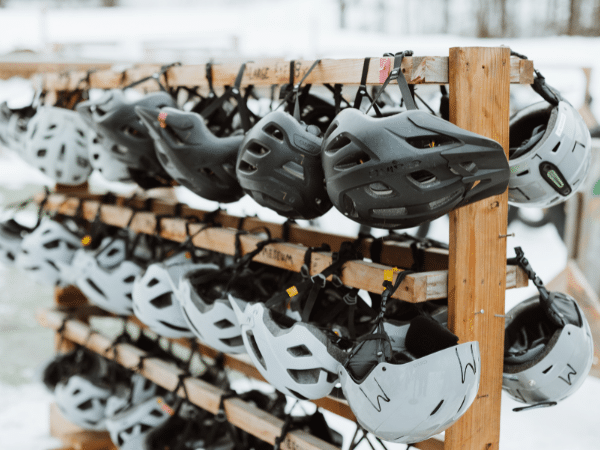
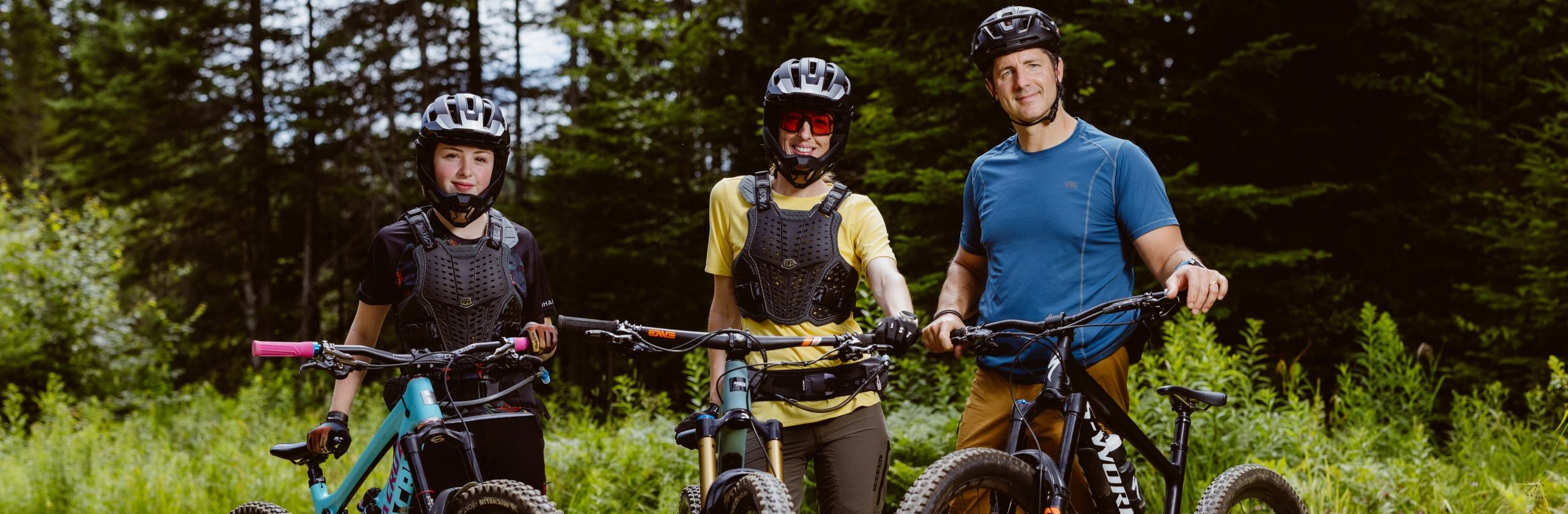
Whether classic or full-face, the bicycle helmet is an essential piece of equipment, whatever type of mountain bike you ride. It protects the head from impact and helps reduce the risk of injury, even in low-speed falls.
Some full-face helmets are modular, allowing the chin strap to be removed for less heat and greater comfort on the trail.
Technical trails demand a robust helmet that resists impact and offers excellent coverage:
- Reinforced shell and optional chin guard for steep descents
- Good ventilation to keep you cool despite intense exertion
- Precise adjustment system for effective support on uneven terrain.
Please note: the best ill-fitting helmet is not as effective.
As soon as you start riding fast, technical or mostly downhill trails, especially with ski lifts, we recommend you opt for a full-face helmet.
This type of helmet offers complete head and face protection, considerably reducing the risk of injury in the event of a high-speed fall.
Glasses
Wearing sports goggles protects the eyes from the sun, dust, debris and branches, and can prevent watering at high speeds. Depending on your riding style, you can choose a lightweight frame or a full-face model similar to ski goggles, perfectly suited to full-face helmets.
Breastplate and neck guard
The chest protector is a semi-rigid or rigid piece of equipment that protects the chest, stomach, ribs and back against impacts, shocks, blows or friction. The neck protector stabilizes the nape of the neck in the event of heavy impact, preventing whiplash to the brain. When choosing a model, check that the protection covers the ribcage well, while allowing sufficient mobility on the bike. Some chest protectors retain heat: you need to remain vigilant, watch out for heatstroke and hydrate accordingly.
Gloves
Mountain bike gloves cover the whole hand, from palm to fingertips. They ensure a good grip on the grips, prevent blisters and protect the hand in the event of a fall. Some models feature protective pads on the palm, others on the top of the knuckles.
Knee and elbow protectors
Knees and elbows are often the first to be affected in a fall. The choice of model is based on a balance between warmth and size, as well as on the level of protection, depending on the risk, speed, nature of the terrain or experience of the wearer. For example, a lightweight (soft, breathable) version is ideal for long outings, when pedaling, ventilation and range of motion are paramount. A semi-rigid or rigid model is preferable for more demanding terrain (enduro, fast descents, rocks, jumps), for more effective protection.