
Cycling skills on a gravel bike
The gravel bike is distinguished by the variety of surfaces it rides on, from smooth asphalt to dirt roads, loose gravel or forest trails.
Each type of terrain requires constant adaptation of riding, rhythm and posture. The biggest challenges are usually climbs, descents and braking for those just starting out on gravel roads.
Good control of the bike is acquired with practice, and repeated outings over varied terrain help you to understand how your bike reacts. A short technical training session in a park or on a familiar road is also an excellent way to improve reflexes.
Basic skills
Most gravel biking takes place on public roads, and as such requires compliance with the Highway Safety Code. Beyond the legal framework, gravel biking requires technical skills that enable you to evolve in a predictable and safe manner: riding so as to be visible and to see well, spotting obstacles early and avoiding them, reading the surface to choose the right trajectory.
The basis lies in a few essential skills: keeping your balance with ease, braking gradually and simultaneously with both brakes, turning with control in both directions, and changing gear at the right moment while maintaining a steady cadence. Depending on the difficulty of the ride and the nature of the roads, other skills are added: adopting a stable, relaxed position, applying an effective pedaling technique, maintaining a constant cadence while changing gears fluidly, and safely overtaking another cyclist. Together, these skills support smooth, enjoyable and responsible gravelle biking.
Climbing
To tackle a steep climb on gravel roads, keep your body centered on the bike and in the seated position for as long as possible to distribute your weight evenly over both wheels. Even when the going gets tough, on soft or slippery surfaces in particular, it's best to stay on the saddle and shift into an easier gear to keep control and maintain a good cadence. Standing up on the pedals is a guaranteed skid!
If the slope is really steep or the terrain technical, it's best to shift the weight slightly towards the front of the saddle. Although not very comfortable, this allows you to keep pedaling steadily, without jerking, to maintain the wheels' grip on the ground until you reach the summit.
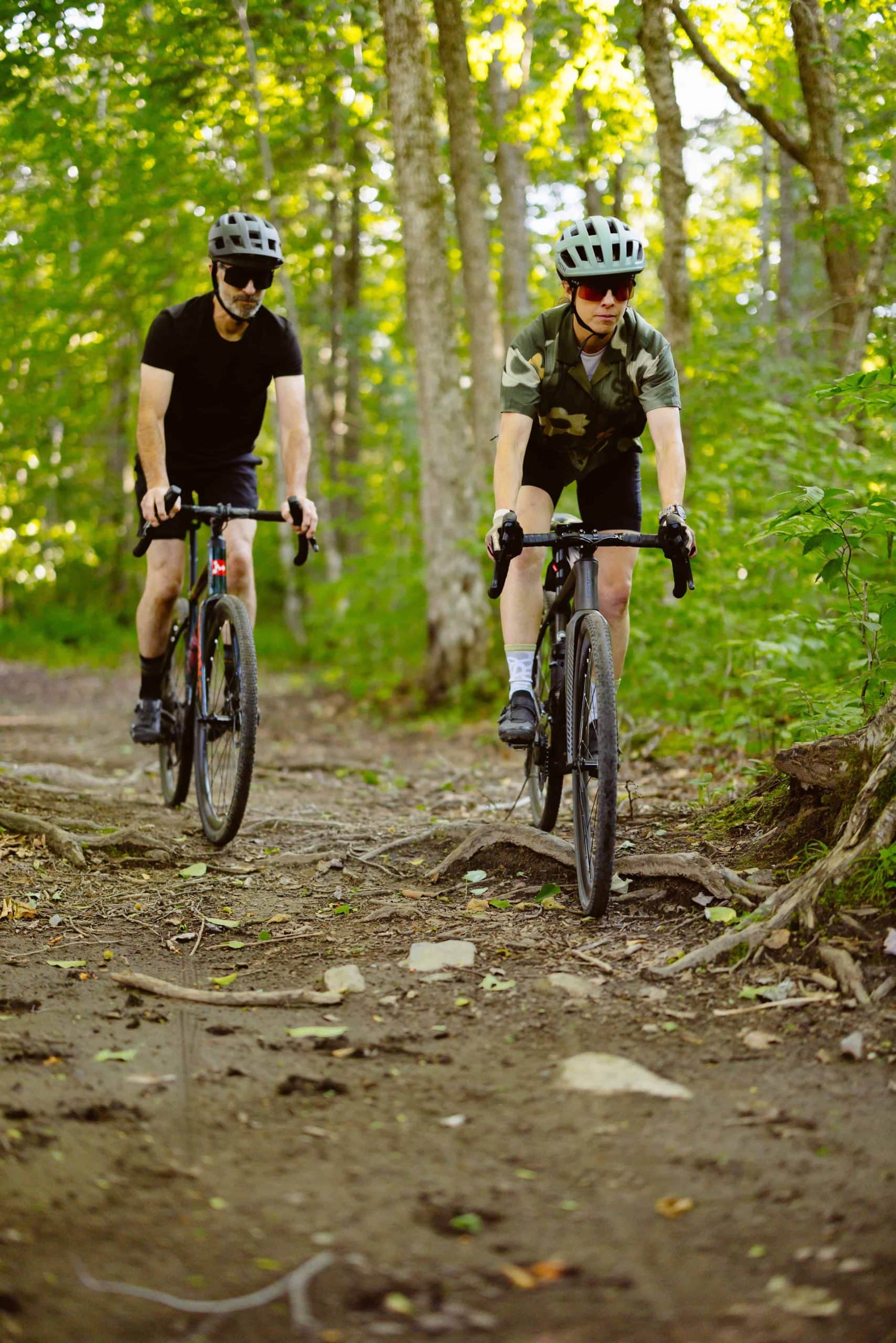
Braking on gravel requires finesse and anticipation. As a general rule, use both brakes simultaneously for better speed control.
First of all, try to avoid locking the wheels: modulated braking adapted to the slope is more stable and safer.
Be careful not to slow down too much, as this increases instability.
Advice: control speed before obstacles, not during them!
Reading the terrain
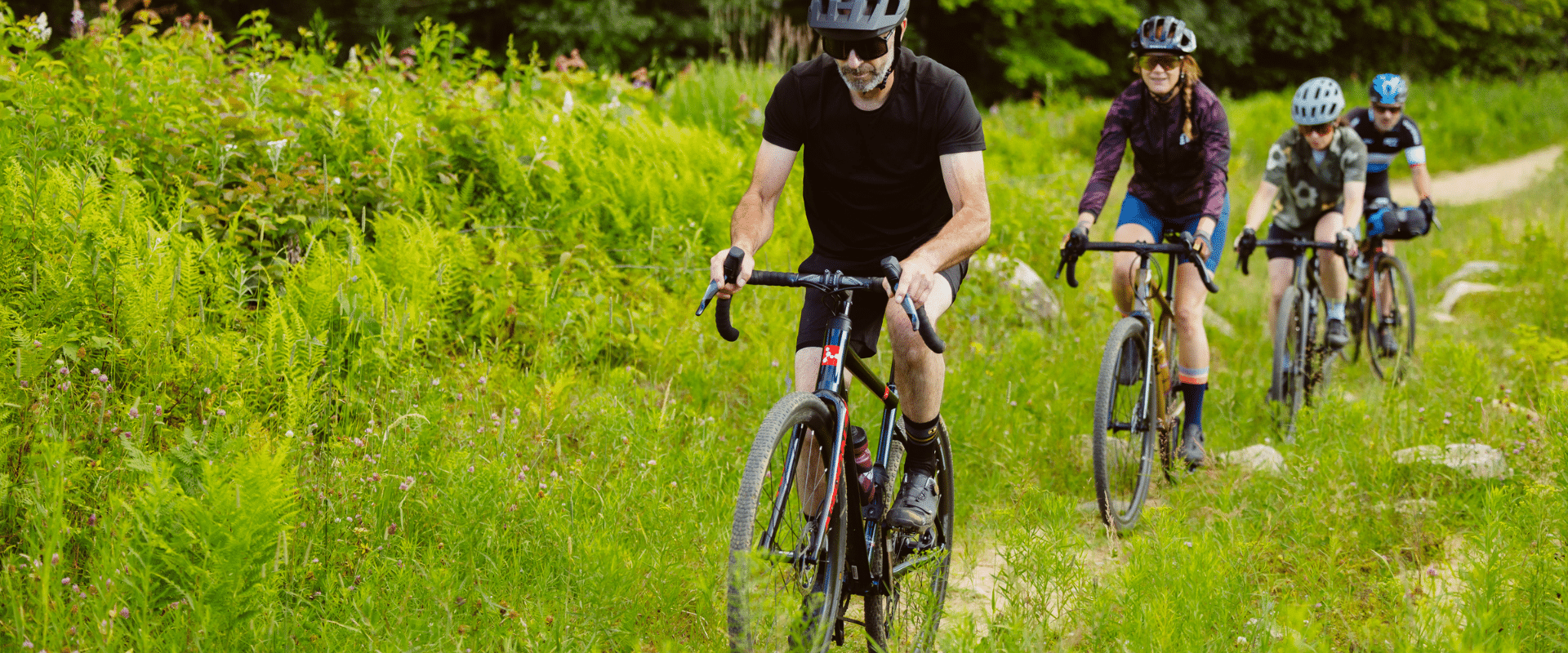
The ability to read the terrain consists in observing the surface ahead of you: areas of soft or deep gravel, puddles, ruts, stones, sand, etc., and choosing, in advance, where it is possible to pass safely, according to your cycling skills and abilities.
Anticipating these elements gives you the time you need to adapt your trajectory and avoid unpleasant surprises. To do this, you need to keep your eyes constantly scanning the terrain, moving from what's coming up to your current position. All in all, it's a question of avoiding staring at a point or an obstacle. Your gaze is focused on where you want to go, because the bike goes where your eyes land.
Aim for the most stable and cleanest part of the ground; avoid, where possible, piles of gravel, holes, stones and ruts.