

Guide to choosing the right bike
There's no such thing as the perfect bike - just the one that's right for you. This guide is designed to give you an overview of what you need to consider when buying a bike.
For many, finding the right bike can be a real headache, as there are so many options and parameters to consider. The «right» bike depends first and foremost on your riding style. Before you start shopping, it's a good idea to clarify a few points so you can focus your search.
- What's your main use for it? Unfortunately, there's no such thing as an «all-purpose» bike. You need to choose your bike according to the most frequent use.
- Where will you be riding? Who do you ride with? How many times a year? Choose a bike that reflects your reality, not the exception.
- What's your budget? Evaluate whether it's better to buy new or used. Depending on how often you use your equipment, renting can sometimes be an advantage. Calculate!
- What are your medium-term priorities and limits? Fitness improvement, history of injury or illness, ambitions for progression, time available, accessibility to networks, travel planning, etc.
- What qualities are you looking for to achieve your goals? Comfort, performance, versatility, lightness, sturdiness, etc.
Choose between two modes: muscular or electrically assisted (EAB)
In recent years, the emergence of the EAB has greatly contributed to the accessibility of trail cycling, opening up new horizons for more and more cyclists. EAB doesn't replace effort, it supports it. A discreet motor assists pedaling, making it easier to pedal, to go further or to prolong pleasure when energy is low.
ATV enthusiasts love the freedom it provides, the possibility of sharing an outing with people of different abilities, and the feeling of «just enough» effort. Of course, there are a few drawbacks: electric bikes are heavier, more expensive and require more maintenance than muscle bikes. The battery has limited autonomy and lifespan, and requires recharging after each ride.
Electric bike
- Reduces physical fatigue and shortness of breath
- Makes long or uneven journeys easier
- Maintains a higher average speed with less effort
- Suitable for all levels of experience and anyone with physical limitations
Muscle bike
- Requires constant physical effort
- Lighter and easier to handle
- Fewer electronic components, simplified maintenance
- Suitable for sporty people and short outings
On mountain bike trails, only Class 1 e-bikes with pedal motors are permitted. Class 1 bikes have an electric assistance system that cuts out at 32 km/h. Class 2 bikes, which operate with a joystick without pedaling, are forbidden on trails.
Key factors in choosing a bike
Each discipline has its own specific technical features. However, the key elements for choosing a bike remain the same, whatever the practice. Here are the key elements you need to understand to make an informed decision.
1. Frame size
Choosing the right size bike is essential for your comfort and efficiency, and to avoid pain and injury. No compromise on this point!
Bike size depends on model, manufacturer and discipline. The ideal size is always first consult the manufacturer's size chart and, if possible, do a trial run.
The three measurements you need to know are :
- Your size
- The height of your crotch
- Arm amplitude
In addition to these general rules, the choice of bike size depends on your weight, flexibility and personal constraints. The aim is to make you as comfortable as possible.
Do you come in two sizes? No problem! Some elements can be adjusted to suit your preferences or morphology. This is the case of :
- Stem length
- Saddle height, recoil and model
- Handlebar width
- Crankset length
Expert advice is strongly recommended to ensure that you choose the right frame for your body type and riding style. Proper positioning also helps reduce the risk of injury.
Recommended inseam height
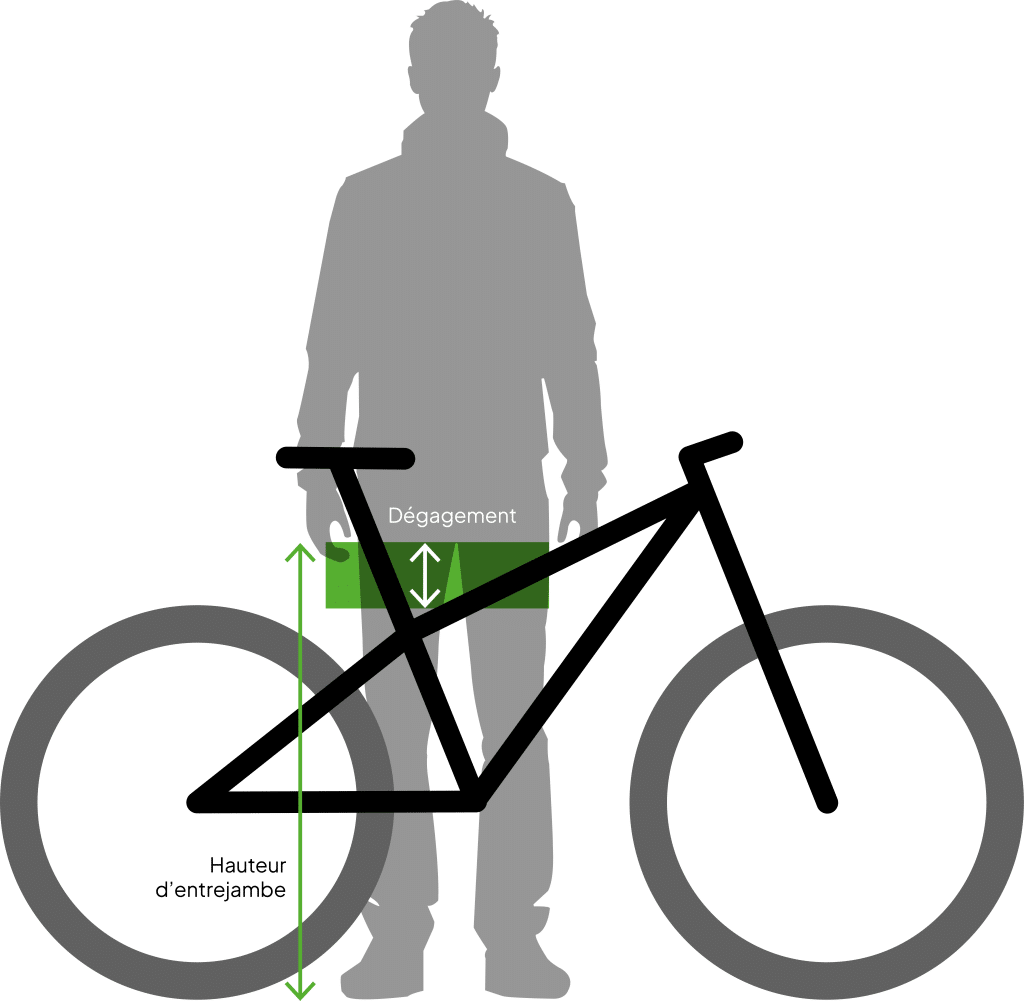
Bike with inclined top tube: at least 5 cm clearance.
Bike with straight top tube, parallel to the ground: approx. 2 cm space clearance.
2. Frame material
The frame is the heart of the bike. The choice of material influences comfort, durability, weight and price.
- CarbonLightweight and rigid, it offers excellent power transmission.
Disadvantagesmore expensive, less shock-resistant and less suitable for loading.
- SteelThe new, affordable, comfortable, sturdy and long-lasting vibration absorber.
Disadvantagesheavier than other materials.
- Aluminumlightweight, affordable, rigid, corrosion-resistant and popular.
DisadvantagesThe new, slightly less comfortable over long distances.
- Titaniumcombines lightness, strength and comfort, offering an ideal compromise between carbon and steel.
Disadvantageshigh price and limited choice of models.
The quality of components (brakes, transmission and suspension) varies enormously, which has a direct effect on the price of the bike. If you're on a tight budget, you may be better off opting for a less expensive frame and investing more in better components.
3. Frame geometry
A bike's geometry describes the dimensions and angles of the frame, which determine its behavior. This is what will most influence its comfort, efficiency and handling, depending on its intended use.
Data is plentiful, and preferences as varied as the number of people who ride bikes. It's also important to note that a single measurement of a component's angle or dimension cannot describe the bike's expected behavior. It is the totality of this data that gives the bike its character. Important: always compare data from a frame of the same size.
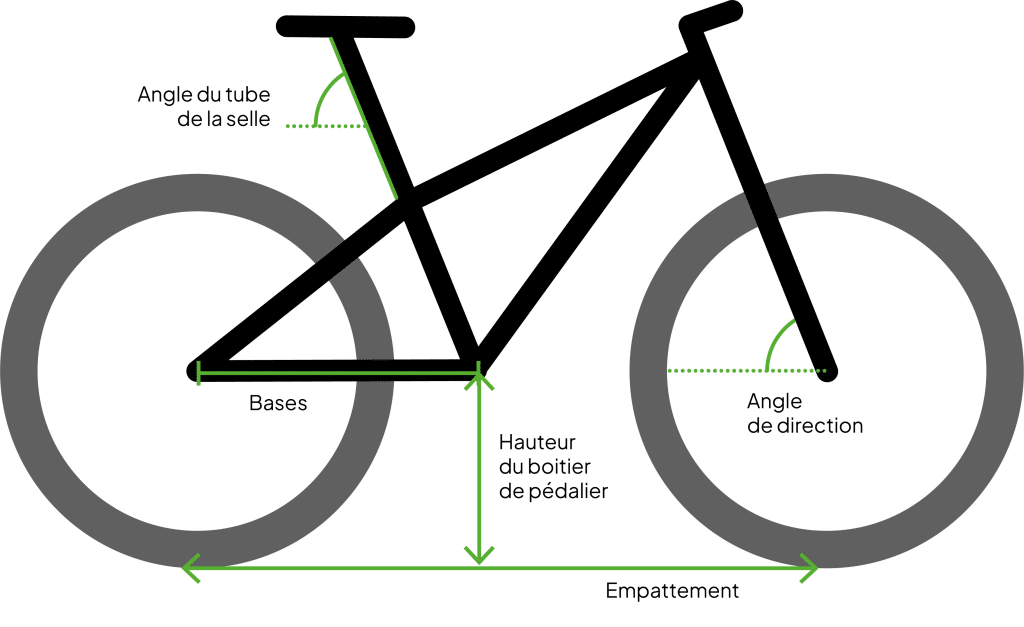
When it comes to geometry, it's better to base your choice on your real needs and the qualities you're looking for, rather than on numbers alone.
Sporty geometry for agility and responsiveness.
- Lower, recumbent position on the bike
- Short wheelbase and bases
- Higher seat and steering angles
- Higher bottom bracket
Stable geometry promotes comfort.
- Higher, straighter rider position
- Long wheelbase and chainstays
- Low saddle and steering angles
- Lower bottom bracket
4. Suspension
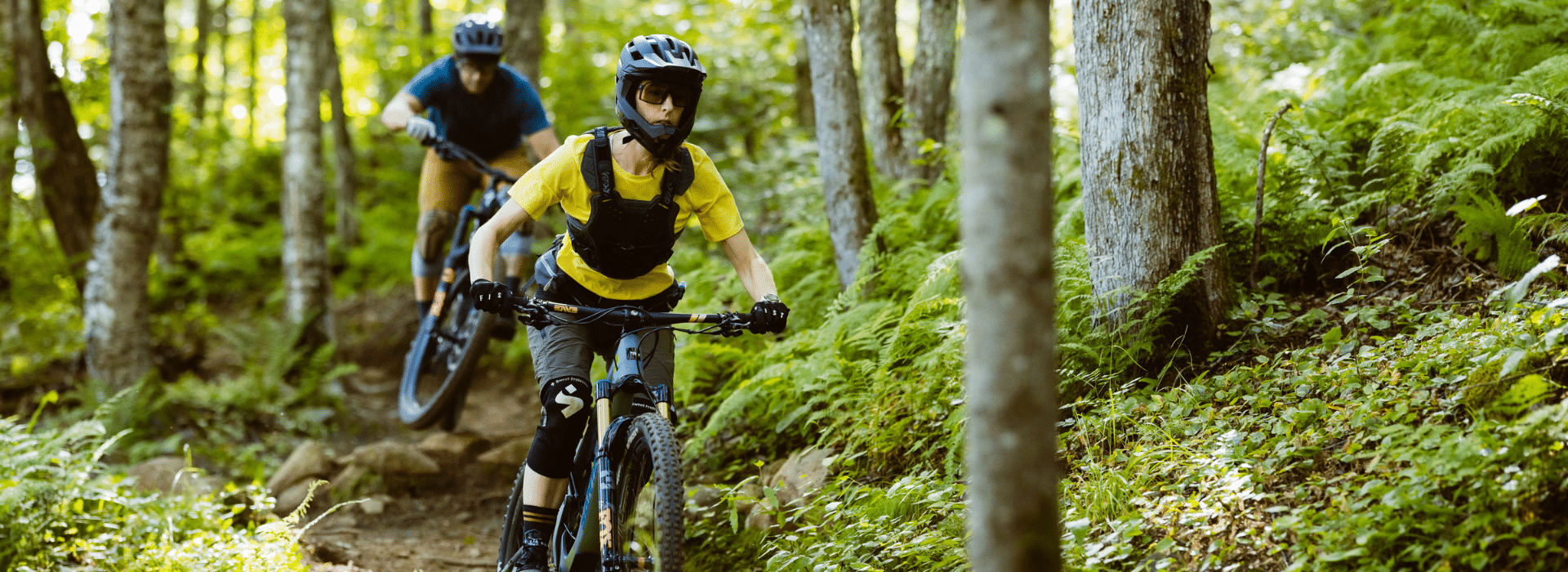
The suspension absorbs shocks and maximizes ground traction. This contributes to greater comfort and steering control when the terrain becomes rougher and more technical. On the other hand, suspension makes the bike heavier and absorbs pedaling energy.
Rigid or suspensionless
Ideal for gentle terrain, paths and smooth roads. The majority of fatbikes and gravel bikes are rigid, since they compensate for the absence of suspension with their wider tires, which absorb a large part of the shock.
Simple suspension: the suspension fork
Ideal for terrain with fewer obstacles. Cross-country mountain bikers and beginners appreciate their lightness and climbing efficiency. What's more, a single-suspension bike is generally less expensive.
Double suspension: the shock absorber
This system provides excellent shock absorption on uneven terrain. The shock absorber helps stabilize the bike, while offering greater comfort when negotiating obstacles. Mountain bikes of the trail, enduro and downhill models are generally double-suspension.
5. Transmission
Modern mountain bikes come with a single chainring. Gravel bikes, on the other hand, still offer a choice between one or two chainrings. The choice depends on the bike's general use.
The single tray
- Ideal for outings on more varied and rugged trails where gear changes are frequent
- Easier to use on technical terrain
- Less adjustment, maintenance and risk of breakage.
The double tray
- Ideal for long, flat roads
- Wide speed range to maximize optimum cadence according to wind, topography or fatigue level.
6. Pedals
Don't be surprised: bicycles are often sold without pedals! What's more, there's a vast choice of models on the market. Depending on whether you're looking for cost, durability or lightness, pedal materials will vary.
Common options are:
- Aluminium: affordable and durable
- Composite: lightweight, less resistant to intense impact
- Carbon: very light, more expensive.
There are 2 main types of pedal on the market:
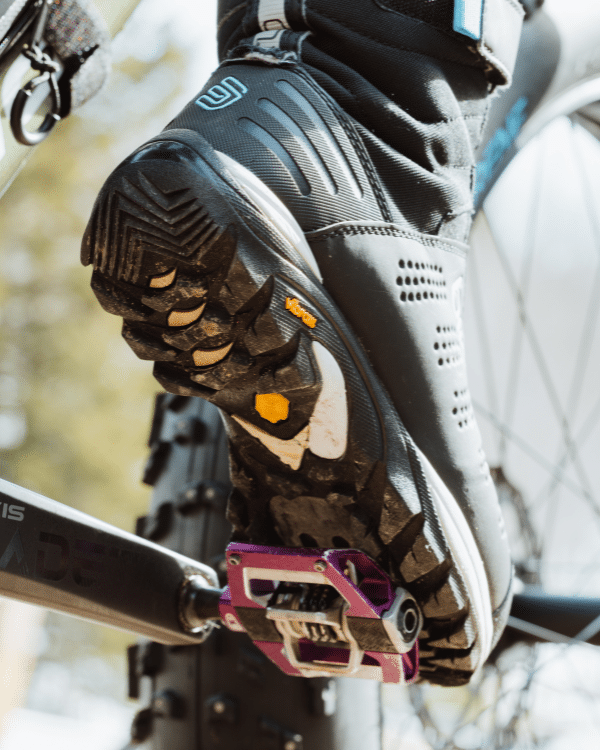
- PlatformsPedal: a wide, flat contact surface on which the foot rests freely. It's designed to be used with any type of shoe, making it an affordable option for beginners.
- Automatic (clip-on): A pedal with a system that fixes the foot to the pedal by means of a metal wedge placed on the sole of the shoe. Efficient when pedaling and stable when descending, it requires time to adapt and a specific shoe.
Further information
When it comes to buying a bike, each practice has its own specific features to consider before purchasing.