
Preparing for a winter outing fatbike
An outing in fatbike starts before you leave home. Quick, simple planning makes all the difference to a successful experience. The more thorough the preparation, the easier it will be to adapt once on the trail.
The ideal temperature is between 0 and -20 degrees Celsius. In warmer weather, the snow softens and pedaling becomes more demanding. The pace of progress slows and the bike's passage creates ruts that damage the trails. Conversely, in very cold weather, the experience loses comfort and the risk of frostbite on the face, hands and feet increases sharply.
Most resorts publish this information daily on their website or Facebook page, as do local groups who share actual piste conditions. Note that conditions become optimal after several days of cold, without precipitation.
Estimate the duration of the route according to your level and energy, bearing in mind that progress is slower in winter. Your itinerary should also take into account outside temperature, wind and trail conditions.
Last but not least, prepare your backpack for the ride. Make sure you have everything you need: clothing, snacks, hydration, mechanics and first aid to manage the main risks associated with hiking. fatbike in winter.
Communicate your exit plan and expected return time to someone you trust, especially if you're going solo.
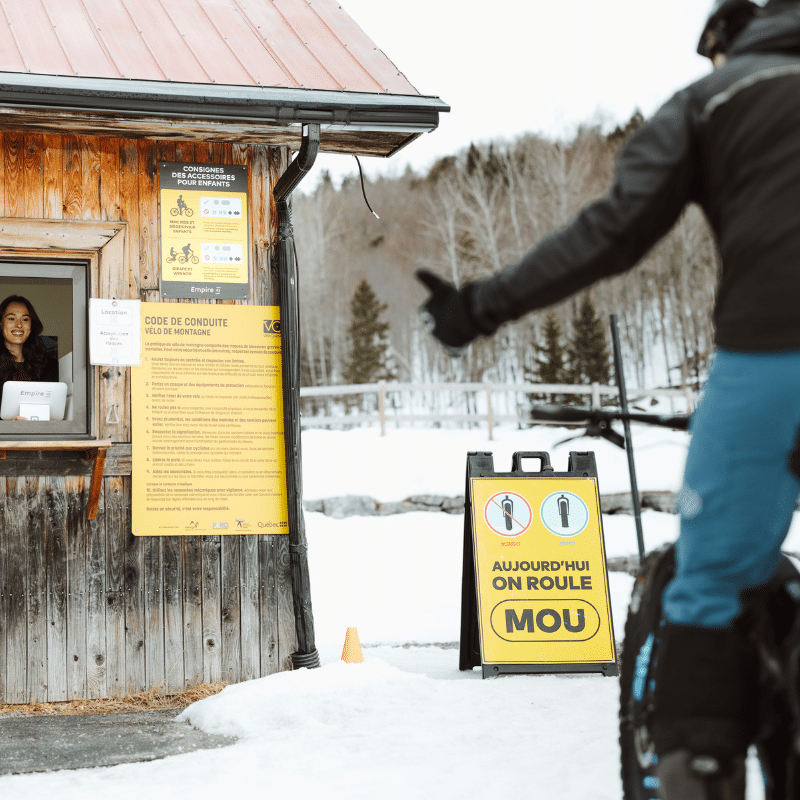
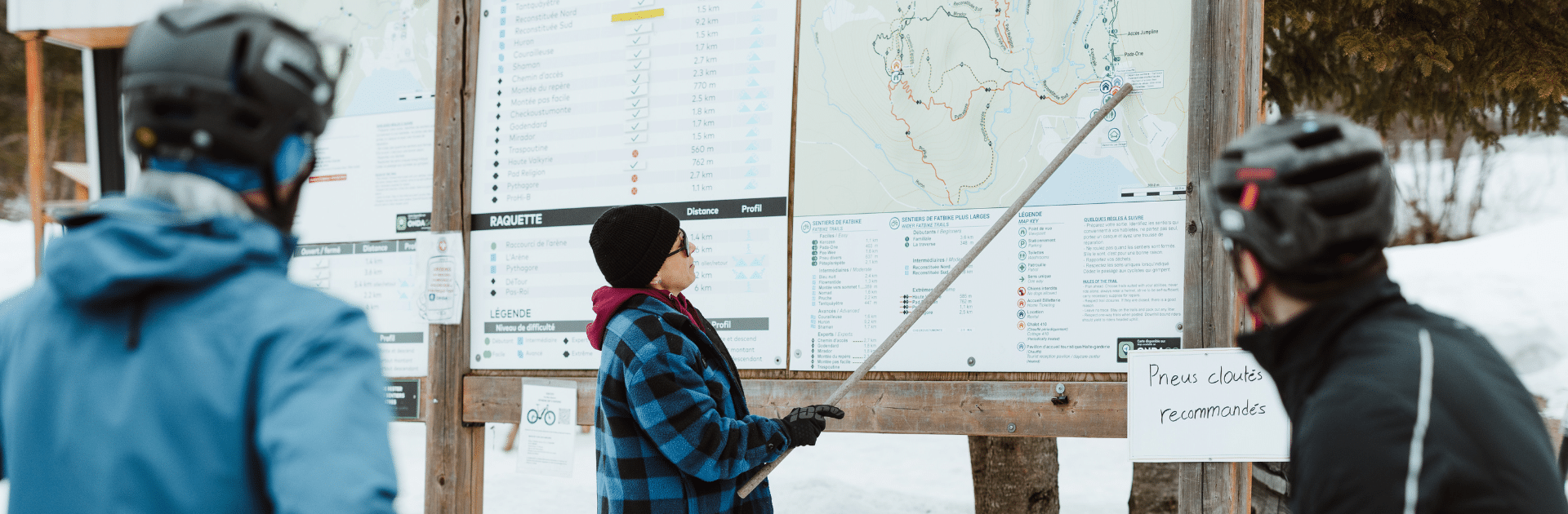
- Take the time to look at the trail map and the information, including trail conditions and tire pressure recommendations, provided at the reception desk, to confirm your preparation.
- Pay your access fee and install it visibly on the bike or on clothing.
- Before hitting the trail, do a quick inspection of your bike.
Know the rules of etiquette
Respect for signage and good trail practices ensures a great experience for all riders.
Avoid riding on a trail where the snow is too soft or very wet, as this will leave tracks that will make it difficult to ride when the snow is wet.ige will have hardened. It's better to get off your bike than to oversteer and risk damaging the trail. When you have to walk, as far as possible, stay off the trail to avoid leaving boot prints. Don't hesitate to adjust tire pressure according to actual conditions!
In winter, the trails used in fatbike are sometimes shared with snowshoers and cross-country skiers. As a cyclist, you must yield to hikers and cross-country skiers, respecting the principle of vulnerability.
Rain or shine, avoid skidding and unnecessary wheel lock-up to avoid damaging the tracks.
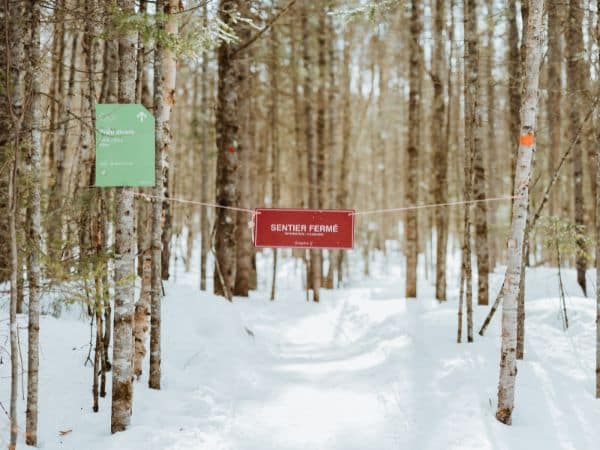

If you can't ride in a straight line, if your tires sink more than 2.5 cm (1 in) or if you have to get off the bike to negotiate a slight climb, it's time to go home!
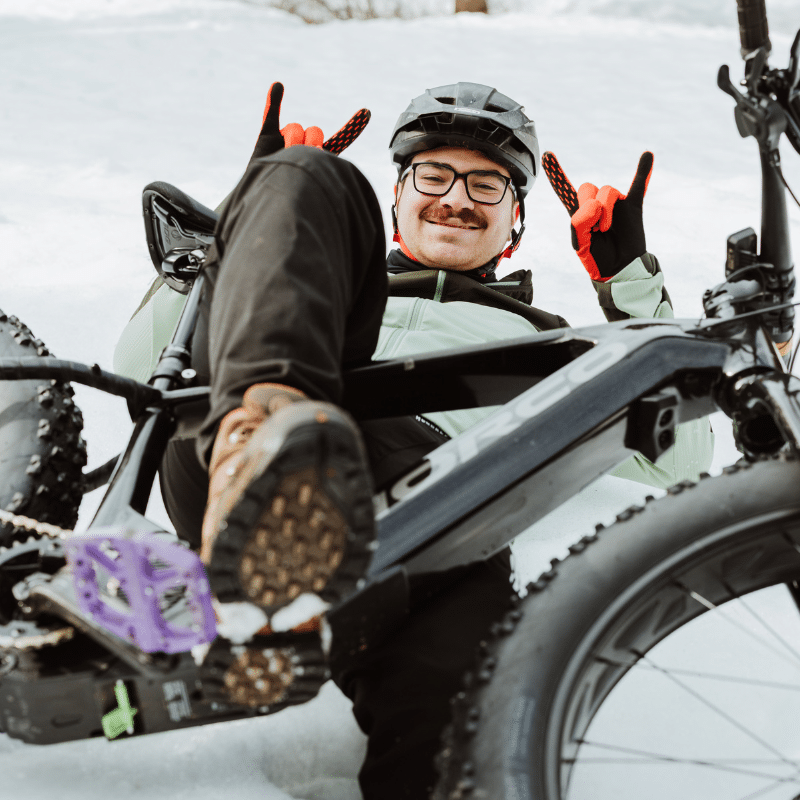
During a winter outing in fatbike, cold is the main enemy. For cyclists, the main risks are fatigue, frostbite and hypothermia. Recognizing these symptoms early on is essential if you are to react in time.
Warning signs:
- Frostbite tingling, loss of sensitivity, pale or waxy skin.
- Hypothermia Intense shivering, clumsiness, confusion, slurred speech.
Winter tips
- Plan your trip realistically and conservatively.
- Manage layers of clothing to avoid dampness and protect extremities from cold and wind.
- Avoid long breaks: add a warm layer as soon as you stop for a break.
- Keep water bottles, snacks and electronics close to your body, to protect them from the cold.
Drink and snack regularly, even if you don't necessarily need to.
Use a thermos to hold hot water or your favorite beverage. You can slip a warm stocking over your usual bottle or keep it close to your body, to prevent the water and mouthpiece from freezing too quickly.