
Mini guide to bicycle tires
Tires are our bike's only point of contact with the ground. They therefore play an essential role in traction, grip, handling, safety and comfort.
There are many factors to consider when choosing the right tire for your riding needs. There's a whole range of products on the market, and it's not easy to find your way through all the jargon. That said, it's a good idea to be aware of a few essential characteristics when choosing the right tire for your bike and your riding.
Tire size
This is the main factor to consider. Tire diameter and width depend directly on the rims fitted to your bike. Depending on the type of bike, measurements will be expressed in inches or millimeters. To find the right size, it's best to refer to the dimensions indicated on the sidewall of the tires you already have.
- Visit first measurement indicates diameter tire size: for example, 700 or 29”.”
- Visit second measurement indicates widthfor example. 32c, 45 or 2.4”
- Visit recommended safe air pressure limits are indicated in PSI (Pound per Square Inch or pound-force per square inch) and in bar

Studs and tread
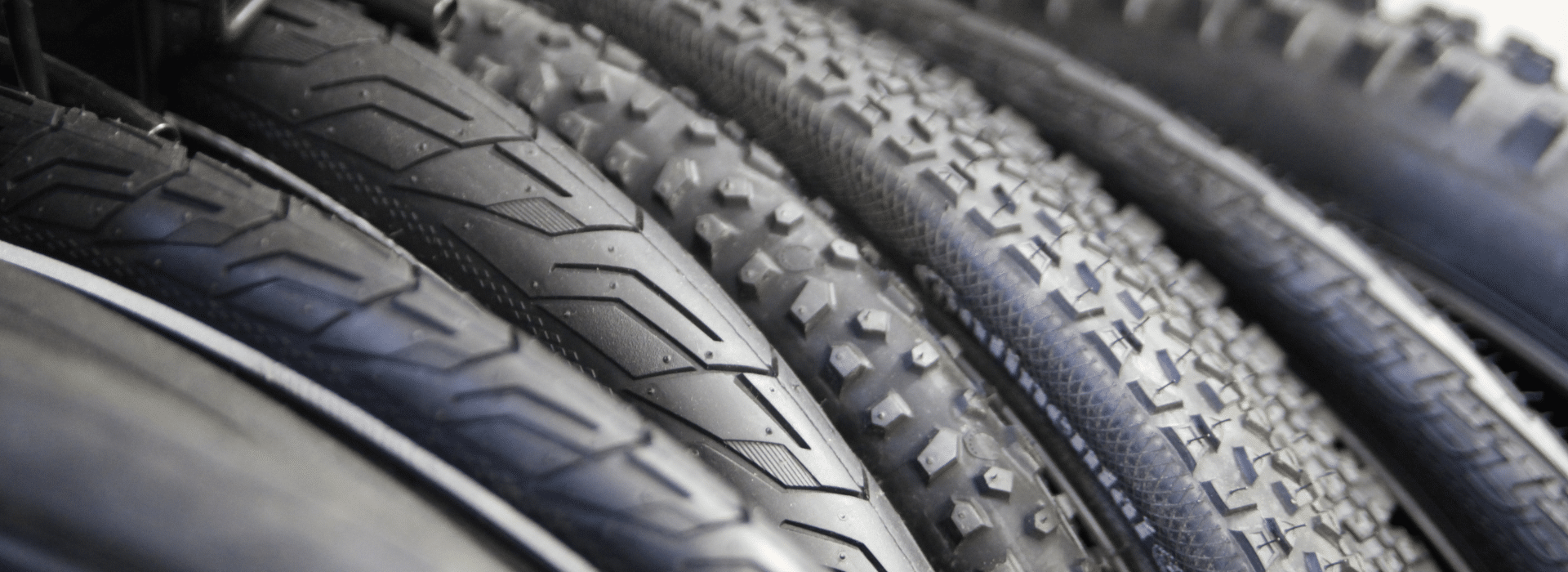
The type of terrain you'll be riding on most often will influence your choice of tire profile. A smooth, studless tire performs well on hard, even surfaces. A tire with large studs is more effective on soft, uneven surfaces. In between, a mixed profile offers a hybrid approach where versatility takes precedence over performance.
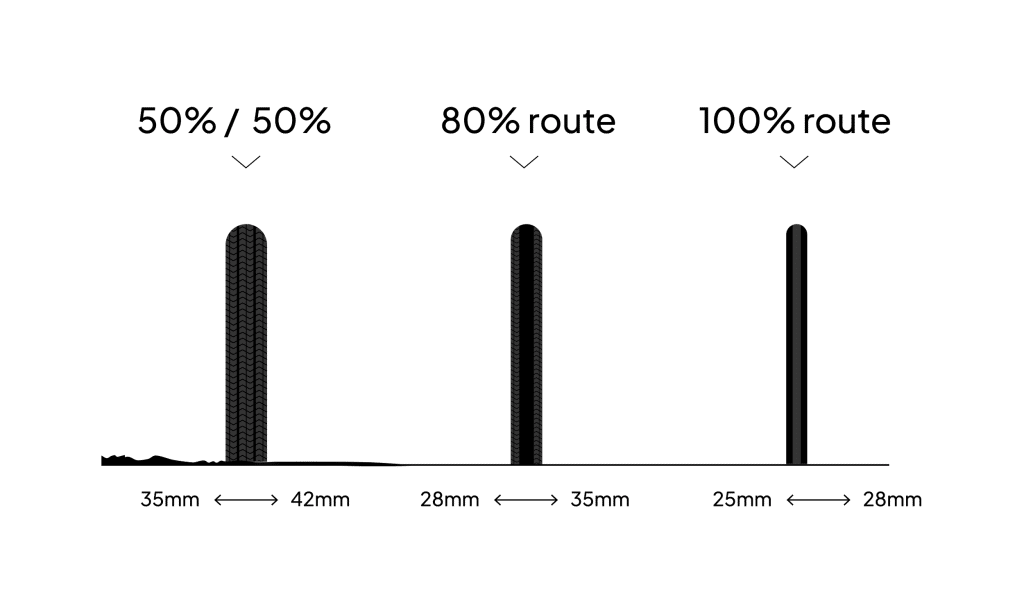
5 factors that influence tire pressure
Nothing changes a bike's behavior like tire pressure. Too much air: the exit becomes uncomfortable and unstable. Not enough: you're guaranteed a puncture or the feeling of pedaling through treacle.
Finding the right balance means improving grip, comfort and performance.
1- Type of practice
- Gravelle, bicycle touring and adventure Intermediate pressures for greater comfort and stability.
- Mountains and fatbikes lower pressures to maximize grip.
2- Tire width
The wider the tire, the lower the pressure. A narrow tire requires higher pressure.
3- Total rider weight
The higher the total weight (person, equipment and luggage), the higher the pressure needs to be adjusted.
4- Type of land
Hardened/asphalt surface: higher pressure.
Gravel/soil/rootslower pressure for greater grip and comfort when cornering.
Winter/snowThe pressure is even lower to maximize the contact surface.
5- With or without inner tube
Some tires are identified «tubeless ready»In other words, they are designed to operate without an inner tube.
With an inner tube
Benefits
- Easy to install and repair
- Affordable
- Compatible with all wheels
Disadvantages
- Risk of pinching
- No more punctures on small holes
- Less comfort and grip (higher pressure)
Tubeless (tubeless)
Benefits
- Fewer punctures (sealant)
- No pinching
- Greater comfort and grip (lower pressure)
Disadvantages
- More technical installation
- Sealer maintenance
- More expensive equipment
Guide values by type of practice
Most manufacturers indicate safe air pressure limits on the tire sidewall. Before inflating, always check the recommended range. Optimum pressure is often between minimum and maximum.
Mountain biking
- Lowering the pressure increases grip and comfort, especially on technical terrain, but increases the risk of punctures or rim failure.
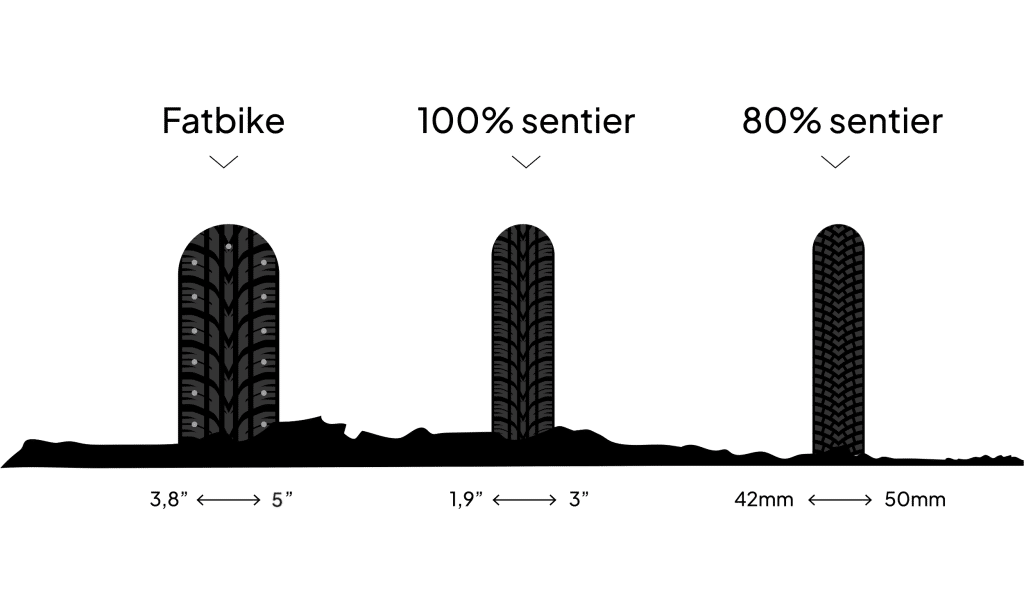
- Typical tire width: 2.2 to 2.6 in.
- Approximate recommended pressure: 18 to 30 psi (tubeless) / 25 to 35 psi (tubed) depending on rider weight and discipline.
Gravel bike
- Air pressure varies according to terrain: lower on bumpy roads, higher on hard pavement. Opting for a tubeless tire is recommended for riding at low pressure, especially when going off-road.
- Typical tire width: 38 to 50 mm.
- Approximate recommended pressure : 30 to 45 psi (lower pressure possible if no inner tube).
Cyclotouring / Adventure biking
- Higher air pressure increases rolling efficiency. Tires that are too hard, however, reduce comfort over long distances.
- Typical tire width: 28 to 42 mm.
- Approximate recommended pressure : 50 to 70 psi (depending on weight and load).
Fatbike
- Low pressure makes all the difference: the softer it is, the more it floats on snow or soft sand. Always adjust to the terrain (powder, hard snow, sand).
- Typical tire width: 3.8 to 5 in.
- Approximate recommended pressure: 2 to 10 psi (snow) / 10 to 14 psi (summer).
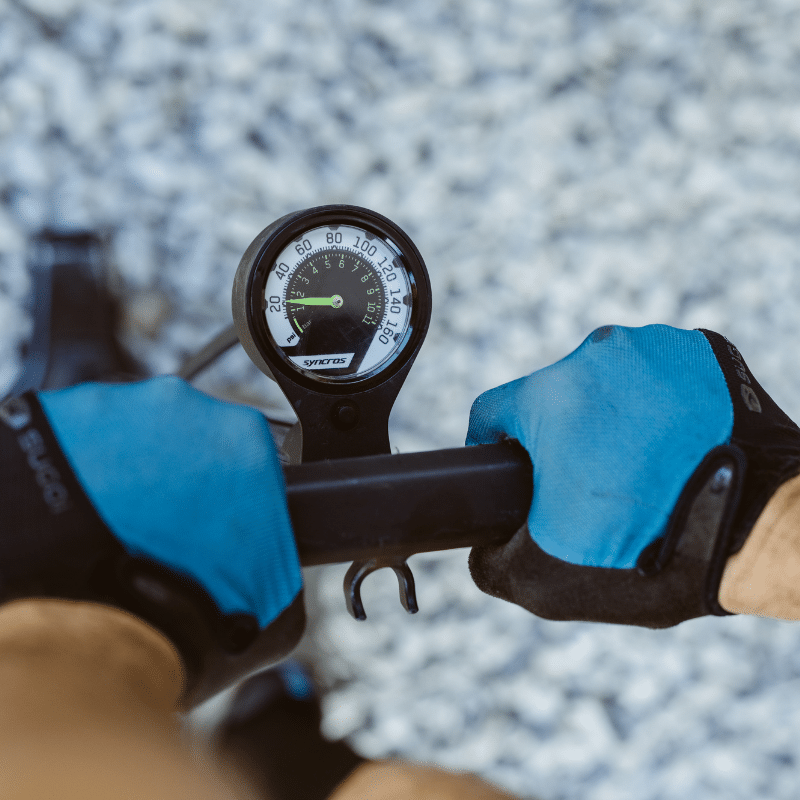
- Start in the middle of the suggested range.
- Test in the field: if it bounces too much, it's too puffy. If it crashes and lacks response, it's too soft.
- Adjust a little at a time: a difference of 1 to 2 psi makes a big difference on a wide tire.
- Use an accurate pressure gauge: foot pumps are often approximate at low pressure.
- Note your preferences: every bike, every person and every surface has its own preferences.
Practical tips
- Adapt pressure to the day's output
- Rocky ground or wet roots: lower slightly to improve grip.
- A long climb on an untechnical path: pump up a little to improve performance.
- Additional weight (panniers, equipment or trailer): add 2 to 5 psi.
- Consider the outside temperature: it influences pressure. The colder it is, the lower the pressure. For example, a tire inflated to 10 psi in the comfort of your home will drop to 7 psi if it's -15°C outside.
The right pressure is the one that balances comfort, traction and performance. There's no magic number, only a range to be explored according to your bike, weight and riding terrain.
A simple adjustment can transform its output: more fluid, more stable, more pleasant.