
Simple, step-by-step bicycle maintenance
A few simple gestures are all it takes to extend the life of your components and, consequently, that of your frame.
Maintaining a bicycle may seem complex or require special tools. But it doesn't have to be that way! Adopting certain reflexes, such as basic checks before each ride, a quick clean after each use and an annual tune-up, will keep your bike in good condition and extend its life.
Regular use of the tools helps build confidence and efficiency. Most basic maintenance can be carried out at home, with a minimum of equipment. It's a great way to learn more about bike mechanics and to develop your independence on your next outings. It's also a great way to better understand and care for your machine!
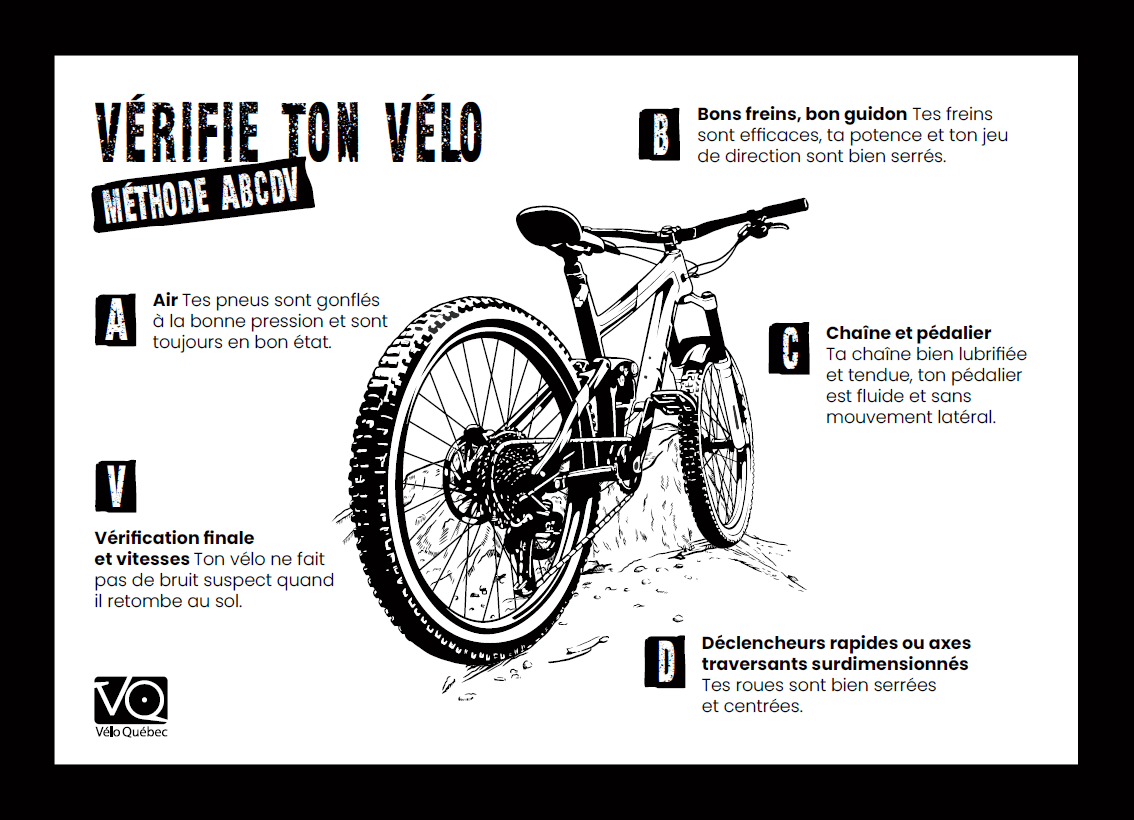
Before each outing: check the condition of your bike
Before each ride, take a few minutes to check that the bike is ready for use.
These quick checks have two advantages: they give you peace of mind by preventing the risk of breakage during your ride, and they limit premature wear and tear on components.
After each outing: clean the bike
It may seem a daunting task, but it's actually quite simple: it only takes a few minutes! Regular cleaning prevents dirt build-up, protects your parts and keeps your bike performing at its best.
- Rinsing the bike to moisten all parts and remove most dirt with a non-pressurized water jet. Avoid high-pressure hoses: water can force dirt into bearings and seals.
- Apply a cleaning product suitable for bicycles (avoid washing-up liquid).
- Remove mud and dust using a clean cloth for the frame, and a brush for the cassette, derailleur and chain (an old toothbrush works well).
- Rinse again.
- Dry carefully with a clean, soft cloth, paying particular attention to the chain.
- Lubricate Once dry, lubricate the chain with a suitable lubricant.
Recommendations
- Avoid using dishwashing soap: it is too greasy.
- Take care not to contaminate brake discs with cleaning products or lubricants.
- Always dry and lubricate the chain after washing to prevent rust.
Lubricate your chain in 4 easy steps
A well-maintained chain ensures smooth, quiet pedaling, while protecting the other components (chainrings, cassette, derailleur). Lubricate the chain every 1 to 3 rides, depending on duration, weather and type of terrain. A short ride in dry conditions doesn't require as much maintenance as a 4-hour day in the mud or rain.
- If the chain is dusty, give it a few turns with a clean cloth.
- Apply lubricant to the center of the chain, turning the pedals backwards.
- Let the oil penetrate between the links.
- Before setting off on a ride, always wipe off excess oil with a cloth. This is the secret to keeping your chain clean without having to clean it too often.
Lubricant types
- Dry (dry): low viscosity, designed for dry, dusty conditions in summer.
- Wet (wet): thick and sticky, designed to withstand rain, mud or snow.
- All conditions (all conditions): is more versatile in mixed conditions.
- For electric bikesdesigned to withstand the increased friction of a motor-driven chain.

It's not enough to simply lubricate your chain: you also need to wipe off any excess oil to prevent dirt build-up and premature wear.

Even without disassembly, it's a good idea to take a look at a few things before a small problem becomes a big one.
- Brakes: check that the levers are not depressed too much and that braking remains clean. Check brake pads for wear. If squeaking is noticeable, clean the discs with a cloth soaked in isopropyl alcohol.
- Suspensions: Validate suspension air pressure and quickly inspect plungers for traces of oil, a sign that full servicing is required.
- Tires: inspect sidewalls and tread for cuts or cracks.
- Wheels: turn the wheel and check if it wobbles from left to right. A slight wobble is easily corrected in the workshop.
- Screws and bolts: check that they are tight (handlebars, stem, saddle, pedals, derailleur, etc.). A quick wrench is often all that's needed.
Download our checklists to build up your bike mechanics kit.
Once a year: the complete tune-up
The annual tune-up is an opportunity to check the general condition of your bike, replace worn parts and prevent future breakdowns. It's the best way to ensure the longevity and performance of your bike.
You can entrust this task to a mechanical workshop. Eventually, it may be a good idea to do it yourself.
Here are the essential points of an annual tune-up
- Transmission A good degreasing and gear adjustment ensure smooth gear changes.
- Cables and sheaths If gears or brakes malfunction, they may be dirty or worn.
- Bearings (hubs, crankset, steering): they can be cleaned and relubricated by a specialist workshop.
- Suspension Maintenance: clean and replace seals (workshop service recommended). A well-maintained suspension remains supple and durable.
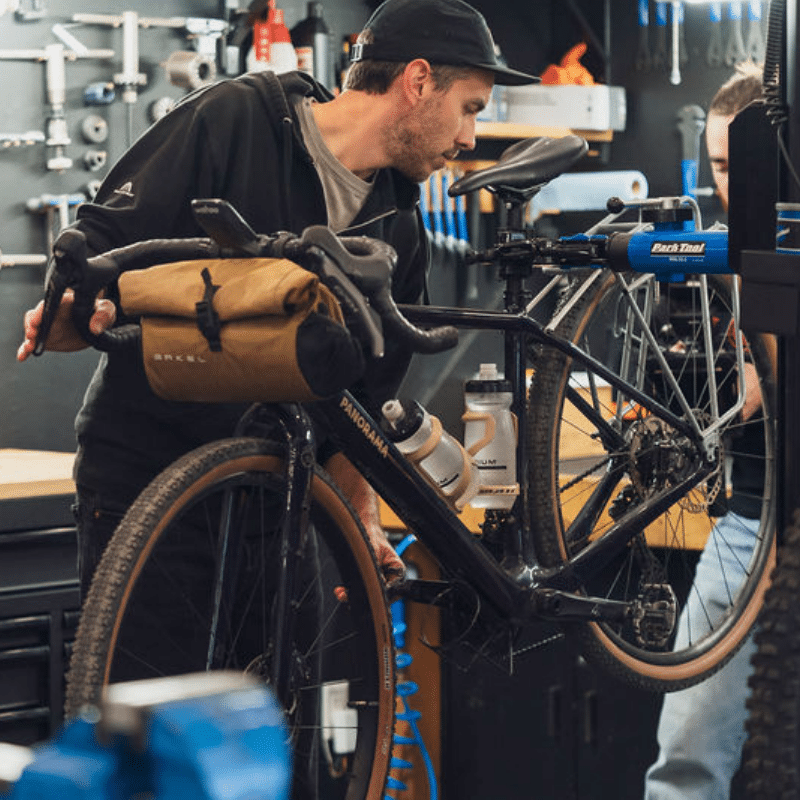
Knowing how to work on your bike, even for minor repairs, is an integral part of the cycling experience.
- Learning the basicsRepairing a puncture, adjusting a derailleur or changing a brake pad are simple skills to master.
- Training: take a bike store workshop, watch tutorials or consult specialized guides.
- Practicesimulate a puncture at home, disassemble and reassemble a wheel, test your tools.
Numerous online videos detail each step. Self-service repair stations and community bike mechanic workshops are increasingly available to the cycling community throughout Quebec.