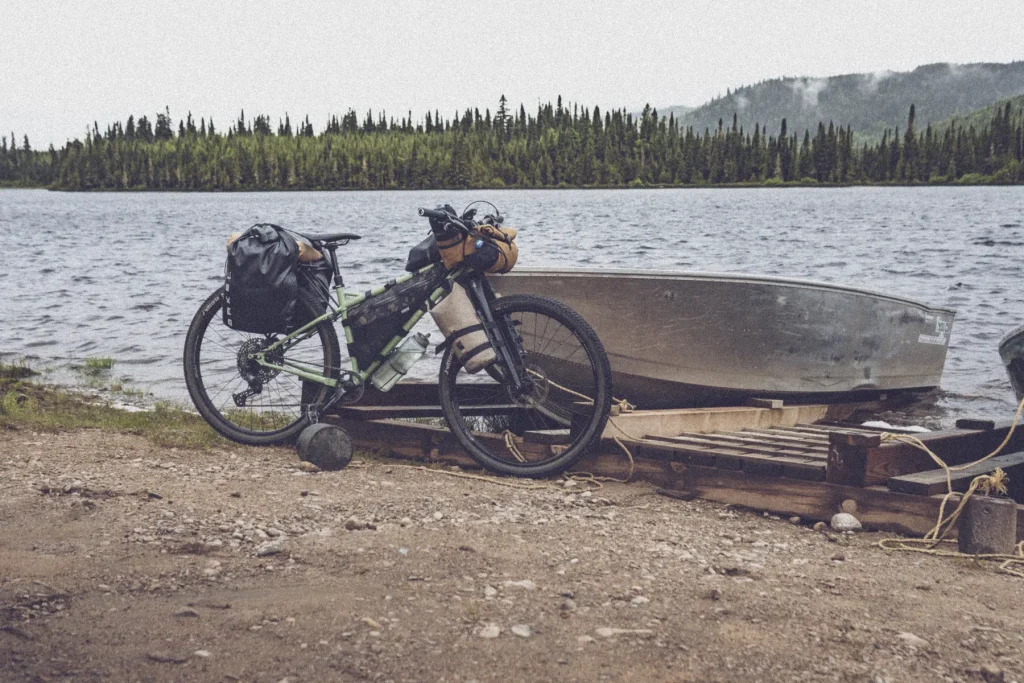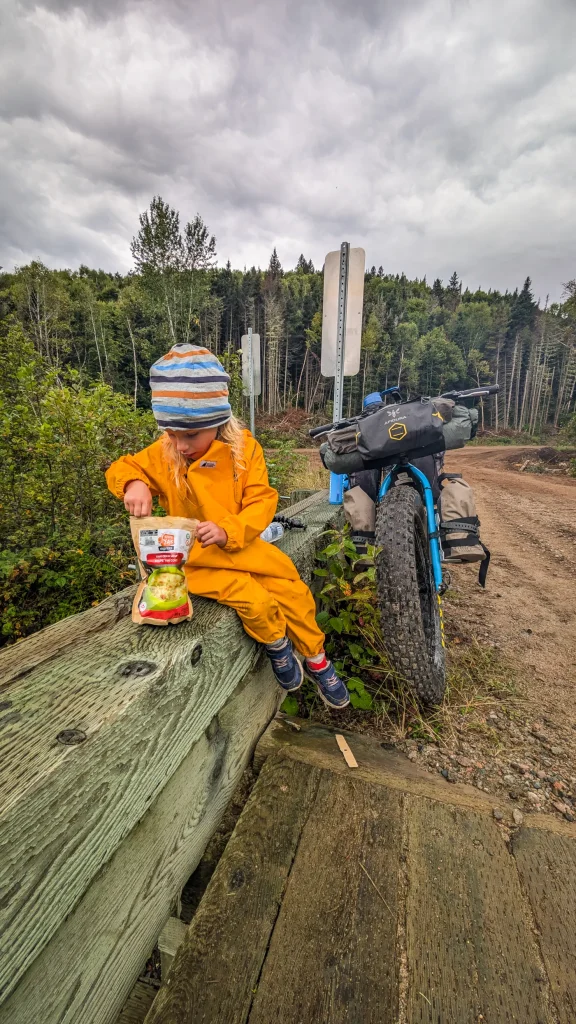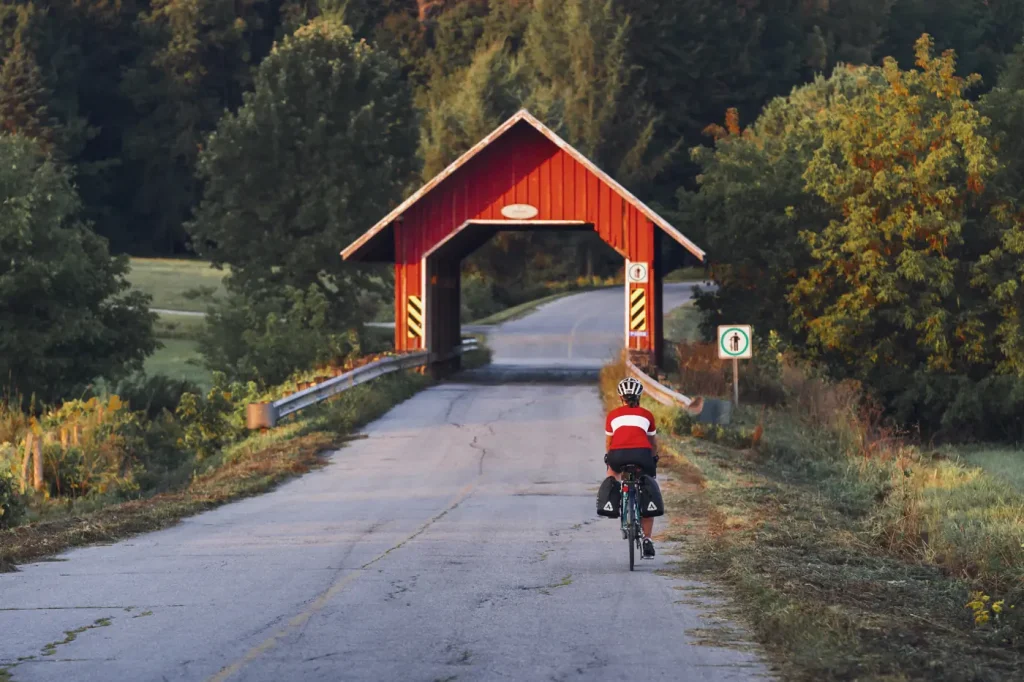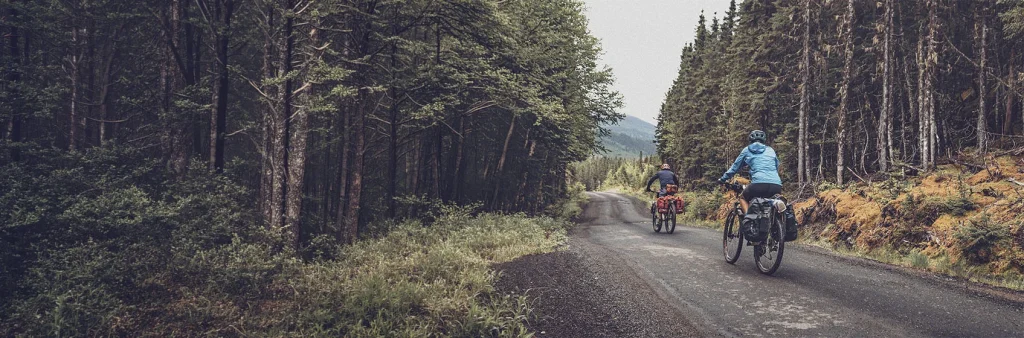

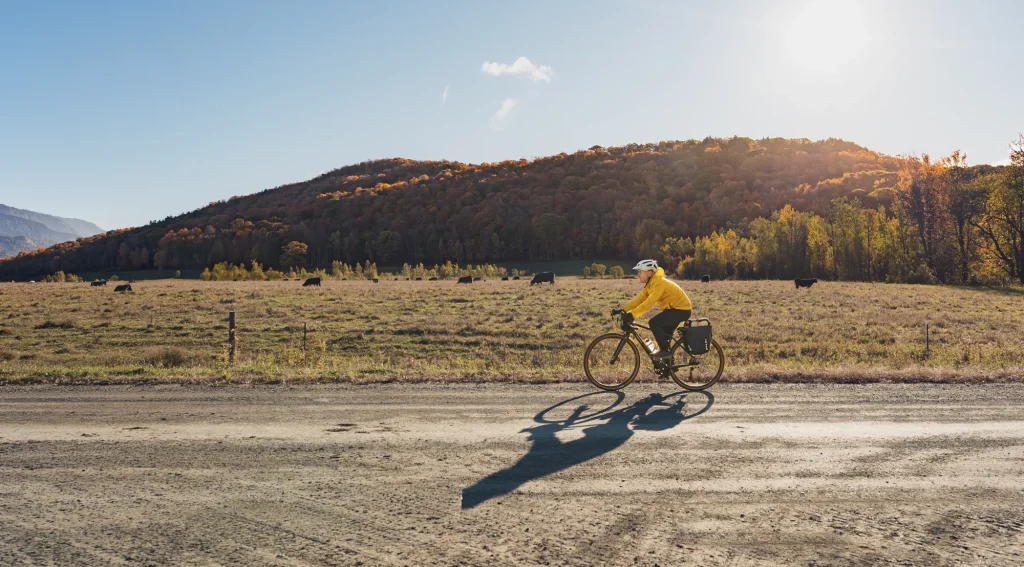
Cyclist in the Great Outdoors in Quebec
Practical guide

Explore the Region

Our collective imagination is filled with forests, rivers, and lakes—vast expanses that have been traversed and inhabited for millennia. Whether for a short getaway or a more ambitious adventure, access to nature is of crucial importance to Quebecers.

© Nicolas Bourdeau
Interactive Map

Bicycle Guide to Accessing the Region

This guide aims to introduce the key players in our natural areas and the specific challenges related to cycling. It encourages reflection on safety and traffic issues while promoting the responsible development and wider access to nature through cycling.

Because gaining a better understanding of the realities of different regions is the best gateway to a world of adventure!

By type of territory

The Territories

Each type of area has its own rules regarding access, travel, and lodging. Check the information sheet for the area you’d like to explore.

Browse by region
Indigenous Territories © Jonathan B. Roy

Indigenous Territories

For Indigenous Peoples, the land is much more than just a geographical area or a piece of property. The connection to the land continues to shape the worldview and history of Indigenous Peoples today. It is the cornerstone of their cultures, knowledge, oral traditions, and ways of life, which are directly rooted in the landscape, the waters, and the seasons.

Eleven (11) Indigenous nations (10 First Nations and the Inuit Nation) inhabit the territory of Quebec. These nations are divided into more than 55 communities and territorial entities. Their different relationships with the territory provide insight into their realities:

  • A ancestral territory (or traditional territory) refers to the lands, waters, and resources that Indigenous peoples have occupied, used, and maintained since time immemorial, before the arrival of Europeans. These territories are deeply connected to the identity, cultural practices, and ways of life of Indigenous communities. In Canada, certain ancestral rights related to the use of these territories are recognized and protected by the Canadian Constitution.
  • A reserve is a term inherited from the colonial era that is used to refer to a parcel of land belonging to the Crown and set aside for the use of an Indigenous community. Although still in use in administrative and legal contexts, this term has pejorative connotations.
  • A Indigenous community is the preferred term; it is used to refer to a place inhabited by a group of people living on a specific piece of land who identify with a shared family, cultural, and historical heritage.
  • A institution refers to a parcel of land where an Indigenous community resides, but which does not have the legal status of a federally administered reserve. This term is rarely used; once again, the term “community” is preferable.
  • A contracted land refers to the northern treaties that grant the Eeyou (Cree), Inuit, and Naskapi specific rights and certain exclusive uses over vast northern territories.

It is best not to refer to the administrative divisions inherited from the colonial era, but rather to specifically name a community and its nation to indicate its territorial affiliation.

Am I allowed to ride my bike there?

Several communities welcome non-member visitors and allow cyclists access to their territory. That said, Band Councils have the authority to regulate access to reserve lands. If in doubt, check the communities’ websites or contact local tourism offices for more information.

Keep in mind that community-based tourism helps bring Indigenous and non-Indigenous people closer together and offers wonderful opportunities for cultural exchange when it highlights the initiatives of community members.

When it comes to ancestral lands, it’s very likely that you’re already cycling through them! Learning about the communities near your routes is part of a respectful approach to learning.

Where to stay?

Quebec Indigenous Tourism promotes numerous local tourism experiences and lodging options.

Unless local authorization is granted, camping outside designated sites should be avoided within communities, out of respect for the importance of natural areas. Camping options can be discussed with members of local communities.

Other Considerations

Powwows are annual cultural gatherings where non-Indigenous visitors are often welcome! Held throughout Quebec from May to September, they offer great opportunities to explore a community near you by bike. For details on these events, check the calendar for the Pow-Wow Route from Tourisme Autochtone Québec.
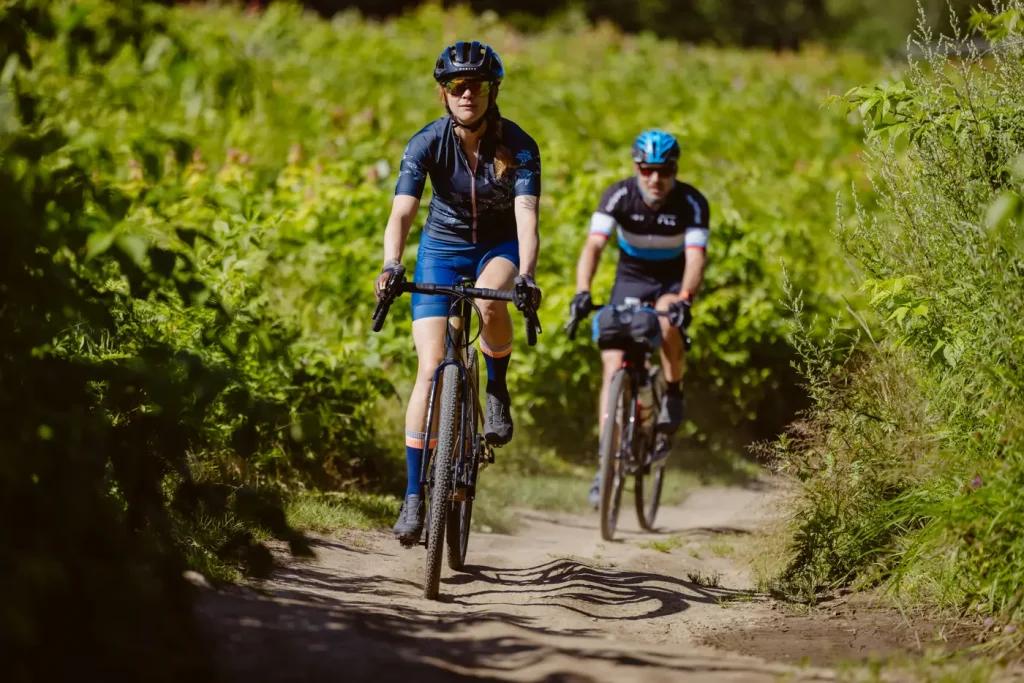
Cyclist in a Canadian National Park © Jonathan B. Roy

Canada's National Parks

Managed by Parks Canada, the network of parks, park reserves, and historic sites is responsible for protecting and showcasing representative examples of Canada’s natural and cultural heritage, in collaboration with partners across the country, while preserving their integrity.

Canada has 37 national parks and 11 national park reserves. Three of these sites are located in Quebec: Mauricie National Park, Forillon National Park, and the Mingan Archipelago National Park Reserve. Quebec is also home to one national marine conservation area—the Saguenay–St. Lawrence Marine Park—and 30 national historic sites administered by Parks Canada.

Am I allowed to ride my bike there?

Yes! The Mauricie and Forillon parks feature paved roads and unpaved trails that are well worth exploring. Also managed by Parks Canada as national historic sites, the Lachine Canal and Chambly bike paths remain very popular with cyclists. Please note that access for electric-assist bicycles is restricted to certain areas.

What are the rights of access?

Admission fees are required for national parks and most historic sites. However, you can use the trails along the Lachine Canal and the Chambly Canal for free.

Where to stay?

Campgrounds with or without amenities, ready-to-camp sites, and rustic cabins are available. Wild camping (without a designated site) is not permitted.

Can we build campfires?

Campfires are permitted only when a designated campfire site is available.

Communication Devices

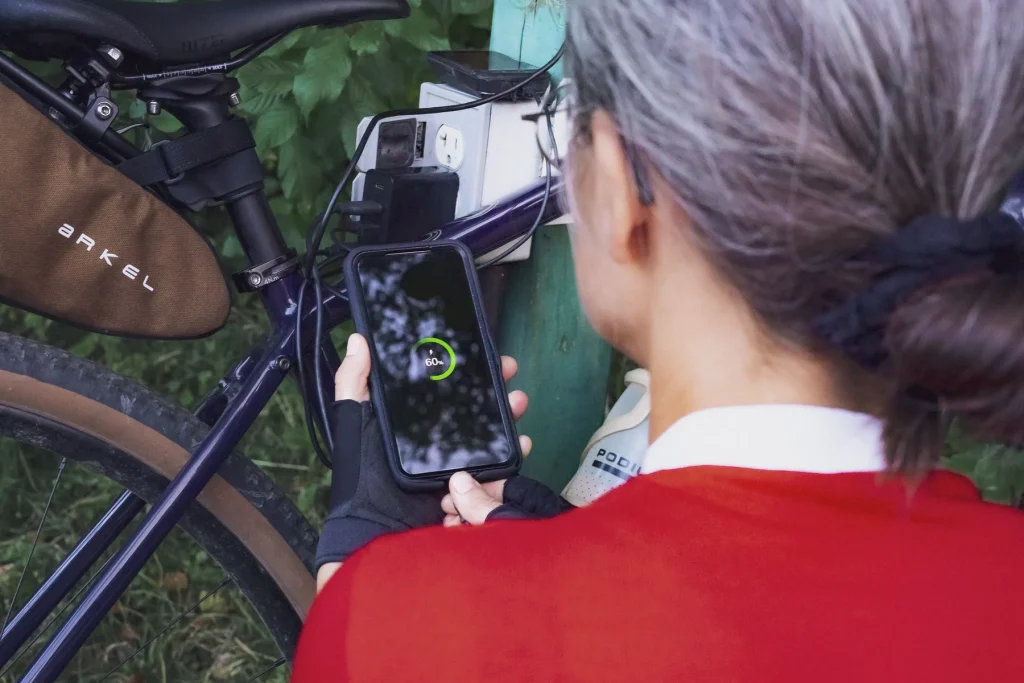
Cell phone reception may be spotty or nonexistent in certain areas of the parks. A satellite communication device may be worth considering.

Evacuation

Each person is responsible for their own safety and must be self-reliant in any emergency situation. Protocols are in place to enable Parks Canada teams to respond. Evacuation is generally conducted by land and is coordinated with provincial emergency services. Find out about the emergency services specific to the places you are visiting.

Other Considerations

Park roads are shared by wildlife and other users. Please be courteous and adjust your driving accordingly.

Special Cases

The National Capital Commission (NCC)

The NCC is a federal government agency; it is responsible for the administration and development of Gatineau Park and a portion of the region’s bike paths.

In addition to the bike paths, cyclists can use the park’s roads and many of the gravel trails that crisscross the park. There is no admission fee, and no registration is required for cyclists. A campground with services, ready-to-camp sites, and rustic cabins are available. Wild camping (without a designated site) is prohibited. Fires are permitted only in designated areas. ccn-ncc.gc.ca

The National Battlefields Commission

Did you know? A separate federal agency is responsible for managing Battlefields Park, which includes the Plains of Abraham and Braves Park. Cyclists are welcome on the trails throughout the park, and there is no admission fee. canada.ca

Quebec National Parks (Sépaq) © Étienne Dionne

Quebec National Parks (Sépaq)

The Société des établissements de plein air du Québec (Sépaq) is responsible for the management, operation, and promotion of the province’s national parks south of the 50th parallele At the same time, the purpose of a national park is to preserve natural and cultural heritage. The ecosystems within it are protected from logging, mining, and hydroelectric development.

National parks are open to the public and offer low-impact activities such as hiking, biking, canoeing, and camping.

Am I allowed to ride my bike there?

Yes! Biking is permitted and encouraged in most national parks. An extensive network of bike trails spanning approximately 700 km is available, with several sections connected to the Route verte.

What are the rights of access?

Access fees are required at all times, but there are some exceptions.

Access is free for cyclists when they pass through a national park using an official Route verte bike path. This exemption applies to Oka, Aiguebelle, Bic, Yamaska, and Pointe-Taillon National Parks.

Additional fees may apply for access to trails designated for mountain biking or fat biking.

Where to stay?

The network offers hotel accommodations, rustic cabins, campgrounds with or without amenities, ready-to-camp sites, and fully equipped cabins. Sépaq offers Bienvenue cyclistes! campsites. Wild camping (without a designated site) is prohibited.

Can we build campfires?

Only in designated areas and in accordance with current SOPFEU guidelines.

Communication Devices

Cell service may be weak or unavailable in some areas. Depending on the circumstances, a satellite communication device may be considered.

Evacuation

Each person is responsible for their own safety. Any costs incurred during search and rescue operations are the responsibility of the beneficiary: be sure to obtain adequate insurance coverage.

Other Considerations

It is essential to preserve the peace and quiet of wildlife by keeping a safe distance from them and avoiding any interaction, particularly with species considered vulnerable or endangered.

Regional Parks of Quebec © Jonathan B. Roy

Regional Parks of Quebec

Organized under the Association of Regional Parks of Quebec (Parq), regional parks are developed areas located primarily in natural settings. They may be located on public or private land. Their primary purpose is outdoor recreation and recreational tourism.

Regional parks can be divided into three categories:

  • Natural Park : an area developed within a natural setting for outdoor activities;
  • Urban Nature Park : an area developed on the outskirts or within an urban center for local outdoor activities;
  • Regional Linear Park : a multi-purpose linear network designed for year-round outdoor activities.
Am I allowed to ride my bike there?

Yes! Nearly half of the parks are suitable for cycling. Some parks also offer mountain bike or fatbike trails.

What are the rights of access?

In most cases, registration is required, and an admission fee must be paid. However, some parks allow visitors to enter freely without an admission fee or registration.

Where to stay?

Hotel accommodations, rustic cabins, and campgrounds—with or without amenities—are available throughout the network. Check with the park to find out what lodging options are available.

Wild camping (without a designated site) is not permitted.

Can we build campfires?

Only when a space designated for that purpose is available.

Communication Devices

Cell service may be weak or unavailable in some areas. Depending on the circumstances, a satellite communication device may be considered.

Evacuation

All regional parks have a risk management plan. Be sure to ask about the emergency procedures when you check in. Some parks are in remote locations: evacuation may be difficult and time-consuming. Consider obtaining adequate insurance coverage.

Controlled Mining Areas (ZECs) © Nicolas Bourdeau

Controlled Mining Areas (ZECs)

Located on public lands, ZECs are nonprofit organizations that manage recreational and tourism activities within their territories: hunting, fishing, vacationing, and outdoor activities of all kinds. There are a total of 63 hunting and fishing ZECs—that is, land-based ZECs—where cyclists can explore. These ZECs are grouped together within the Réseau Zec.

Am I allowed to ride my bike there?

Yes! However, there are no bike paths in these areas. The trails are shared with cars, logging trucks, and ATVs.

What are the rights of access?

Whether you're biking or walking, no access permit is required! However, for safety reasons, registration is mandatory.

Where to stay?

Rustic cabins, ready-to-camp units, and campsites with or without amenities are available. The facilities and services offered vary from one site to another and from one ZEC to another. Each ZEC is managed independently, and rates may also vary.

Wild camping (without a designated site) is permitted within the network, but fees and conditions may apply.

Can we build campfires?

Yes, when a space designated for that purpose is available.

Otherwise, when it comes to backcountry camping, campfires are generally permitted, but you must follow the «Campfires—Safety First» guidelines in this guide.

Communication Devices

Cell service may be weak or unavailable. Depending on the circumstances, a satellite communication device may be considered. In the forestry sector, workers use CB radios to signal their presence.

Evacuation

By registering, you make the response teams' work much easier.

Depending on the isolation constraints, evacuation by helicopter is sometimes faster than by land. Be sure to have adequate insurance coverage.

Other Safety Considerations

Traffic is prohibited during big-game hunting seasons and strongly discouraged during small-game hunting seasons.

Forest road users aren’t always used to encountering cyclists. Find out when the forestry industry is active. Be alert, stay visible, and adjust your riding accordingly.

Wildlife Reserves (Sépaq) © Nicolas Bourdeau

Wildlife Reserves (Sépaq)

Sépaq’s Wildlife Sector comprises 13 wildlife reserves as well as the Sépaq Anticosti outfitter. They offer a variety of outdoor activities, particularly those focused on conservation, wildlife enhancement, and hunting and fishing.

These areas offer an extensive network of forest trails and secondary roads, primarily intended for cars and heavy vehicles, but which cyclists can also explore.

Am I allowed to ride my bike there?

Yes! Cycling is permitted and considered a recreational activity that is compatible with the purpose of wildlife reserves. Cyclists must ride responsibly, safely, and in accordance with authorized uses.

What are the rights of access?

No access permit is required to ride a bike or walk through a wildlife reserve, but one is required to spend the night there. For safety reasons, registration is recommended.

Where to stay?

Rustic cabins, cabins with amenities, ready-to-camp sites, canoe-camping sites, and campgrounds with or without services are available. Facilities and services vary by site.

Wild camping (without a designated site) is permitted within the network, but only if you register.

Can we build campfires?

Only in areas designated and equipped for this purpose.

Communication Devices

Cell service may be weak or unavailable. Depending on the circumstances, a satellite communication device may be considered. In the forestry sector, workers use CB radios to signal their presence.

Evacuation

Each person is responsible for their own safety. By registering, you greatly assist the response teams in their work. The costs incurred during search and rescue operations are the responsibility of the beneficiary: please consider obtaining adequate insurance coverage.

Other Safety Considerations

Traffic is prohibited during big-game hunting seasons and strongly discouraged during small-game hunting seasons.

Forest road users aren’t always used to encountering cyclists. Find out when the forestry industry is active, as that’s when heavy truck traffic increases. Be alert, stay visible, and adjust your riding accordingly.

Land belonging to the state estate © Jonathan B. Roy

Land belonging to the state estate

In Quebec, state-owned lands can be divided into two categories: lands subject to statutes and occupancy rights, and lands that are free of such restrictions.

Land subject to specific regulations and occupancy rights is managed and regulated by an organization to which the government delegates certain powers and obligations; this is the case, for example, with ZECs, wildlife reserves, certain outfitters, and national parks.

Land that is not subject to these restrictions is managed directly by the Ministry of Natural Resources and Forests (MRNF) or by a regional county municipality (MRC).

Am I allowed to ride my bike there?

Yes! Cycling is permitted there without restriction.

However, some trails may be managed by other organizations; in such cases, you must check with those organizations to confirm the access requirements.

What are the rights of access?

No access rights are required on lands managed by the MRNF.

Where to stay?

Wild camping (without a designated site) is permitted on lands managed by the MRNF.

Can we build campfires?

Campfires are permitted, but you must follow the rules outlined in the «Campfires—Safety First» section.

Communication Devices

Depending on the circumstances, a satellite communication device may be necessary. The presence of cyclists may come as a surprise to mining or logging trucks operating in the area. Workers use a CB radio to announce their presence.

Evacuation

Depending on the isolation constraints, evacuation by helicopter is sometimes faster than by land. Be sure to have adequate insurance coverage.

Other Safety Considerations

Avoid hunting seasons as much as possible, and find out when the logging industry is active, as heavy truck traffic increases during those times.

Special Cases

Logging Areas

Logging is authorized on state-owned lands through the issuance of a supply guarantee. The supply guarantee allows a logging company to harvest a specific area. Unless there is a temporary restriction for safety reasons (for example, because machinery is in operation) or pursuant to a specific law, regulation, or contract, cycling remains permitted.

Public Forest Roads © Alexandre Beauchemin

Public Forest Roads

Commonly referred to as forest roads, multi-use roads are public roads located on state-owned land. Built and used for a variety of purposes, they are intended, in particular, to provide access to forest areas and their resources. Most of these trails are located outside urban and agricultural areas.

Am I allowed to ride my bike there?

Yes! However, if the manager is not the MRNF, you must check the regulations of the manager responsible for the area where the trail is located.

What are the rights of access?

No right of access is required for trails located on lands managed by the MRNF.

Communication Devices

Depending on the circumstances, a satellite communication device may be necessary. The presence of cyclists may come as a surprise to mining or logging trucks operating in the area. Workers use a CB radio to announce their presence.

Evacuation

Depending on the isolation constraints, evacuation by helicopter is sometimes faster than by land. Be sure to have adequate insurance coverage.

Other Safety Considerations

Users of these trails do so at their own risk. In other words, the MRNF cannot be held liable for issues related to maintenance, repairs, improvements, or construction defects. It is therefore important for cyclists to ensure that the route is passable (including bridges) or to take the necessary precautions.

Forest roads are used primarily by forestry and mining equipment, as well as by vacationers, hunters, and anglers. Keep in mind that cyclists may be a surprise. Whenever possible, avoid hunting seasons.

The vastness of the forest road network and the large number of intersections and dead ends make it easy to get lost. It is therefore essential to have reliable and up-to-date navigation tools.

Trails for off-road vehicles (ATVs and snowmobiles) © Étienne Dionne

Trails for off-road vehicles (ATVs and snowmobiles)

In Quebec, the Off-Road Vehicle Act governs the use of ATV and snowmobile trails. The Act specifies that trails may be located either on public land or on private land, provided the landowner grants permission for their use.

Some of these trails are specifically managed by clubs affiliated with the Fédération des clubs de motoneigistes du Québec or the Fédération québécoise des clubs de quads. Commonly referred to as «federated trails,» this network is the one shown on the map.

Am I allowed to ride my bike there?

Cycling is not prohibited per se. However, just as with ATVs and snowmobiles, cyclists must consult the regulations governing the area if it is public, or request permission to pass if it is private property.

With some exceptions, however, it is prohibited on trails owned by clubs—that is, federation-affiliated trails. The law stipulates that «only off-road vehicles (ORVs) […] may travel on a user club’s trail.».

What are the rights of access?

There are no specific access rights for off-road vehicle trails. These rights depend on the managing agency or the landowner.

Communication Devices

It is not uncommon for trails to pass through remote areas where cell service is not always reliable. A satellite communication device may be worth considering, depending on the degree of isolation.

Evacuation

Depending on isolation restrictions, evacuation by helicopter is sometimes faster than by land. Be sure to have adequate insurance coverage.

Other Safety Considerations

Vélo Québec does not recommend that cyclists ride on off-road trails that are actively used by ATVs. The coexistence of ATVs and cyclists poses significant safety risks for cyclists.

Road network © Nicolas Bourdeau

Road network

Quebec’s public road network consists of various types of roads that may be managed by the Ministry of Transport and Sustainable Mobility (MTMD), regional county municipalities (MRCs), or municipalities.

Am I allowed to ride my bike there?

Yes, on all public roads, except for roads with restricted access (e.g., highways) or roads reserved for specific uses (e.g., bus lanes).

Communication Devices

Cell phone reception may sometimes be unavailable on certain remote roads. Although not essential, a satellite communication device may be worth considering for these areas.

Evacuation

Evacuation by land via regular emergency services is the standard procedure.

Other Safety Considerations

Although the road network is accessible to cyclists, it is not always cyclist-friendly. Whenever possible, choose to ride on the Route verte, or consult the MTMD’s interactive map to view the cyclist-friendliness rating for numbered roads.

Road Type Numbering Access
Highway 20 Highways and Access Roads Highways: 0 to 99
Collector roads: 400 to 999
Prohibited
Route 132 Major, national, and secondary roads Major or national highways: 100 to 199
Secondary roads: 200 to 399
Accessible

Special Cases

Outfitters

There is no general rule regarding bicycle access to outfitters.

Outfitters are private businesses that provide lodging, equipment, and services necessary for recreational hunting and fishing. They may be located on state-owned land or private land. However, even on state-owned land, the outfitter’s internal rules may apply.

So you have no choice: you’ll need to check with the outfitter in question. Some of them, however, will be more than happy to offer you lodging options outside the hunting season.

The "Hydro" Lines

The right-of-way under Hydro-Québec’s power lines is not public land, but rather an area reserved for Hydro-Québec. It may consist of public land, private property for which an easement agreement has been negotiated, or property owned by Hydro-Québec.

Cycling is permitted there, but only on an official trail established with the approval of Hydro-Québec and/or the landowners.

Wind farms

In general, the presence of a wind farm does not prevent cyclists from passing through. However, the land-use regulations and safety measures associated with the project may sometimes restrict access to the site.

L'Ethics in a Natural Setting © Nicolas Bourdeau
Whether you're biking or camping

L'Ethics in a Natural Setting

Cycling and camping in natural areas come with certain responsibilities. It is cyclists’ duty to prevent and minimize their impact on wildlife and the environment. A good place to start is to familiarize yourself with the seven Leave No Trace© principles and the recommendations outlined in the “Cultive ton plein air!” guide developed by Réseau plein air Québec.

Responsible Wild Camping © Nicolas Bourdeau
A Few Basic Rules

Responsible Wild Camping

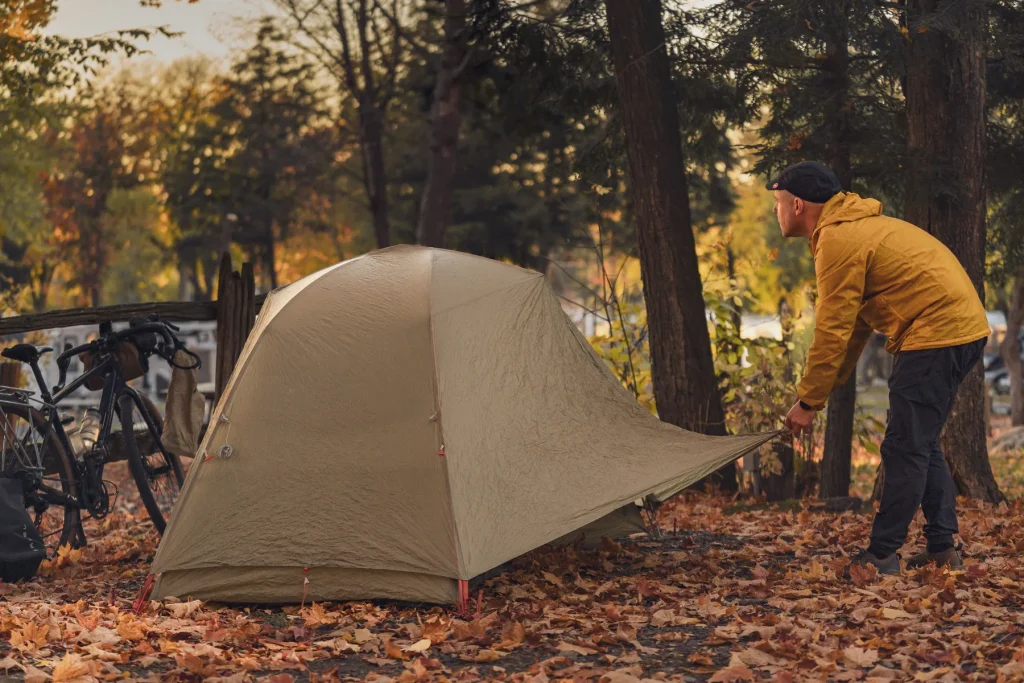
When camping outside a designated site, following a few basic rules makes all the difference.

  • Avoid trampling : When camping in a group, it’s best to space out the tents and avoid walking in the same areas to prevent trampling the vegetation. Ideally, look for durable (mineral) surfaces to set up the cooking area.
  • Protecting Water Sources : Set up your campsite and cooking area at least 60 meters from a water source.
  • Leave the site as is : Avoid disturbing natural features unnecessarily, and be sure to take all your trash with you. If there are no restrooms, bury human waste 20 cm deep in organic matter and at least 60 m from a water source.
  • Respect Wildlife : Be sure to keep your food and strong-smelling items out of reach of wildlife—for your safety and theirs!
Campfires © Jonathan B. Roy
Safety first

Campfires

When you're about to build a fire, the first question you should ask yourself is: Is it really necessary? Modern stoves are much more efficient for cooking and greatly reduce the risks and nuisances associated with a campfire.

If you still want to build a campfire, there are certain safety rules you must follow, whether you’re using a designated campfire site or setting up your own.

  • Check and comply with the restrictions in effect and the fire danger ratings issued by SOPFEU.
  • Check with the area manager to see if any other temporary restrictions apply.
  • Do not light a fire if wind speeds exceed 20 km/h.
  • Never leave a fire unattended, even for a short time.
  • Use wood that is sourced locally or available in the area to prevent the spread of invasive species.
  • Keep your firewood supply away from the flames.
  • Keep water nearby.
  • Do not burn your trash.
  • Always put out a fire with water (better safe than sorry).

If you are setting up your own fire pit, be extra careful. In addition to the rules mentioned above:

  • Choose a clear, rocky, and stable surface;
  • Be sure to stay a safe distance away from trees, roots, and vegetation.

Did you know?

Campfires that haven't been properly extinguished are the cause of approximately 60 forest fires per year !

Assessing Your Situation Accurately

L'isolation

To properly assess the extent of our isolation, we need to analyze three criteria.

  • Physical Distancing : that is, the travel time required to reach an evacuation route and support resources (e.g., a reception center equipped with a communication system and emergency supplies, a shelter, an accessible road, etc.).
  • Communication : that is, cell phone coverage or the availability of communication services.
  • The time it takes to receive medical care : that is, the time it takes for emergency responders to reach you.

Here is a table showing the level of isolation according to each criterion.

Criterion Low Medium High
Distance (on foot)* Less than 3 hours from a shelter or additional resources Between 3 and 8 hours of shelter or additional resources More than 8 hours of shelter or additional resources
Communications Full cellular coverage (or a reliable and available communication device) Variable cell phone coverage (or a reliable and available means of communication along the route) No cell service (and no means of communication)
Medical Care Less than 60 minutes 1 to 5 hours More than 5 hours

*Calculate the walking distances, since cycling may not be an option.

Recognizing the extent of our isolation is essential to preparing ourselves adequately.

Our Tips and Advice for Planning Your Trip

Risk Management and Evacuation © Nicolas Bourdeau
Being prepared means protecting yourself

Risk Management, Emergency Procedures, and Evacuation

If you decide to go cycling in areas you’ve never visited before, don’t neglect your preparation. A trip plan is one of the key elements of preparation. A trip plan typically includes:

  • The itinerary, including the departure time and the estimated return time;
  • Emergency service numbers and contact information.

Keep this information with you and share it with a loved one who can help you in case of an emergency. When requested by the area manager, check in upon arrival.

Available emergency resources

Depending on the region and the nature of the accident, various resources may be mobilized:

  • Land managers (park rangers, patrol officers, volunteers, etc.);
  • Municipal services (fire department, ambulance service, police, etc.);
  • The Sûreté du Québec;
  • Military personnel (specialists in search and rescue techniques);
  • Private medical evacuation services (Airmedic, Hélico-secours, etc.).

L'drainage

Depending on the circumstances and isolation constraints, evacuation may take place by land or by air. Although public services are required to assist people in danger, this does not necessarily mean that assistance will be provided free of charge or immediately.

  • RAMQ : Covers necessary medical care. With some exceptions, it does not reimburse the cost of prehospital transportation (evacuation) and does not provide compensation for injuries.
  • SAAQ : Covers the cost of pre-hospital transportation and provides certain benefits in the event of injuries, but only in the case of an accident involving a motor vehicle—even if you have a driver’s license. Cyclist struck by a car: covered. Cyclist hitting a pothole: NOT covered.

S'Make sure you're insured!

The cost of a ground evacuation can be steep, but in the case of an air evacuation, it can run into the thousands—or even tens of thousands—of dollars. In any case, it’s best to be prepared. Some accident insurance policies offer coverage that includes evacuation: be sure to check the terms of your policy. If you frequently travel through remote areas that might require an air evacuation, you may want to consider subscribing to private evacuation services (such as Hélico-secours, Airmedic, etc.).

Before You Go

Equipment Lists and Kits

Plan your rides with Vélo Québec's checklists.

List of Cycling Travel Gear

Everything you need to pack for a cycling trip, from clothing to camping gear.

Download the PDF

Mechanics Kit

Essential tools and parts for fixing your bike on your own, whether on the road or on a trail.

Download the PDF

First aid kit

Everything you need to handle injuries and unexpected situations during your outings.

Download the PDF

Resources for Further Study

Tours and Itineraries

To explore suggested itineraries or create your own, visit lequebecavelo.ca.

Quebec by bike

Accommodations and Attractions

To find accommodations and attractions tailored to cyclists, visit Bienvenue cyclistes!

Bienvenue cyclistes!

Tips and tricks

From tips & tricks to properly prepare for a cycling trip.

A collaborative guide

Our partners

Financial Partner

The production of this guide was made possible thanks to financial support from the Government of Quebec under the Safety and Integrity Program (PSIQ).

Collaboration

We would like to thank our partner organizations for their generous cooperation.

Acknowledgments

  • Daphné Brochu (Zec Network)
  • Marie-Andrée Gelac and Philippe Jolicoeur (Sépaq)
  • Nicolas Grondin (MRNF)
  • Nicolas Vazeille (Quebec Regional Parks)
  • Mélissa Larose (Parks Canada)
  • Charlotte Heinz (Quebec Indigenous Tourism)
  • Caroline Tanguay (Réseau plein air Québec)
  • Marie-Gabrielle Philibert (Vélo Québec Association)
  • Marie-Pierre Savard and Camille Benoit (Les Fines Garnottes Collective)
  • Frédéric Latour and Marie-France Lajeunesse (SOPAIR)
  • Pierre Bouchard and Marie-Claude Laurendeau-Desmarais (Vélo Charlevoix)
  • Julien Lamarche (Cantons Cycling & Adventure Collective)

Graphic Design

PAR Design

Production

Vélo Québec Association

Vélo Québec cannot guarantee the accuracy of the information contained in this guide. The regulations referred to herein are subject to change, and it is the responsibility of cyclists to check directly with the authorities in the areas they visit.