









What constitutes an acceptable number of deaths and serious injuries on our roads? This was the question posed to Montreal residents in 2017, as part of a public consultation on the subject. awareness campaign. After an initial response (« ten », « twenty », « one hundred and four and twenty »), respondents were asked how many deaths and serious injuries would be acceptable in their family. Inevitably, invariably, the answer was a resounding «zero».
In 2022, 392 people died on our roads (45 more than in 2021), and 1,275 were seriously injured and will probably live with the after-effects of a road collision for the rest of their lives. While these figures represent a clear improvement on the 1970s (when there were over 2,200 deaths in 1973!), they also show that there is still a long way to go.
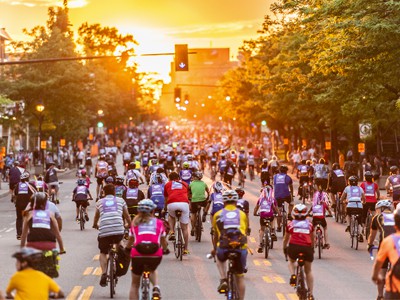
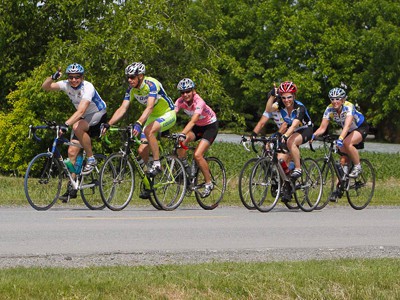
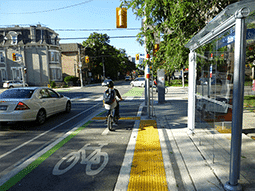
The road safety record of cyclists is improving almost constantly, despite the increase in the number of cyclists and vehicles on the road. How can this be explained? The network of cycle lanes, which guarantee greater safety for cyclists, has more than doubled in 20 years.
Road safety, both real and perceived, is also a huge barrier to the adoption of cycling by the majority of the population: according to a university study conducted in 2012, more than half the North American population is «interested but concerned» about cycling. Improving road safety means giving more people more choice in how they travel.
For all these reasons, Vélo Québec welcomed the road safety plan presented just before the start of the school year by Minister Geneviève Guilbault, whose remarkable leadership on this issue is to be commended. It responds to many of the requests we made to her team.
In terms of governance, A concerted action table will be (re)set up* to combine the efforts of all stakeholders: Société de l'assurance automobile du Québec (SAAQ), police forces, but also the Ministère des Transports et de la Mobilité durable (MTMD), municipalities and user representatives. Indeed, road safety cannot be improved solely by means of awareness campaigns, however excellent they may be (let's highlight the one on the’artificial empathy of the SAAQ and the recent one of the city of Laval«.« Roll over »). Although there is already a road safety plan led by the SAAQ, it was necessary to bring together once again all the bodies that can also act on the physical features of roads and streets, which play a decisive role in ensuring the safety of road users.
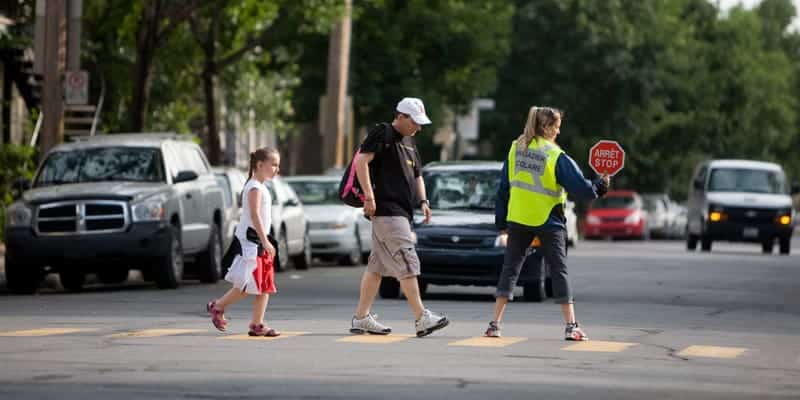
On the development front, The MTMD's standards will finally be reviewed to take into account the reality of people on foot, particularly schoolchildren and seniors, who are disproportionately affected by road insecurity. With an additional 68 M$ injected into financial support programs for municipalities, they will be given the means to calm traffic and provide sidewalks and bike lanes. This will not be too much to ask, as municipalities will now be obliged to limit speed to 30 km/h in school zones, and to design these zones to make them safer for schoolchildren.
If you still have concerns, I'm talking about the numbered roads that come under the MTMD, but run through the heart of Quebec's towns and villages. Anyone who has followed the case of young Anaïs, who died walking on the sidewalk-less road through the small village of Saint-Flavien, will recall that MTMD refused to pay for the construction of a new sidewalk on her road. Following a referendum, the municipality refused to go into debt to build the requested sidewalk. While Ms. Guilbault's new plan includes several actions on the theme of collaboration with municipalities, and makes timid mention of «clear guidelines with regard to cost-sharing when carrying out joint projects», we will be particularly attentive to cases involving the Ministry's infrastructures on municipal territory. If all the intentions expressed in this plan were to ensure that the MTMD and its regional directorates become real partners in road safety, offering both their expertise and the necessary funding to calm living environments (at the cost, if need be, of the fluidity of the «superior network»), this would be nothing short of a minor revolution. It would be a major cultural shift, requiring strong leadership - another opportunity for Minister Guilbault to exercise it. And we applaud this revolution with enthusiasm.
*The previous Table québécoise de la sécurité routière, created in 2005 and chaired by Jean-Marie de Koninck, has seen its work suspended since the 2017 public consultation on road safety.
Jean-François Rheault, President and CEO, Vélo Québec