










Cycling rules
In Quebec, cyclists have the right to use all roads except highways, access roads and certain prohibited bridges and tunnels, and must follow the same obligations as motorists.

Respect other users
The Highway Safety Code is for everyone. Respecting it is essential to sharing the road with other users - pedestrians, cyclists and motorists - as harmoniously as possible.
When driving in an area shared with pedestrians, drive slowly and give them the right of way.
Pay attention
The city is full of the unexpected: people jumping out from between cars, doors opening, drivers forgetting to use their blinkers, potholes and so on. So it's vital to be attentive and focused on the road. Remember that it's forbidden to pedal while wearing headphones or using hand-held electronic devices.
Respect the signs
You must follow the signs intended for motorists, unless there is one specifically for cyclists. In that case, the latter will prevail.
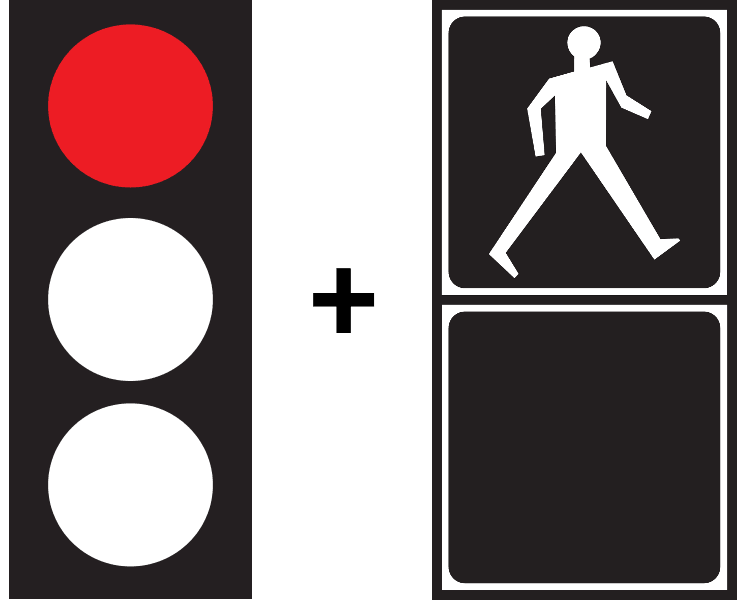
Facing a red light and an activated pedestrian light
After coming to a halt and giving way to pedestrians, you are authorized to proceed at a reasonable and prudent speed.
Attention
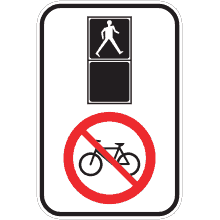
If the Cyclists prohibited from crossing during the pedestrian phase is present: you cannot use the pedestrian phase and must use the motorist phase.
If the Obligation for cyclists to cross during the pedestrian phase is present: you cannot use the motorist phase and must use the pedestrian phase.
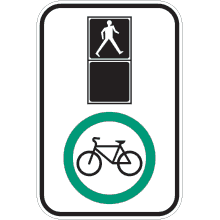
Other signage specific to the cyclists you will encounter
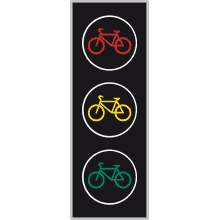
Traffic light for cyclists
Cyclists must comply with this and are therefore not allowed to respect the phases of the traffic light or pedestrian light.
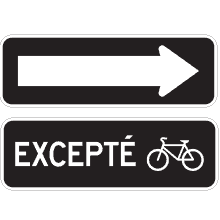
One-way traffic - Exception for bicycles
This sign indicates a street where one-way traffic is restricted to road vehicles only, and where cyclists are allowed in both directions.
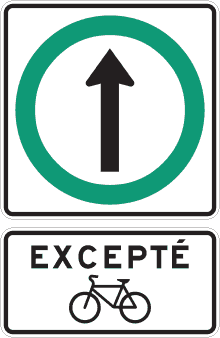
Obligation or prohibition - Exception for bicycles
Indicates that the obligation or prohibition in the sign above does not apply to bicycles (here, the obligation to continue straight ahead does not apply to bicycles).
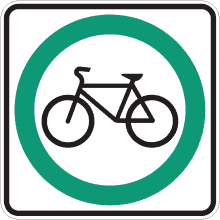
Compulsory route for cyclists
Indicates to cyclists the obligation to use the bike lane.
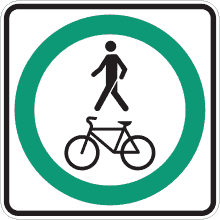
Compulsory route for pedestrians and cyclists
Indicates that cyclists and pedestrians must travel together on the pedestrian-cyclist path. No specific corridor is reserved for either user.
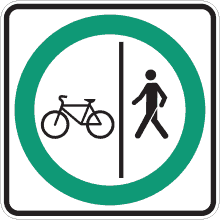
Mandatory route
This sign indicates to cyclists and pedestrians that they must travel on the side indicated on the pedestrian-cyclist lane sign. (In this example: cyclists must use the left-hand side of the road and pedestrians the right-hand side).
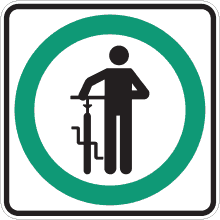
Obligation to dismount
This sign may be accompanied by a time slot indicating the times of day when the obligation applies.
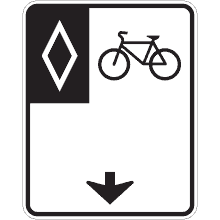
Bicycle lane
This sign indicates the presence of a cycle lane or any other lane reserved for cyclists. It may include period indications (x months to y months).
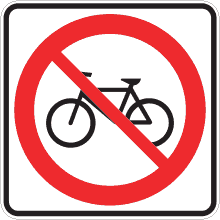
No access for bicycles
Indicates that the lane is closed to cyclists.
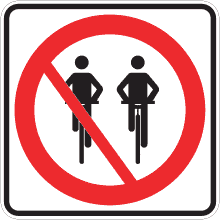
No overtaking
Indicates to cyclists that they cannot ride side by side and specifies the start of a zone where overtaking is prohibited.
Drive in the direction of traffic
You must ride in the direction of vehicular traffic unless the signage authorizes contra-flow traffic for cyclists.
Don't drive on sidewalks
It's forbidden to ride on sidewalks, except when authorized by signs, for example under certain viaducts, or when necessary.
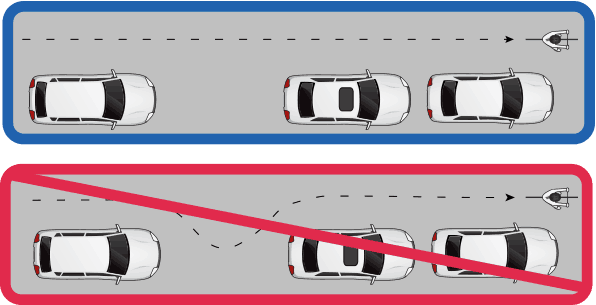
Drive as close as possible to the right side of the road
- A safe distance from parked cars
When cars are parked, drive one meter away from them to avoid doors that could open unexpectedly. - With room to manoeuvre
On a street without parking, drive 50 cm from the kerb or white line. This will give you room to maneuver to avoid a hole, manhole cover or object on the pavement. - In a straight line
Maintain this line even if there are gaps between parked cars. This way, you'll be visible and predictable to following motorists and cyclists.
Don't drive too fast
A cyclist who rides too fast can't anticipate dangers and unforeseen events on the road. So adopt a moderate speed, between 15 and 20 km/h, to give yourself time to react.
Signal your intentions
Indicating the maneuver you're about to make enables following cyclists and motorists to adapt their driving to your path. A simple wave of your arm does the job nicely:
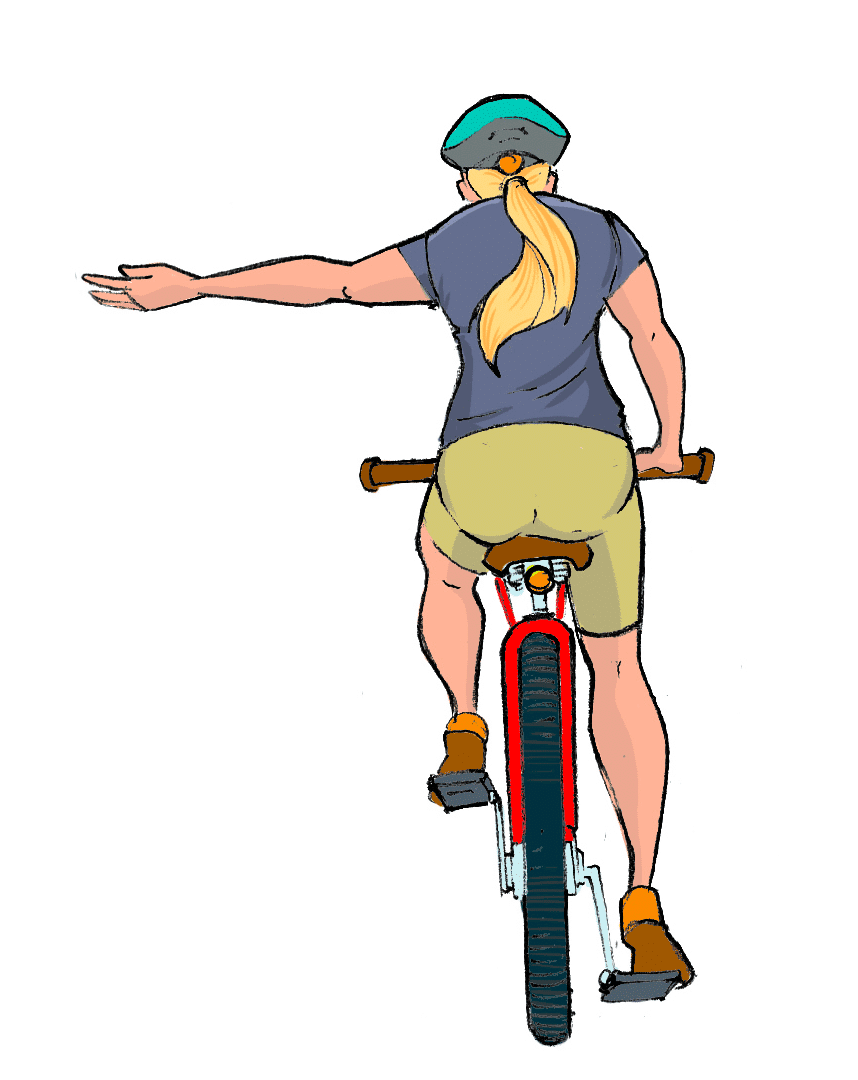
Left turn
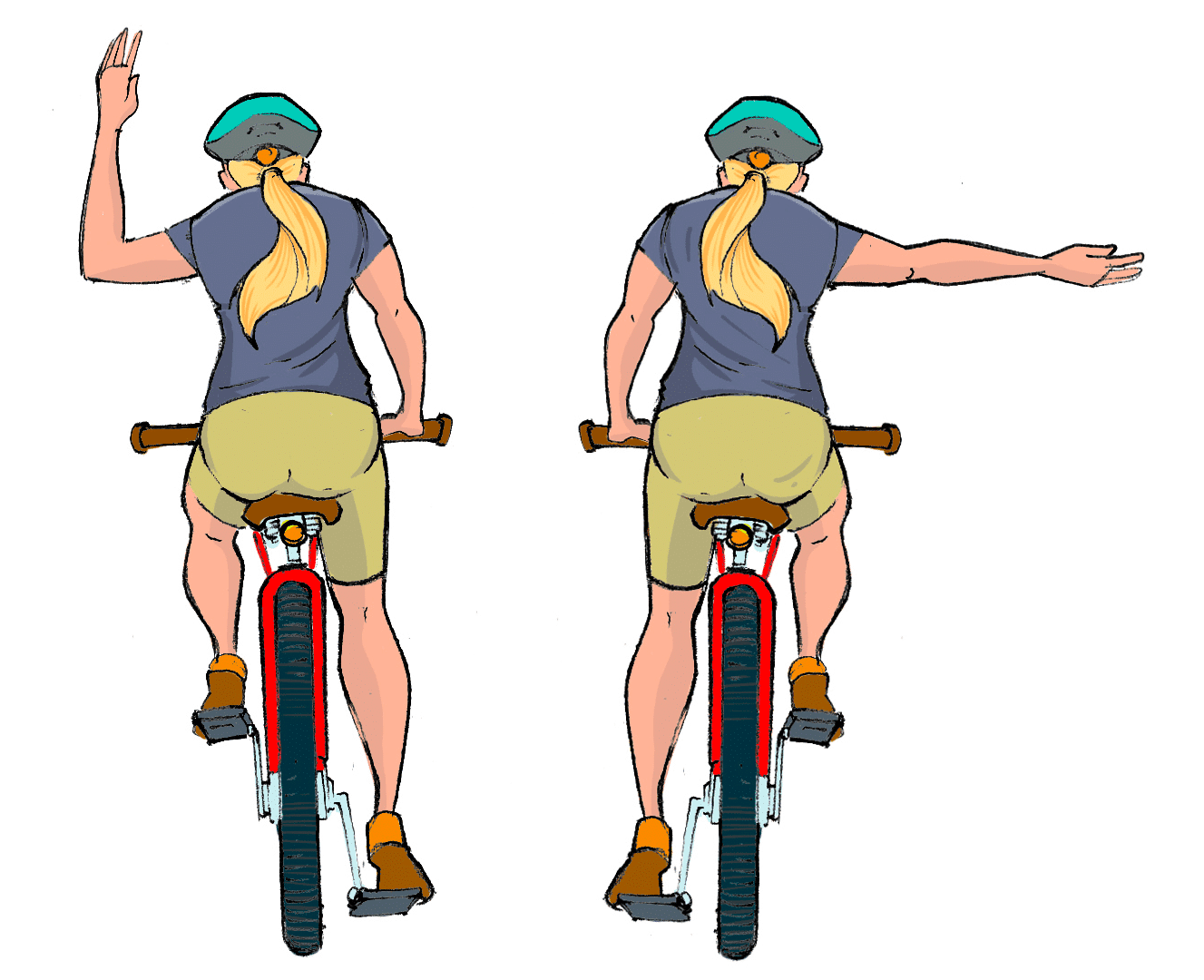
Right turn
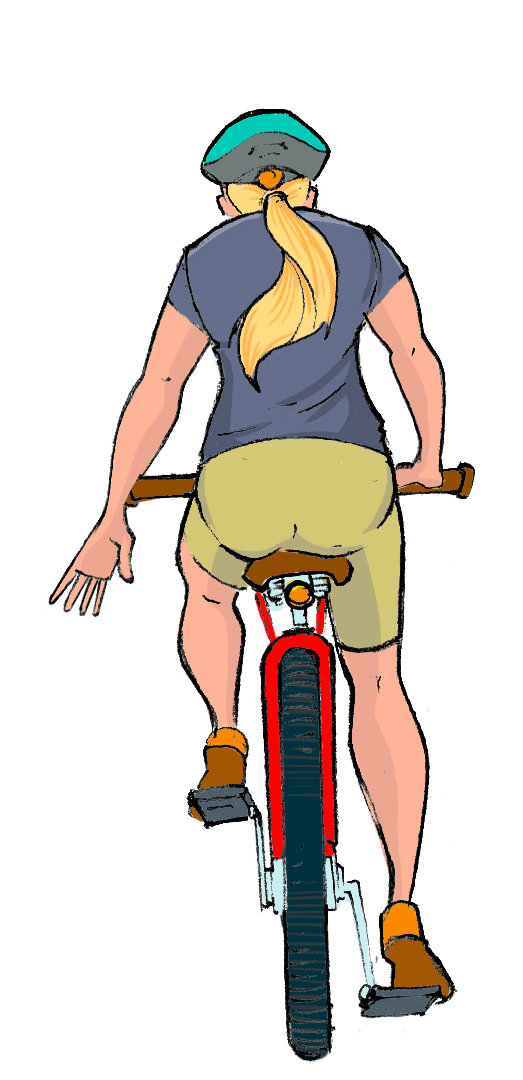
Stop / Slow down
Stay behind buses and trucks and keep your distance
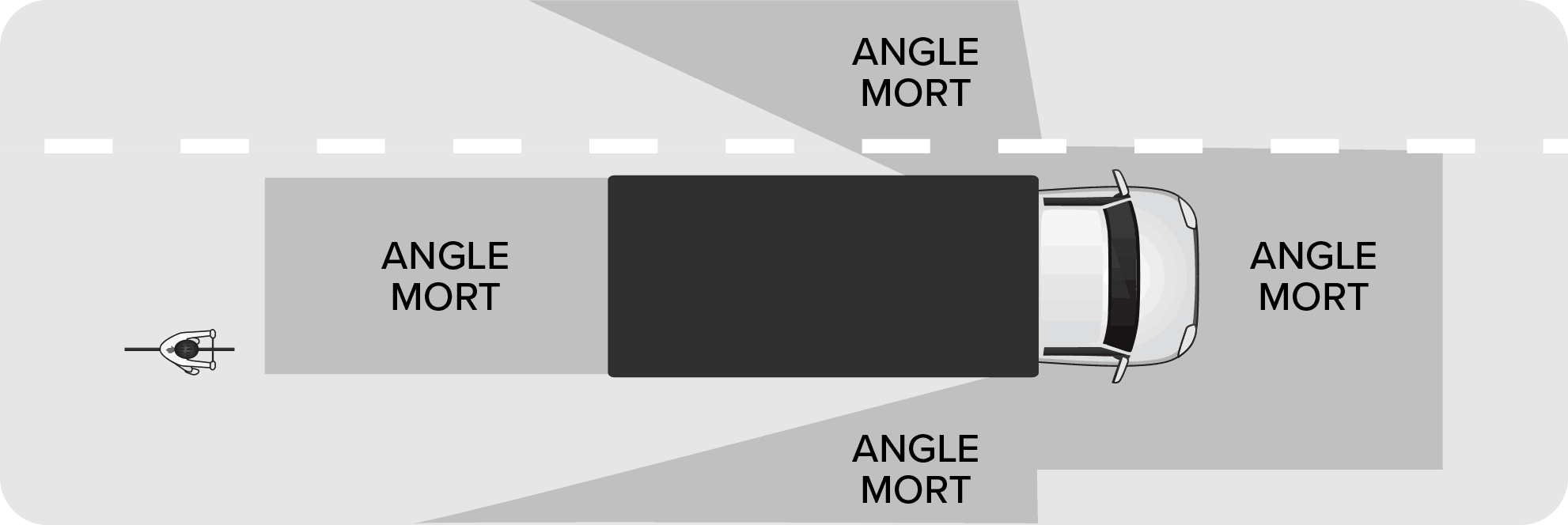
Buses and trucks have many wide blind spots: drivers don't see you when you're positioned in one of the blind spots.
Make sure you keep a safe distance so that the driver can see you clearly and, as far as possible, always stay behind to avoid being trapped by a vehicle making a bend or pulling to the right.
Never pass a bus or truck on the left or right unless it has come to a complete stop and its hazard warning lights are on.
Be careful at intersections
Many conflicts occur at intersections. Stay alert and make sure you're seen by other road users - cyclists, pedestrians, motorists - by making eye contact with them.
-
Be visible
At traffic lights, position yourself in front of cars waiting for the green light, without encroaching on the crosswalk. This way, you're sure to be seen by stopped motorists.
-
Beware of right-turning vehicles
Always be vigilant at intersections and make sure you're not in a vehicle's blind spot. If the right-hand lane is reserved for right-hand turning, overtake cars on the left.
Be extra careful if turning right at a red light is allowed where you're driving. Turning right at a red light is prohibited on the island of Montreal, but permitted almost everywhere else in Quebec. -
Make safe left turns
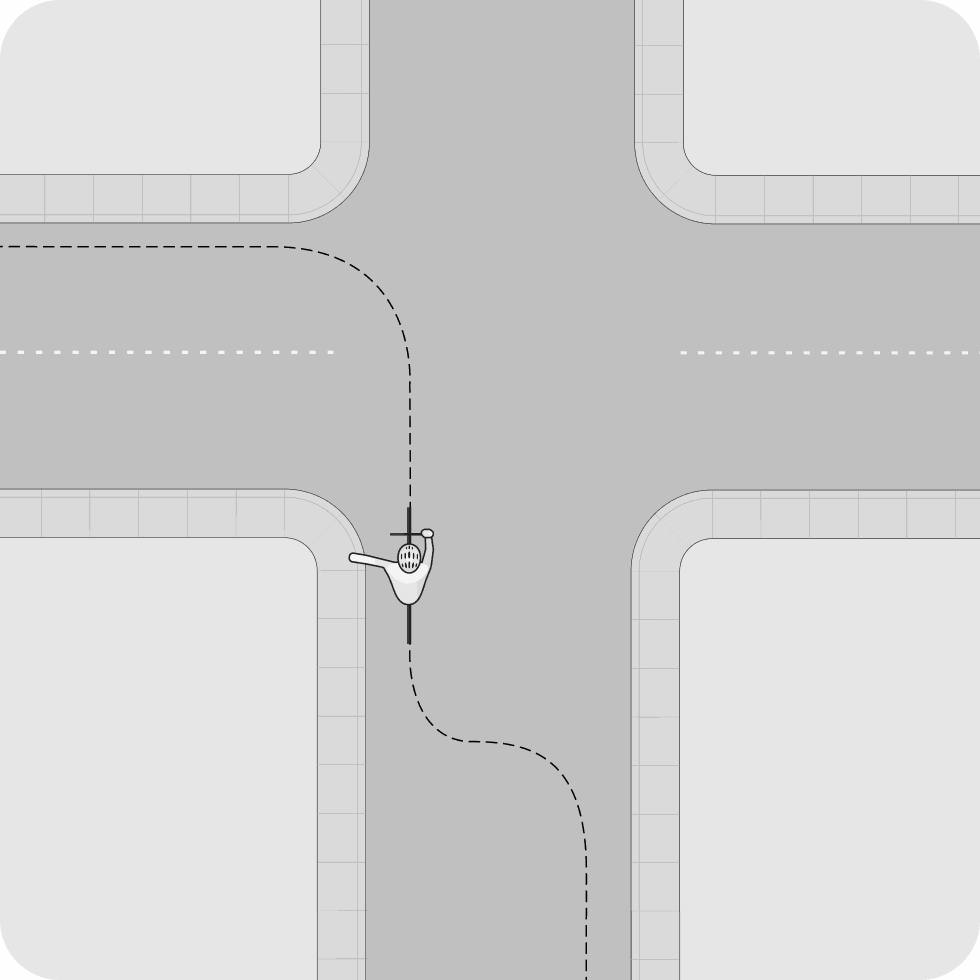
There are two ways to make a left turn. Use the one you're most comfortable with.
A two-stage turn
Carry out the maneuver like a pedestrian. This method is recommended when there are several lanes to cross, or when traffic is heavy and fast.
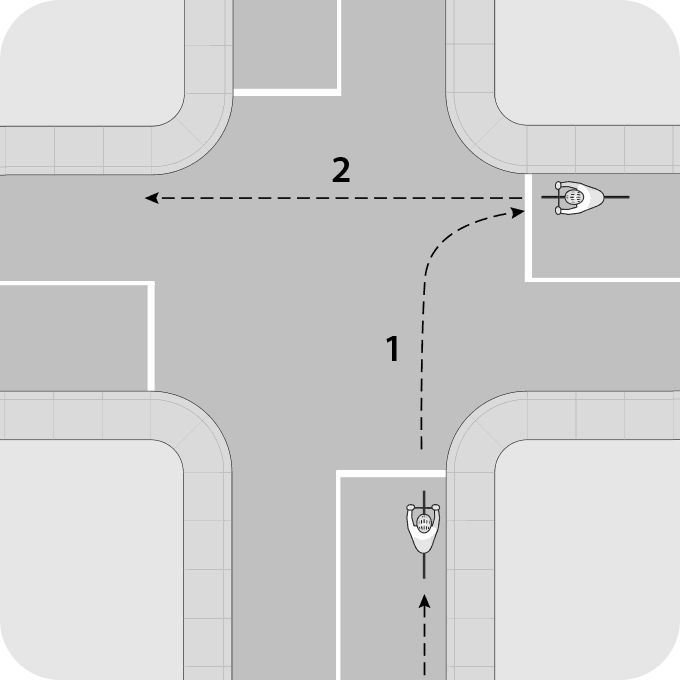
One-step turn
Consists in performing the maneuver like a vehicle. This method is recommended when there is little traffic, only one lane per direction or when the street is one-way.
Special features
Riding a bicycle
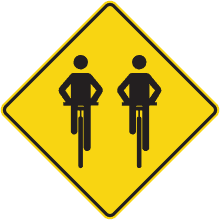
A "vélorue" is a public road, or part of one, on which the certain traffic rules have been modified to encourage cyclists and ensure their safety.
On a bicycle, the cyclist must respect the direction of traffic and may :
- circulate at the location of your choice on the lane
- two abreast
If a contraflow is set up on a bicycle lane, the cyclist using the contraflow must :
- drive as close as possible to the curb or on the right-hand side of the roadway
- keep in line when travelling in a group
Driving on a shared street
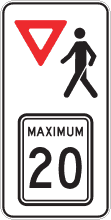
A shared street is a public road, or part of one, on which pedestrian traffic is given priority.
Cyclists must give way to pedestrians on shared streets and adjust their speed accordingly.
When cycling on a shared street, it's important to take extra care, since pedestrians have the right to use the street in any direction and at any time, and can cross at any point.
Driving on a designated roadway
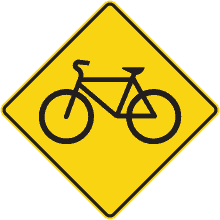
A designated roadway is a roadway shared by motorists and cyclists. It is recognized as a bicycle lane because it is safe and meets specific requirements regarding traffic flow and speed.
Since there are no special facilities or corridors reserved for cyclists, they must follow the same traffic rules as on the rest of the road network.
Cycling is forbidden
- driving on freeways and access roads
- cycling with headphones
- pedaling while using a hand-held electronic device
All rights reserved 2026
Vélo Québec
Conception de sites web : PAR Design, Agence Web