













Over the past 50 years, Vélo Québec has developed a unique expertise that it now makes available to communities and organizations, notably through the planning of bicycle networks and assistance with detailed design of facilities. In the early 80s, when cities and engineers were not interested in bicycle issues, Vélo Québec perfected its technical knowledge and drew inspiration from best practices in Europe to become, beyond its many claims, the organization capable of proposing solutions.

In the early 90s, Vélo Québec undertook its first mandates through its Vélo-conseil department. With the arrival in 1995 of Marc Jolicoeur as Director of Research, the consulting department took off. An excellent popularizer, this trained engineer knows how to reach professionals and decision-makers as well as the general public. In the mid-2000s, Vélo Québec began working with the City of Montreal to improve bicycle access to the downtown core. This collaboration led to the introduction of the Claire-Morissette bicycle path, officially inaugurated in August 2008, and bike lanes in the McGill ghetto.
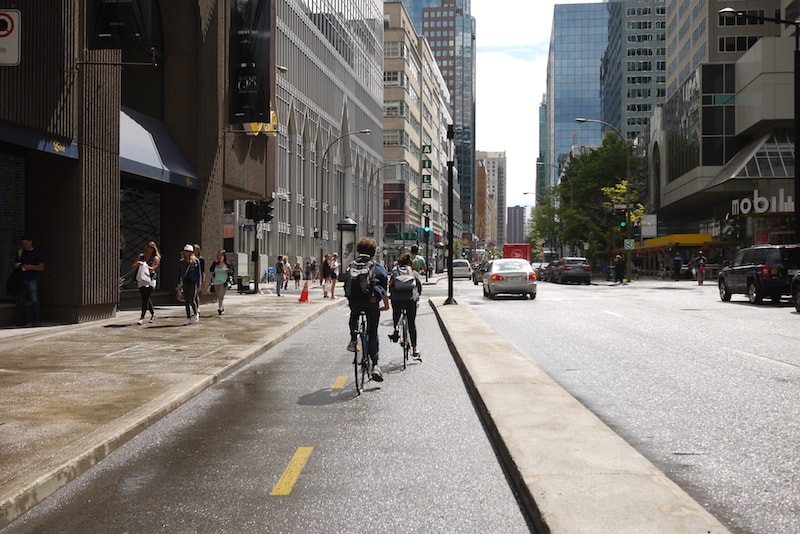
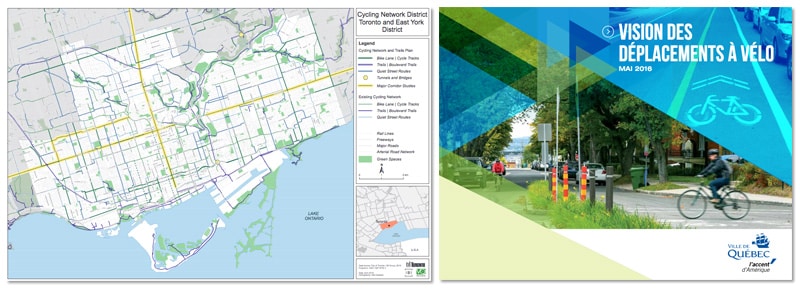
With the leitmotiv of always proposing safe, efficient and attractive bicycle facilities with a high rate of use, Vélo Québec has since worked with municipalities of all sizes, in Quebec and Ontario. Among the mandates it has carried out, we would highlight the development of cycling plans in 2015 for Cities of Toronto - in conjunction with Toronto-based IBI - and Quebec and, soon in 2018, for downtown Montreal.
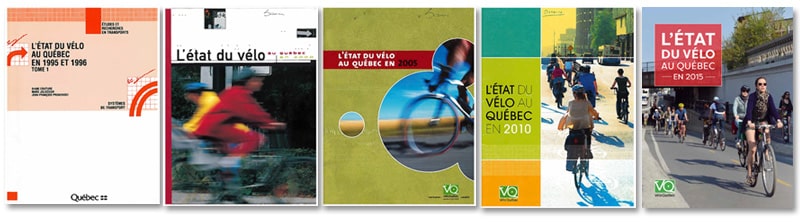
In addition to these mandates, every five years Vélo Québec publishes The state of cycling in Quebec since 1995, when the Quebec government adopted its first bicycle policy. This detailed portrait of the situation includes a survey of the general public and analysis of data from origin-destination surveys. In addition to being extremely useful for planning bicycle facilities, each issue of L'état du vélo demonstrates the growing importance of cycling, especially as a means of transportation, in Montreal and elsewhere in Quebec.
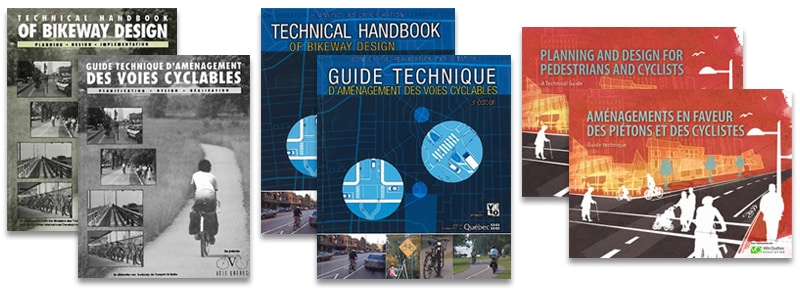
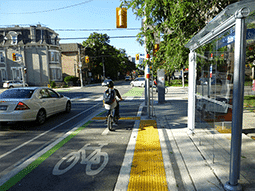
Vélo Québec also published its first Guide technique d'aménagement des voies cyclables in 1990 (reissued in 1992), with the aim of passing on information not available in university programs and showing what was possible in terms of infrastructure. A second work, with the same title but new content, including a section on traffic calming, was published in 2003, and formed the basis of a technical training course offered from that date onwards. Followed in 2009 Facilities for pedestrians and cyclists which, as its title suggests, now includes a pedestrian component. The accompanying technical training course was presented to stakeholders from some seventy Quebec municipalities. These three books, all of which have been translated into English and will be followed by a fourth in 2018, have had an influence on engineers, urban planners, architects and politicians who are taking action today in Quebec and Canada to promote active travel.
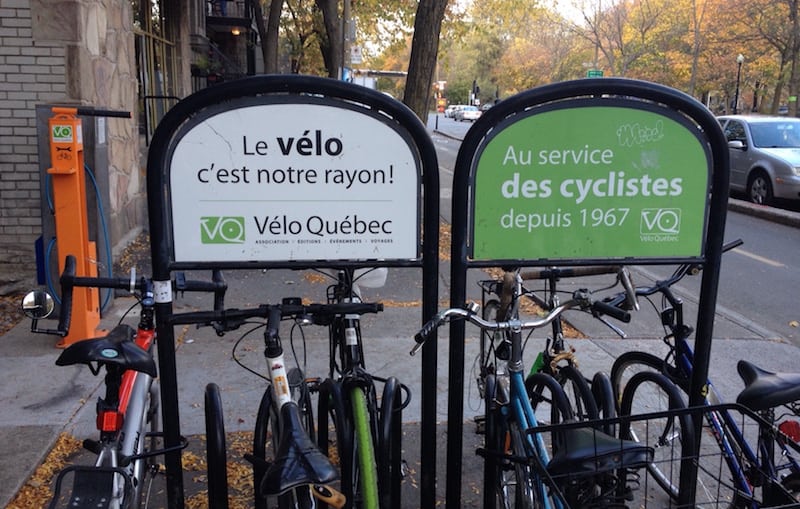
If you pass the Maison des cyclistes on Rachel Street in Montreal, you'll see the words Le vélo, c'est notre rayon. With over fifty years of expertise under its belt, Vélo Québec and its advisory service have made it more than just a slogan!