










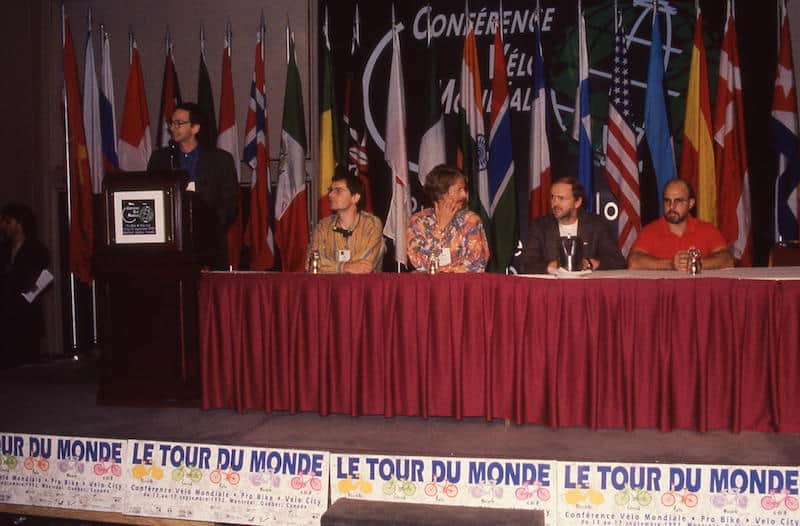
Montreal's history and that of Vélo Québec are intimately linked, and important anniversaries always give rise to major events. In February, to mark the city's 375th anniversary, Vélo Québec will be presenting the Winter Cycling Congress. The scale and scope of this event are not unlike those of the Vélo Mondiale Conference, presented here in 1992, when Montreal celebrated its 350th anniversary.
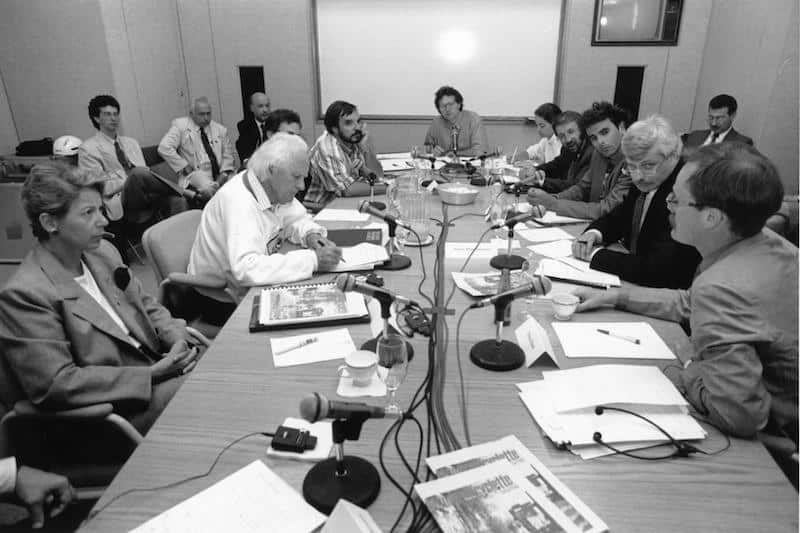
The idea for this conference was born in the late 80s, when Vélo Québec was already well established in the international bicycle scene. The idea came with a major challenge: to bring together in Montreal the two most important conferences in the field, the American Pro Bike and the European Velo-city.
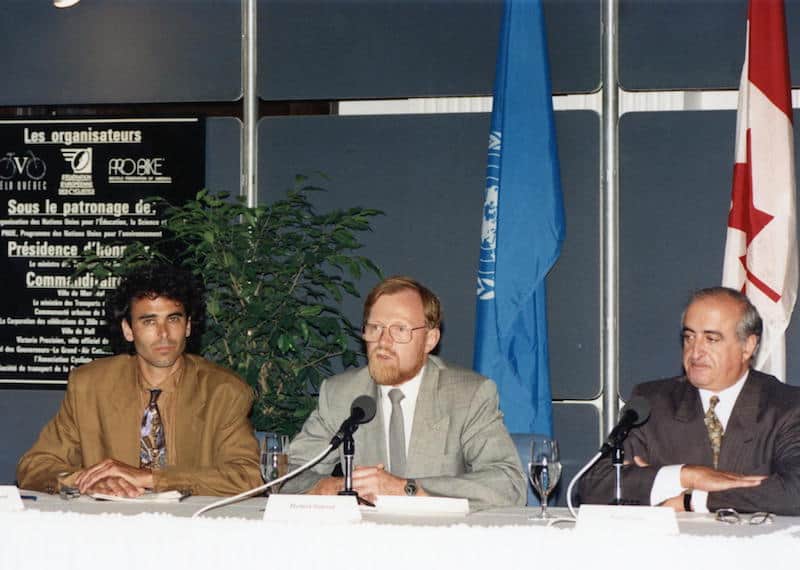
Under the honorary presidency of Sam Elkas, then Minister of Transport, the event brought together some 700 participants from 30 countries from September 13 to 17, 1992. On the first day, Vélo Québec publishes Perspectives mondiales sur le vélo, a bilingual 600-page publication featuring articles by some 70 authors from some 20 countries, describing the state of cycling around the world and covering topics such as planning, safety, strategies and policies, recreation and tourism.
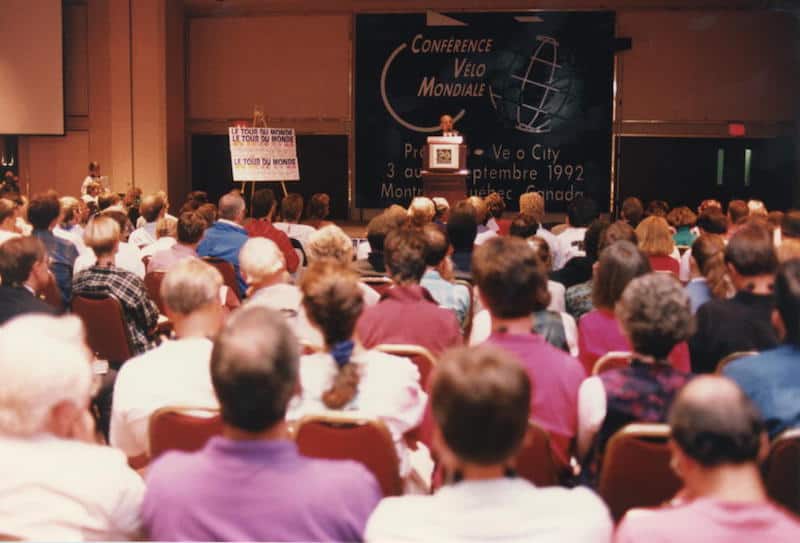
Vélo Québec also took the opportunity to present the vision of cycling in Quebec in the year 2000, including the integration of various linear corridors such as Le P'tit Train du Nord and the Estriade into a coherent whole. Three years later, this vision would become Route verte.
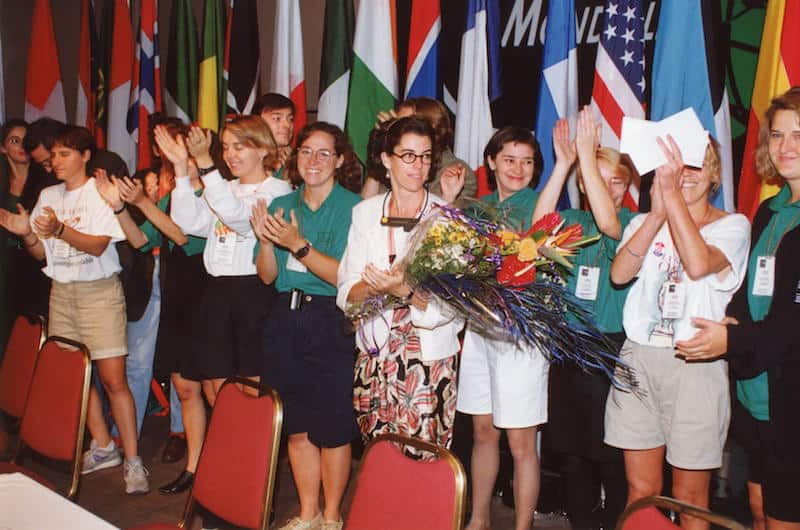
As ambitious as this conference project was, the results were more than equal to the task. The plurality of the voices present gave the event a truly international character, just as the quality of the exchanges enabled the cycling movement to better organize and professionalize itself, in addition to establishing Vélo Québec's credibility as a leading interlocutor.
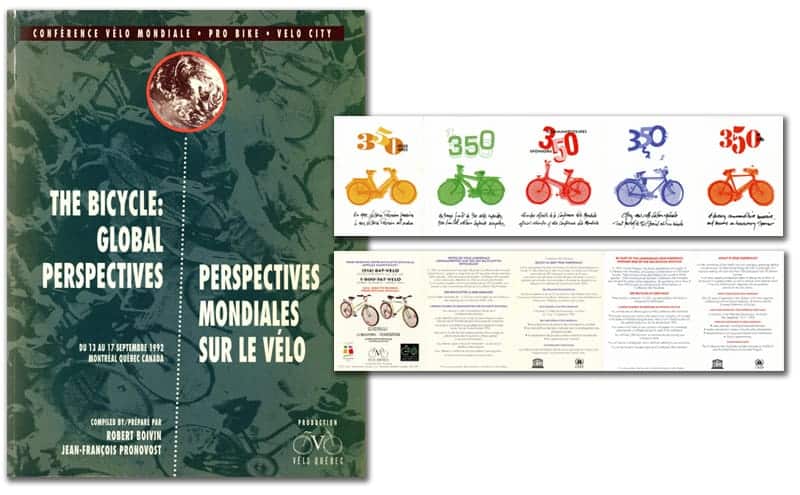
And if today, bike sharing is a reality in many cities around the world, let's not forget that this 1992 conference gave Montreal what could be described as the ancestor of BIXI. As sponsor, Victoria Precision made 350 bicycles available for the occasion, enabling participants to get around as they wished, in particular by following an ephemeral bicycle path traced from the event venue, the Radisson Gouverneurs Hotel (now Delta Montreal), via Saint-Antoine Street to Old Montreal and Notre-Dame Island.