













Montréal, Tuesday, June 8, 2021 - Vélo Québec today released the 2020 edition of the The state of cycling in Quebec, This major survey of bicycle use has been carried out every five years since 1995.
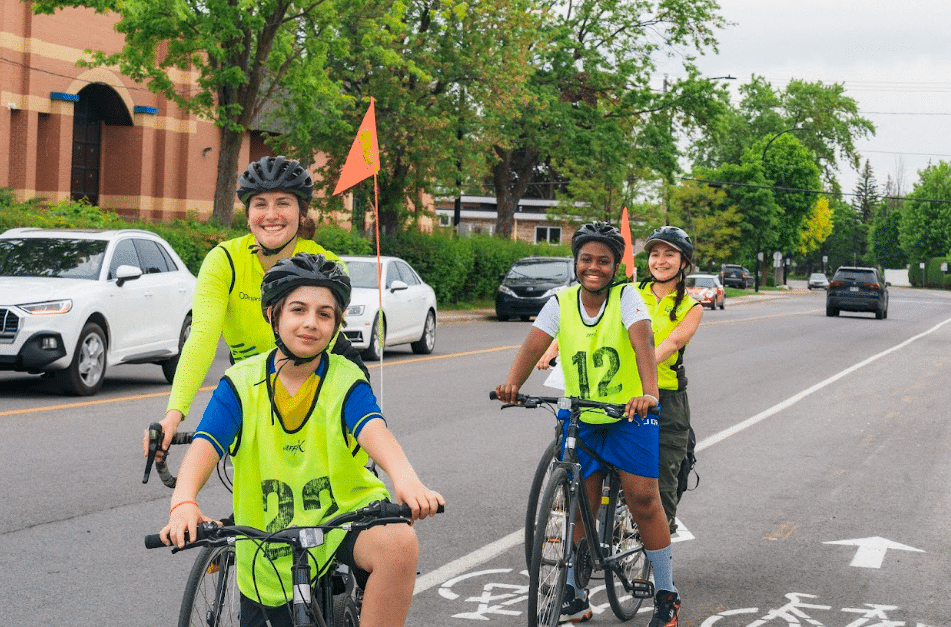
«The popularity of cycling continues unabated, with more and more Quebecers choosing it for leisure, transport and tourism. What's most encouraging is that our efforts have paid off: we've made progress on several fronts, despite the pandemic. »says Jean-François Rheault, President and CEO of Vélo Québec.
Among the main findings of L'état du vélo au Québec en 2020 :
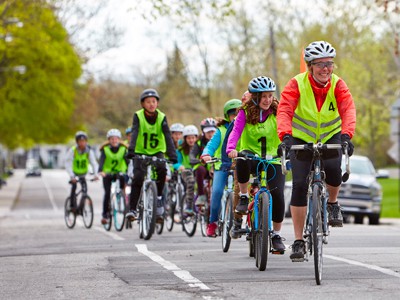
- 4.5 million Quebecers cycle, including 1.1 million children.
- 2.7 million of them do so every week, from May to October.
- In the 55+ age group, the cycling rate almost doubled between 1995 and 2020, from 23 % to 42 %. The increase is even more remarkable in the 65 to 74 age group, where the cycling rate has almost tripled, from 12 % in 1995 to 34 % in 2020.
- The health benefits of cycling are undeniable: Quebec cyclists spend an average of 3.3 hours a week cycling, a distance of 44 km.
- 2.1 million Quebecers combine business with pleasure by using their bikes as a means of transport, either occasionally or regularly.
- In 2018, 5 % of trips were made by bike in Montreal's central neighborhoods; data from automatic meters show that the progression continued in 2019.
- In 2020, telecommuting affected utilitarian bicycle travel, but to a lesser extent than other modes of transport. What's more, recent developments across Quebec are shaping up to be an excellent recovery.
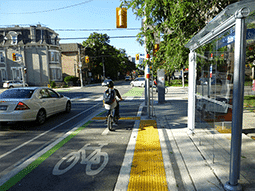
- Quebec's cycling network has increased 5-fold since 1995, to 10,600 kilometers of duly developed lanes. This is good news, as cyclists choose bike lanes for 61 % of their trips.
- In recent years, the cities of Laval, Longueuil and Montreal have built dozens of kilometers of one-way lanes on major arteries, transforming environments that were once considered dangerous for cyclists.
- In parallel with the increase in the number of cyclists and the cycling network, between 2015 and 2020, there will be a gradual decrease of 34 % in the number of cyclists injured in collisions with vehicles.
- In 2020, 660,000 cyclists used mountain bike trails. Adding forest roads and other trails to the calculation, 1.1 million cyclists rode in the woods, 77 % more than in 2015.
- With its 5,100 km of length, its tourist appeal and the fact that it reaches 39 of Quebec's 50 most populous municipalities, Route verte continues to contribute to regional economic activity.
2020: a record year!
The year 2020 will certainly go down in history. Bicycle stores were literally taken by storm: Quebecers bought 950,000 bicycles (430,000 for adults and 520,000 for children). Adding clothing and accessories to the calculation, bike retailers made sales of 565 million $ in 2020. This phenomenon, partly attributable to the COVID-19 pandemic, is unprecedented. For reference, Quebecers have been buying around 600,000 bicycles a year since 2000.
The emergence of the electrically-assisted bicycle (EAB)
Electrically-assisted bicycle sales, which were marginal in 2015, now occupy a significant share of the market. In 2020, 110,000 EABs found takers, representing 26 % of adult bike sales. Today, the 365,000 EABs in circulation make up 8 % of the adult bike fleet.
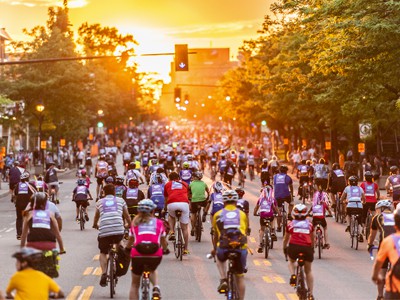
The state of cycling in Quebec in 2020 is a rich source of information. Today, cycling is a major trend, an essential reference point when talking about healthy lifestyles and sustainable mobility. In this respect, it's interesting to note that cycling is increasingly positioned as a real solution in strategies to combat greenhouse gas (GHG) emissions. This craze for cycling is also reflected in all Quebec municipalities, notably through the organization of events encouraging people to pedal or get back on their bikes, and through the creation of facilities promoting safe travel for cyclists and pedestrians. The 2020 data for Quebec's major cities - Montreal, Longueuil, Laval, Quebec City, Trois-Rivières, Gatineau, Saguenay and Boucherville - will be available from June 22. To consult the state of cycling in Quebec 2020 : www.velo.qc.ca/velo2020