









The adoption of a new Highway Safety Code, Quebec's sustainable mobility policy, election campaigns and all kinds of citizen mobilizations in favor of cycling in various regions: a glance in the rearview mirror confirms that 2018 was anything but a banal year.
Gains have been made, even if we would have liked much more. The unjustified increase of 400 % in penalties for cycling offences remains inequitable compared with the other offences mentioned in the Highway Safety Code. The CSR also introduced the The precautionary principle, but unfortunately little government energy has been devoted to promoting this new concept.
But it's never too late to do the right thing: in fact, there's talk of the Quebec government initiating the Vision zero, As the City of Montreal recently did, and as Quebec City is about to do. This will be an excellent opportunity to revisit the notion of prudence and get Quebecers on board.
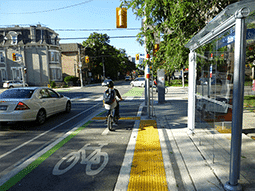
Also in 2018, the Sustainable mobility policy was launched, and investment has certainly increased, but we continue to believe that we need to aim higher if we want to make cycling and active transport a real option in terms of mobility. As we know, the development of protected bike lanes is at the heart of the strategy to get more people to choose cycling for their daily commute. We have already voiced some of our concerns to the new Minister of Transport, and offered him our collaboration in integrating cycling optimally into this sustainable mobility policy.
Despite advances that don't always live up to our dreams, cycling and sustainable mobility are now at the heart of initiatives and debates that would have been hard to imagine just a few years ago, in cities of all sizes. Who could have imagined that Granby and Laval would put forward incentive programs for the purchase of bicycles and electric bikes? Well, it's done! Given the outcry from small shopkeepers on 3rd Avenue in Quebec City, who could have predicted that bike lanes would be installed as planned in the city's initial plan? But that's exactly what happened.
The list of these initiatives, large and small, could go on and on. We saw this first-hand at the Laval forum of the Mouvement VÉLOSYMPATHIQUE last September. Quebec's third-largest city, which until recently was often singled out for its cycling shortcomings, has now entered the big leagues. Boulevards are being redesigned to include bus lanes and protected bike lanes. It's not being done without some gnashing of teeth, but it's being done. This kind of political will will move Quebec towards a more sustainable world, in which the collective interest will be at the heart of decision-making.
As we embark on a new cycling year, I wish you good health and happy miles. May 2019 be a great year for you!
Suzanne Lareau
President and General Manager