
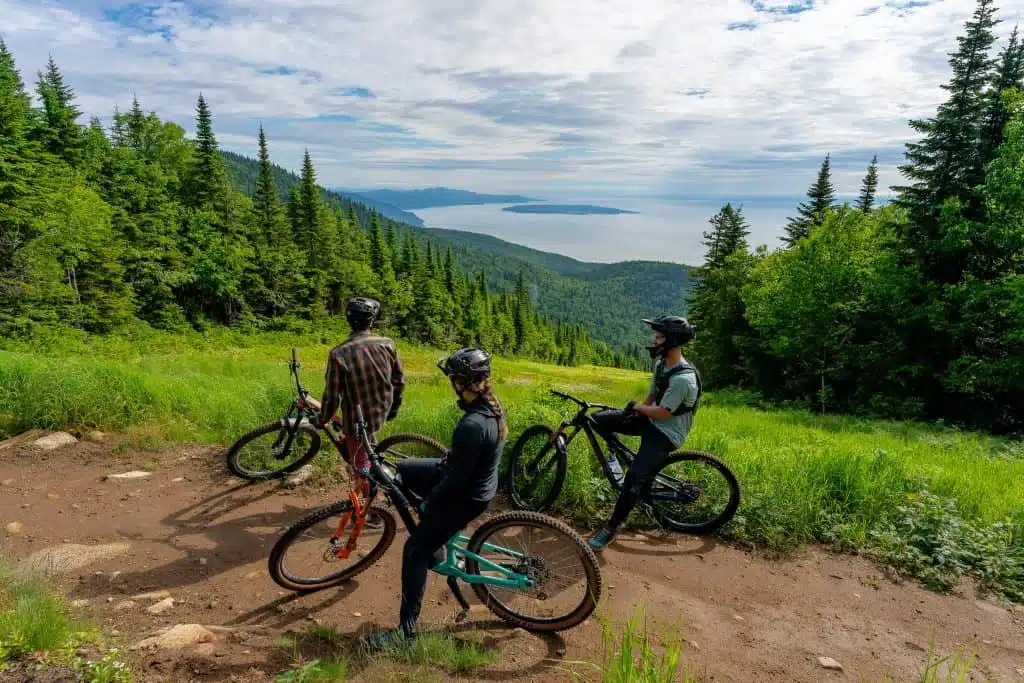








The mountain biking season is in full swing, with the majority of practice sites having reopened their trails in recent weeks. With the arrival of the first warm days, it's the perfect time to dust off your saddle and stretch your legs. Spring is also a time for chores. The trails, which have spent the winter under the snow, need a little help before they can be fully appreciated. Every year, thousands of volunteers and professionals get involved to ensure that their sport remains accessible and safe.
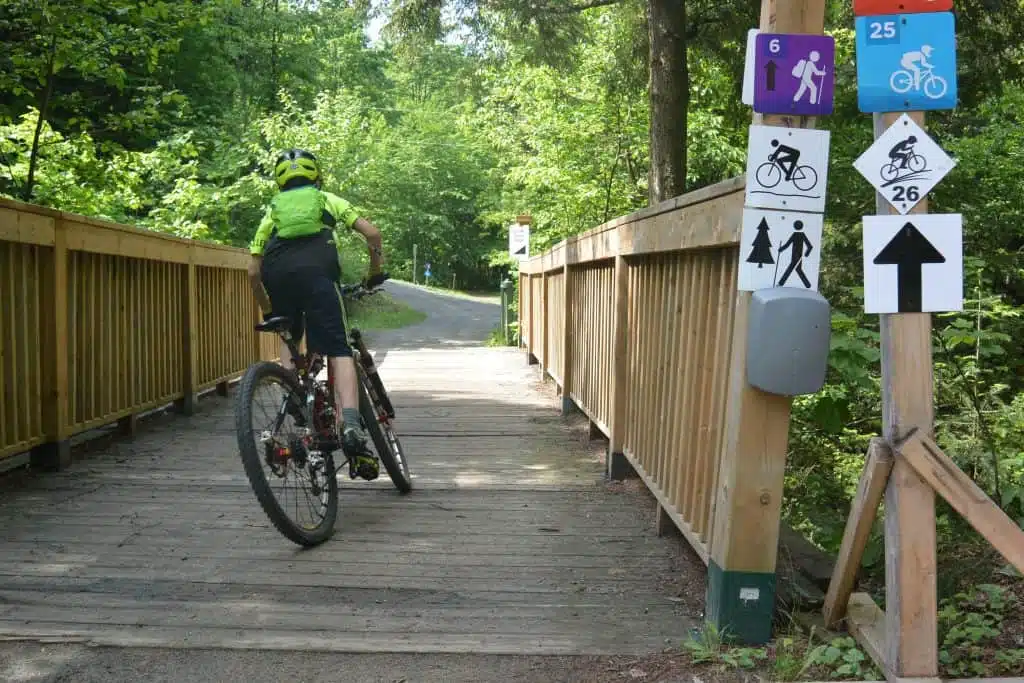
The current craze for mountain biking sometimes makes us forget its long journey to take root in the province. Many of the mountain biking destinations that now delight enthusiasts across Quebec began modestly in informal settings before gaining their letters of nobility. If the major mountain bike centers are the springboard for mountain biking in Quebec, local trails are the gateway. It's these places close to home that allow young people to be introduced to the sport, and enthusiasts to take up the sport on a regular basis.
For many, the arrival of the summer cycling season can be a disappointment, as many trails will never reopen. Indeed, access to natural territory and outdoor activities such as off-road cycling remain precarious. Despite the steady increase in the number of mountain bikers across the province, many trail networks disappear every year, despite the efforts and energy deployed by communities to keep them open. This situation is not confined to informal networks, since major centers such as Empire 47, have recently seen their trails threatened.
In the last issue Physical activity newsletter that the activity rate among children and young people remains insufficient. If we hope to reverse this trend, it's essential to focus on leisure activities that are accessible, free and, above all, that appeal to young people.
Mountain biking is often wrongly perceived as incompatible with the conservation of natural environments. However, it is entirely possible to create safe, accessible local trails that respect the environment. It has been shown that when well laid out, mountain bike trails are equivalent to hiking trails in terms of environmental impact. Local mountain biking is also an incredible lever for mobilizing and raising awareness of nature conservation among the general public. Citizen mobilization leading to the creation of Parc des Sommets or, more recently, the petition from 15,000 names collected to save the Marmota are excellent examples.
As a national recreational organization, Vélo Québec recognizes that cycling, and mountain biking in particular, is inextricably linked to access to the land. The vitality of the cycling culture depends on the development of new venues, but above all on the protection and perpetuation of existing trails.
Local networks must be recognized as public infrastructures in their own right, since they meet tangible needs and help to vitalize the living environments in which they are located. In this sense, Vélo Québec is delighted that the recent revision of the Orientations gouvernementales en aménagement du territoire (OGAT - governmental land-use planning guidelines) integrate some of our recommendations for recognizing and protecting public access to natural areas. We hope that these new directions will be promptly incorporated into regional and local planning documents to protect all local outdoor activities and consolidate the accessibility, safety and sustainability of mountain bike trails throughout Quebec.
Jean-François Rheault
President and CEO, Vélo Québec