







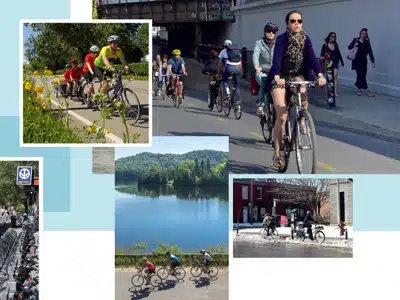
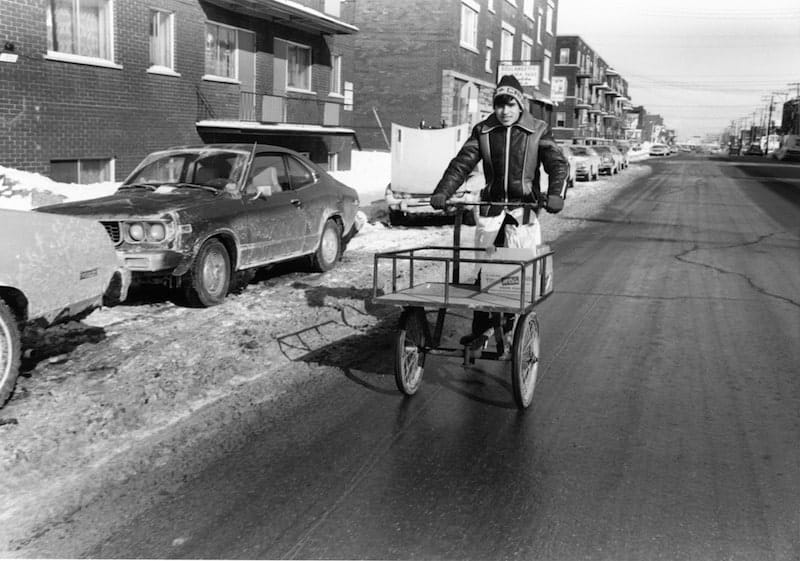
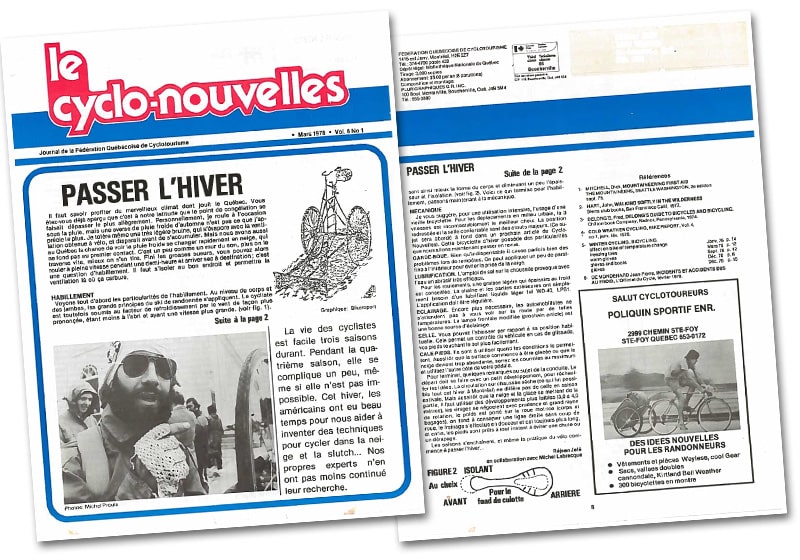
Over the decades, Vélo Québec has been both a player and a witness to the tremendous evolution of winter cycling. If today in Montreal 10 % of cyclists ride daily year-round, and happenings like Sub-zero cycling the fact remains that winter cycling is a subject that fascinates cyclists, just as their detractors, for a very long time. In March 1978, at a time when the practice was limited to convenience store deliverymen on three-wheelers and a few die-hards on two-wheelers nicknamed hurluberlus, the front page of Cyclo-news - which later became Vélo Mag - ran the headline «Getting through winter», urging us to «take advantage of Quebec's wonderful climate» with advice on clothing and mechanics.
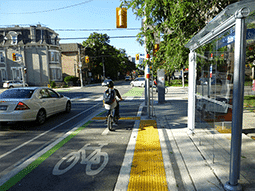
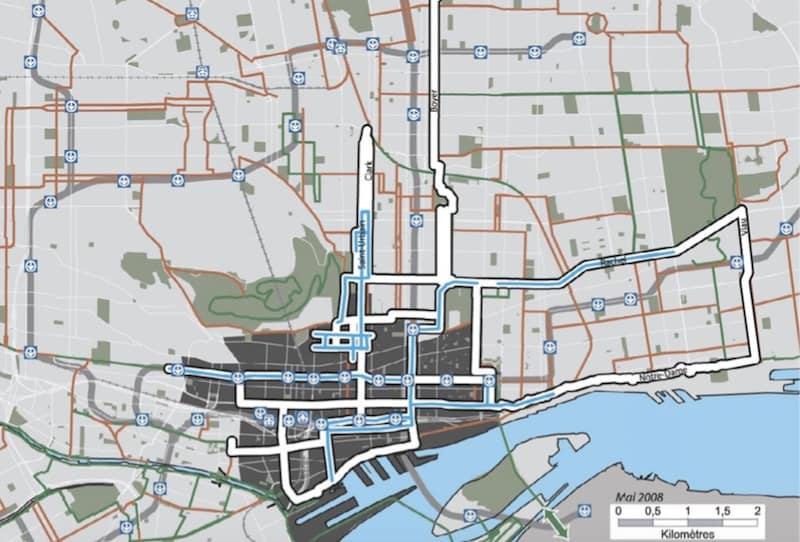
In Montreal, a glance at recent history reveals a number of landmark actions in the evolution of winter cycling, some more successful than others. In 2006, the City extended the bike path season by one month, moving the opening date from April 15 to April 1, and the closing date from November 1 to November 15. In 2007, the city also presented its Transport plan (adopted in 2008), which announced the implementation of a White Network. At the time, there was talk of 63 km of bike lanes being maintained in winter, a figure that by 2012-2013 had still not been reached. In 2008, cyclist and photographer François Démontagne launched the Facebook page Vélo d'hiver Montréal, In 2013, Vélo Québec presented the City of Montreal with a Catalogue of ideas and best practices to facilitate four-season cycling. Also in 2013, Vélo Québec presented the City of Montreal with a Catalogue of ideas and best practices to facilitate the use of four-season bicycles, while in Finland the Winter Cycling Congress and the Winter Cycling Federation under the leadership of Timo Perälä.
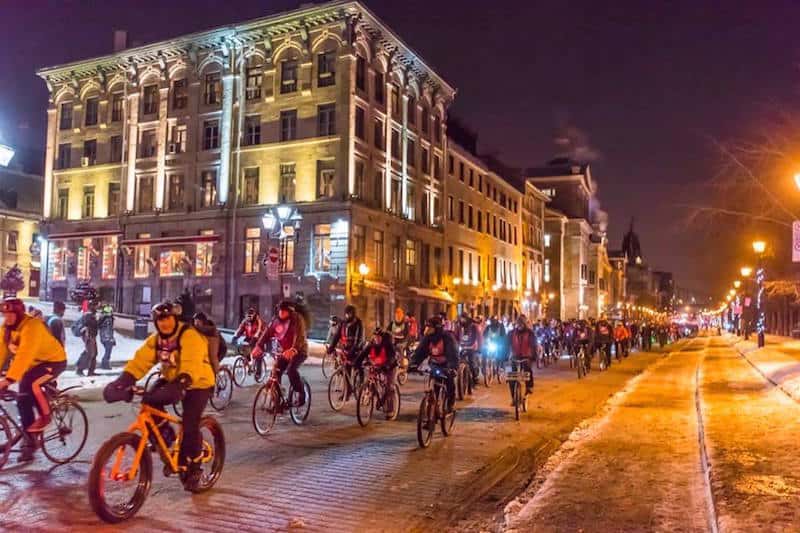
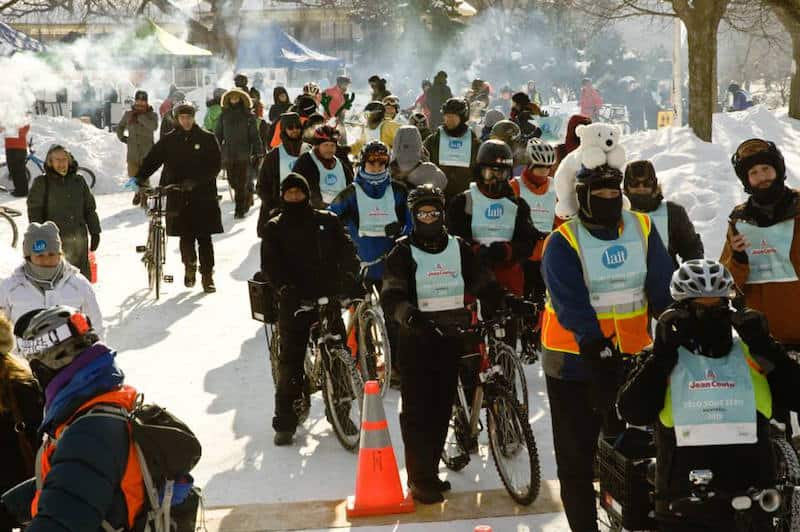
In February 2014, we saw just how popular winter biking had become in Montreal with the presentation by Vélo Québec, in partnership with ENvironnement JEUnesse, happening Sub-zero cycling, A sort of reduced-scale Tour de l'Île with a 15 km course. The 500 free places sold out within a week, and at the event the enthusiasm and smiles of the participants left no doubt as to how much they enjoyed being there. Vélo sous zéro will be presented again in 2015 and 2016, this time in freezing temperatures. In 2017, as part of the festivities for the 375th anniversary of Montreal and the 50th anniversary of Vélo Québec, this joyful gathering was presented in the evening under the name Winter moon by bike and rounded off our presentation of the new 5th edition of the Winter Cycling Federation's Vélo d'hiver congress. The event was sold out and won a great success with some 400 participants from 9 countries, 11 American states and 8 Canadian provinces.
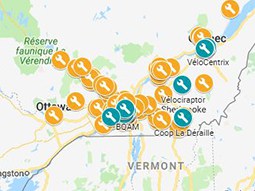
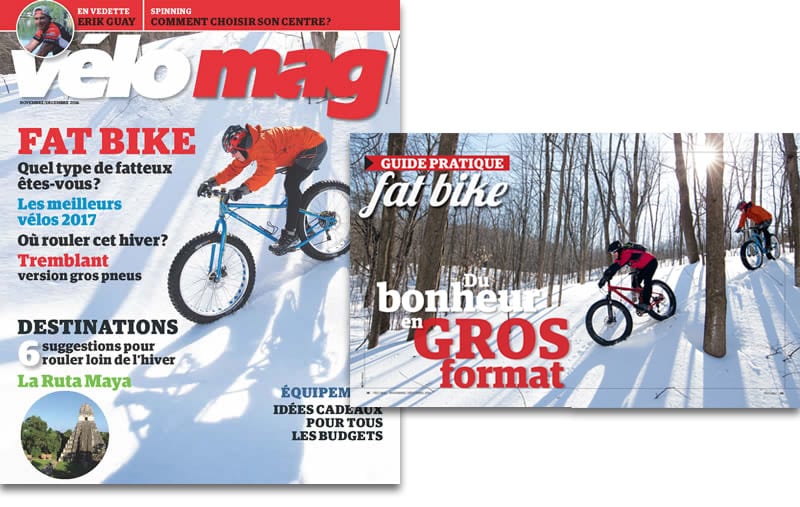
If winter biking in urban areas has gained in popularity in recent years, what can we say about fatbikes, which in mountain bike and ski centers have experienced spectacular growth! In 2014, 12 centers offered around 60 km of trails; in 2017, no fewer than 64 centers offered around 950 km of trails! Thanks to a great deal of creativity, a strong media presence, events such as Le Grand Fat Tour and the first Quebec Championships, as well as a constant improvement and professionalization of the offering, fatbike riding, which was initially aimed at a clientele of experts and hardened cyclists, has managed in four years to win over even families and children. The magazine Vélo Mag devoted its front page and an extensive feature to the subject in its Winter 2016 issue. Vélo Québec also makes available to enthusiasts a trail directory, and rental stores.
The Société des établissements de plein air du Québec (Sépaq) even followed suit, offering fatbike trails and rentals in four of its parks in 2017, in addition to holding one-off events in four others. Sépaq presented the project at the Vélo d'hiver conference, which for the first time featured workshops focusing on fatbike development.

What does the future hold for winter cycling? In Montreal, the city's aim is to keep the cycling network open and well-maintained, which calls on the good cooperation of the boroughs, while BIXI is studying the possibility of running for twelve months. As for the trophy so coveted by cyclists - a Jacques-Cartier bridge accessible to bicycles all year round - the Jacques Cartier and Champlain Bridges Incorporated (PJCCI) will be carrying out a series of tests in winter 2017-2018, raising the hopes of an ever-growing number of enthusiasts.