


Adapting your bike for winter

Do you own a bike? Well, you can ride in winter! There's no such thing as the perfect bike for the cold season... every cyclist has his or her own preferences. So, if you want to get started, you can certainly use that good old bike that transports you so well every other month of the year!

These tips and tricks are taken from the 2 wheels, 4 seasons of ENvironnement JEUnesse.

Tip: before you set off, make sure your brakes and gears are working, and that your chain is well lubricated. Note also that in winter, the road is wet, so think of yourself and others by equipping yourself with full mudguards.

Tip: it's freezing in winter! Always remember to carry a small bottle of lock de-icer in your bag or coat pocket, so you don't start the day late or in a bad mood... (Very inexpensive, available from hardware or bike stores, and takes up very little space).

Active lighting

In winter, the days get shorter and you'll often be riding in the dark. To ride safely, add lights to your bike: a white light at the front and a red one at the rear.

Tip: if your route is poorly lit, you'll need a headlight to see well, with a power of around 150 lumens or more. On a well-lit route, a headlight with 60 to 150 lumens will enable other road users to see you.

Tip: as cold weather is hard on batteries, remember to recharge them frequently or carry a spare set of lights.

Tires

Tip: if the road is slippery, you can reduce your tire pressure. Be careful, however, not to go below the minimum pressure recommended by the manufacturer (follow the instructions on the rim of your tires). A slightly softer tire will give you better grip.

Studded Snow tires: these tires, designed for snow, cold and ice, will give you good grip on slippery roads thanks to their strip of small studs. However, this remarkable traction comes at a price: they are heavier, making your progress slower or more demanding, and are quite expensive.

Cyclocross Versatile, inexpensive tires! Because they're so slim, they're able to split snow and reach asphalt even through deep snow. They work! On the other hand, they have little grip on ice. Drive with caution. Affordable price.

Mountain These wide, studded tires, which are also very affordable, grip the road very well, even when it's wet. However, they have more difficulty gripping snow-covered and icy surfaces. Drive with caution. Affordable price.

Speeds

Derailleur(s) The most conventional system on the market, since they're generally affordable and fairly reliable. However, they can freeze in extreme cold. In such cases, it's best to opt for a ratio that suits you, and avoid changing gears.

Internal gear hub As the gears are protected inside the hub, the risk of breakage is practically nil, and the system is efficient in all conditions! However, this system will make your beast heavier and is a little more expensive to buy.

Single speed (fixed and standard sprocket) The fewer the parts, the lower the risk of breakage! On the other hand, since there's only one speed, it's sometimes harder to move forward. Be careful, the freewheel of the single-speed standard can also freeze in extreme cold. And for those of you with a fixed sprocket, at least have a spare brake!

Brakes

On rims (V-brake, cantilever) The brake jaws close on the wheel rim. This type of brake is quite effective, although a little less so when the road is wet. Beware of freezing temperatures! Brake rims and pads also tend to wear prematurely in winter.

Backpedaling As it's integrated into the hub, it's a very reliable system, whatever the conditions. On the other hand, the bike is more prone to skidding with such a braking system; a minimum of practice is required before taking to the road, and a booster brake is recommended.

Discs This system is very effective in all conditions, but is rather fragile... It requires a little maintenance, and depending on the quality, is relatively expensive compared to other braking systems.

Drums A good choice in all conditions. A durable, low-maintenance purchase that's protected from the elements. Braking emergency is less efficient than other systems... keep your distance! Weak point: it's very heavy and requires a compatible hub.

Saddle

Tip: Consider reducing your saddle height slightly at the start of winter. Icy roads and difficult conditions will sometimes require you to be able to put your foot down quickly to stop or keep your balance. You'll be able to put it back on when the warm weather returns!

Maintenance

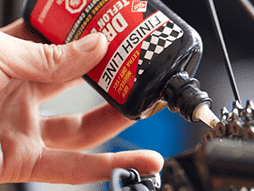
The watchword: lubrication! Don't neglect your chain, or you'll be neglecting your rides during the winter! Use a chain lubricant that's more viscous than in summer, so that it lasts longer than 24 hours in wet conditions, but don't forget to wipe off the excess with a cloth to prevent it from accumulating dirt as quickly as you've cleaned it. You can then top up with a more liquid lubricant as required.

Remember to lubricate your bike's other components (braking system, spoke nipples, derailleur, crankset, etc.) a few times during the winter to improve performance and reduce the risk of freezing.

×