




The challenges

See other sections of the guide

Resource list          Contact persons          Inspiring examples

Cycle paths / facilities

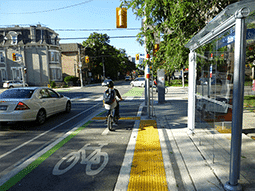
If there were to be one emblematic issue in the development of bicycle culture, it would surely be the creation and development of bike paths (or trails in the mountain biking world). That said, mobilization around the issues of a bike path can take many forms. The “possible issues” section lists some of them.

Possible issues

  • Advocate for bicycle facilities in your community 
  • Participate in a bike trail maintenance chore
  • A «shovel-in»: mobilize people in your neighborhood to clear a bike path that is not cleared by your municipality, to encourage winter biking and active mobility year-round.
  • Opening and improving public squares
  • Acquire land in the wild to develop bike trails for Sunday strolls, mountain biking and fat biking.
  • Design pedestrian streets, shared streets, bike lanes or complete streets, where all users can move around safely (this can include the number of lanes, the configuration of a median, the presence of sidewalks and bike lanes, the fact that it's a pedestrian street, etc.).
  • Install bike racks
  • Require, through zoning bylaws, bicycle racks on certain commercial properties
  • Adding a pumptrack section to a municipal park
  • Regulate heavy-vehicle traffic on public roads maintained by the municipality in order to protect infrastructure and preserve the tranquility of residential areas.
  • For safety reasons, restrict or prohibit the circulation of vehicles or certain categories of vehicles on a road by means of appropriate signage.

Key contacts

  • Transport companies
  • Cities and municipalities
  • City Councils
  • Elected-e-s responsible
  • Regional County Municipalities (RCMs)
  • Active Mobility Committee

Laws, policies and regulations

Do you feel that your municipality does not address, or does not sufficiently address, a road safety issue? Is there a lack of awareness in your community about the reality of cycling? Or that your elected officials could implement programs to encourage people to get around by bike? Then it's time to delve into the world of regulations and procedures: a world that may sometimes seem nebulous and meticulous, but nevertheless holds the potential to advance cycling on a grand scale.

Possible issues

  • Report a safety issue to your municipality
  • Add / adjust a modification to the Highway Safety Code
  • Demand mileage allowances and financial incentives for active transportation from their MLAs
  • Encourage public transit companies to improve connections between modes of transportation
  • Calling on elected representatives to encourage winter cycling
  • Raise awareness among political decision-makers of the benefits of investing in cycling in all its forms (mountain bikes, fatbikes, road bikes, utility bikes).
  • Offer a subsidy for the purchase of electric bikes

Key contacts

  • Cities and municipalities
  • Ministry of Transport (MTQ)
  • City Councils
  • Elected-e-s responsible
  • Active Mobility Committee

Supporting / starting a civic association

Want to get involved in your community, but don't have any citizen groups already formed? Start your own! You don't have to start an NPO for your group to have influence. Many citizens' associations that promote active transportation have a rather organic structure, and are skilful at advancing a number of interesting issues with their elected representatives.

5 steps to starting a civic association 

1 - The starting point of your initiative: recruitment!

  • A committee or citizens' association where you're alone around the table is less interesting, less relevant and less productive. That's why it's so important to surround yourself with the right people. You can rally friends, acquaintances and colleagues who are interested in active transportation issues.
  • Start a Facebook page to bring together potential allies, enhance your initial team, diversify your membership, add points of view to your reflections, energize your exchanges or reflect the diversity of users in your neighborhood. The Facebook page also becomes an ideal tool for promoting your ideas and raising awareness of active transportation issues in your community. Ultimately, it could become an interesting platform for influencing your public decision-makers. It's all the more relevant to accompany this Facebook page with Twitter and Instagram accounts.
  • Put out a call to all and hold an initial meeting to get to know potential committee members. Don't hesitate to reach out to natural allies, whether they're cycling or walking clubs, environmental groups, social networking groups in your neighborhood (or municipality), and so on.


2 - Structure your approach, a step that saves many others

Start the next steps by discussing the reasons for your group's existence, and explore your common goals together.

  • Identify your municipality's/region's strengths, weaknesses, opportunities and threats. Basically, identify potential allies and draw up an inventory of the resources (human, technical, financial, natural, etc.) at your disposal. The platform PourRallier will help you get started.
  • You now have a good idea of your common objectives, and a better picture of your territory. To avoid spreading your energies too thinly (there's so much to do!), it's time to prioritize your demands and actions. Draw up a calendar of actions to be taken over the course of a year (events to be organized, attendance at municipal council meetings or public consultations, noting important dates).
  • Finally, through these steps, you'll also have to decide collectively how your group will operate (monthly meeting, task distribution, prioritized communication method). A little administrative poutine is always a good thing! Most citizen associations meet once a month, some 4 times a year. In the meantime, they use social networks to coordinate their activities and demands. Adapt your operations to the needs of your group!


3 - Make yourself known!

  • Meet potential partners and allies. Get to know your public decision-makers and introduce your committee to your local elected officials by e-mail. It's the first step to making yourself known in your community.
  • Now seems to be an increasingly opportune time to ask questions about bicycle development at city council. It's a good way not only to give credibility to your actions, but also to make yourself better known to elected officials and citizens alike...
  • If you're starting to build a relationship with your elected officials, don't hesitate to make them aware of the Mouvement VÉLOSYMPATHIQUE (MVS). Participating communities have the opportunity to receive a wealth of recommendations, as well as support from Vélo Québec in improving local cycling culture. The MVS also encourages communities to set up a bike-active transportation committee to ensure collaboration between citizens, administration and elected officials. An interesting reminder, don't you think?
  • Organize a community event to bring more people together. Be creative-any proactive way you can! We've created a bank of Bike Month activities to inspire you. We have online resources, and’a guide to planning your business. Otherwise, citizens' associations have also developed interesting local initiatives, and they'll be happy to tell you about them.

Examples of potential events include:

  • A local bike-buying campaign to encourage local businesses and promote active transportation. (Verdun Association for Active Mobility) 
  • A fall bike light distribution and lighting awareness workshop in collaboration with the local police department. (Association pour la mobilité active de Ville-Marie, Association des piétons et cyclistes du Plateau-Mont-Royal, Westmount walking and biking association and others).
  • A winter ride - Winter Bike to work day“
  • A festive day - Fête du vélo (Sherbrooke)

And more! 


4 - Regulations and policies to promote active transportation 

Quebec's cities and municipalities have the power to dictate certain regulations or policies on their territory to promote active transportation. It's a good practice to tell your elected officials about the good things you're doing in this area. A little positive influence is always a winner! Here are a few examples of by-laws and policies:

  • Policies or plans in favor of cyclistsA community defines its objectives in favor of cyclists through a policy outlining its main orientations and a plan detailing the main actions to be taken. An essential tool! 
  • Complete streets policyThe policy: Municipalities sometimes have a tendency to redo arterial roads in an identical fashion during roadworks. With this policy, we're giving a clear direction for redesigning streets to be safe, practical and pleasant for all users, whatever their mode of transport, physical condition or age.
  • Vision Zero policyIt's a strategy based on the principle that no one should be killed or seriously injured using the road transport system. 
  • Urban planning regulations in favor of bicycle parking: In order to systematically provide bicycle parking spaces, we need to adopt this type of bylaw.
  • Construction site safety regulations for vulnerable usersThe purpose of this bylaw is to require a safety plan prior to obtaining a contract or permit for all road infrastructure and real estate construction sites. Basically, it often happens that when a bike lane or sidewalk is blocked for construction work, no detour is planned. This bylaw aims to change that.
  • Bicycle counting programIt's important to have the necessary data to properly assess the need for bicycle facilities, justify investments in cycling infrastructure and have a representative picture of the use of the cycling network. What is your municipality doing to collect this data?

Other regulations are also possible to ensure a ceiling on car parking spaces (in auto-solo mode) or to guarantee electric bike recharging points.


5 - Lists of groups involved in the democratization of utilitarian cycling or active transportation in Quebec :

There are many discussion groups, citizens' associations and committees of all kinds across the province. These initiatives are all different, and well worth getting to know!

Some start-up groups have nevertheless concluded that it is preferable to incorporate as an NPO, in order to receive various subsidies. This is sometimes the case in mountain biking, for example. Many Quebec municipalities prefer to work with more «official» groups before funding trail building and mountain bike development. Espace OBNL has developed a wide range of resources to guide you in this direction.

For an example of a citizens' association that was able to mobilize and come to the defense of one of the most important bike paths in their community, see the example of the Club Cycliste les 3 Sommets and Coalition of West Island Cycling Clubs.

Whether as an NPO or a more organic citizens' association, starting the process can seem daunting. But fear not! It's a step-by-step process. Don't hesitate to contact our community liaison officer for this purpose. Our agent will be happy to guide and support you in your project.

Bike patrol

It's possible to get involved in a bike patrol organization. These are formed to accompany cyclists on the trails of a given region and intervene when needed (minor repairs, first aid, directions and advice). Sometimes, these patrols lend a hand at cycling events or school outings. In short, it's a great way to offer a reassuring presence on your local cycling network, and to socialize with other cycling enthusiasts!

Here are some examples of patrols in Gatineau and Victoriaville.

Key contacts

  • Cycling clubs
  • Cyclist / Pedestrian / Active Mobility Association
  • Community bike workshop
  • Bike patrol

Cycling club

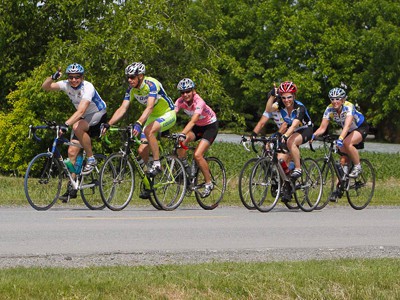
Cycling clubs bring together citizens with a passion for cycling. Some clubs have more than a hundred members: they therefore have the potential to become interesting levers for advancing the cause of cycling, as well as raising the awareness of elected representatives to the quality of infrastructure and safety issues in municipalities.

Possible issues

  • Develop a neighbor-to-neighbor vehicle-sharing program (car, cargo bike or electric bike)
  • Setting up bike sharing in a community
  • Join a cycling club
  • Starting a cycling club

List of cycling clubs across Quebec

You can consult our list of Quebec cycling clubs.

A list managed by Fédération québécoise des sports cyclistes is also available.

Get involved in a mountain bike or fatbike club or association

The development and popularity of mountain biking and fat biking in Quebec would not be the same without the involvement of dedicated volunteers in many regions of the province.

Whether it's developing and maintaining trails adapted to the practice of these activities, calling on local elected officials to finance and improve mountain biking and fatbike projects, or to introduce the public to the sport, hundreds of hours are invested by these clubs and associations to advance mountain biking and fatbike.

Want to be part of the movement and put your shoulder to the wheel? Contact a club or association in your part of the province

List of mountain bike clubs in Quebec

There is also a outdoor volunteering in Québec to bring together the various initiatives being organized across the province.

Key contacts

  • Community bike workshop
  • Cycling association / Pedestrians / Active mobility
  • Post-secondary educational institutions (CEGEPs and universities)
  • Local bike stores
  • Social networks (local cycling Facebook groups, etc.)
×