










Lately, there's been a lot of talk about mobility issues in Quebec City, often in a polarizing context: construction of new road links, quarrels over the tramway project, questions about the viability of a high-speed train linking the National Capital to Montreal... While these subjects and the immobility that surrounds them monopolize conversations, there is one area where progress is dazzling: bicycle culture!
Under the impetus of Mayor Bruno Marchand and his team, cycling is developing at top speed in Quebec City. Whether in terms of facilities, services or popularity, active mobility has the wind in its sails, and the good news is multiplying.
Powered by Vision of active mobility 2023-2027 introduced by the mayor, cycling, walking and intermodality are playing an increasingly important role in Quebec City's public spaces, and this desire to prioritize active travel is beginning to bear fruit. The proof? The àVélo bike-sharing service, inaugurated in 2021, exceeded all expectations for the year 2023, reaching 350,000 trips last August, This was the initial target for the entire season, which ends at the end of October. In view of this impressive rise in popularity, the service will continue to expand in 2024, with the addition of a further 520 bikes, taking the fleet to 1,300. The network will also be expanded, from 74 to 115 stations.
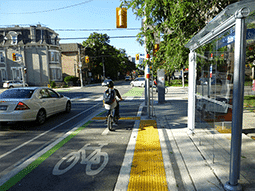
If a service like àVélo is seeing its ridership explode in this way, it's also because Quebec City has decided to invest in its cycling network. The opening of the first Vélo cité corridor, on chemin Sainte-Foy, is a clear sign of the city's intentions. This protected lanes project, similar to Montreal's REV, is changing the face of direct and efficient utilitarian travel in the National Capital. By offering protected one-way bicycle paths, Quebec City is positioning cycling as an attractive and safe mode of transport.
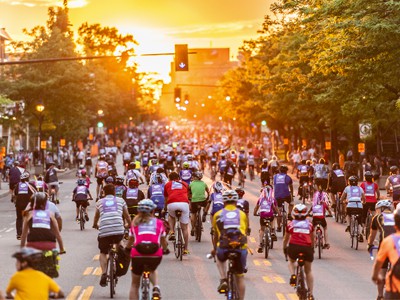
When such infrastructure is built, ridership follows. For example, during the last Quebec City Summer Festival (FEQ), a temporary bike path was set up on one lane of Grande Allée during the festivities, in response to the strike by Réseau de transport de la Capitale (RTC) bus drivers, to facilitate access to the festival. The result? Overflowing bike parking lots on the outskirts of the FEQ site, festival-goers thrilled to be able to reach the festival by bike, and a convincing example that many Quebec City residents are just waiting for the right infrastructure to get them rolling across the city.
With a host of large-scale active mobility projects, including the finalization of the Sainte-Foy corridor, which will link Laval University to Old Quebec in the next few years, and the development of other Vélo cité corridors, we can look forward to Quebec City's cycling future with great enthusiasm, since the municipality is proposing concrete, substantial projects inspired by the world's best practices. Finally, more people will be able to choose cycling as a means of getting around or having fun in Quebec City!
Jean-François Rheault
President and CEO, Vélo Québec