












Every 5 years since 1995, Vélo Québec has conducted a major study - The state of cycling in Quebec - the organization's flagship publication. At the time, the Labrecque-Pronovost tandem had launched this project in the wake of the Quebec government's first Bicycle Policy. The aim was to draw up a portrait of cycling and establish a benchmark against which to measure the policy's progress. Twenty-five years later, L'état du vélo au Québec is still an essential reference for decision-makers, researchers and activists.
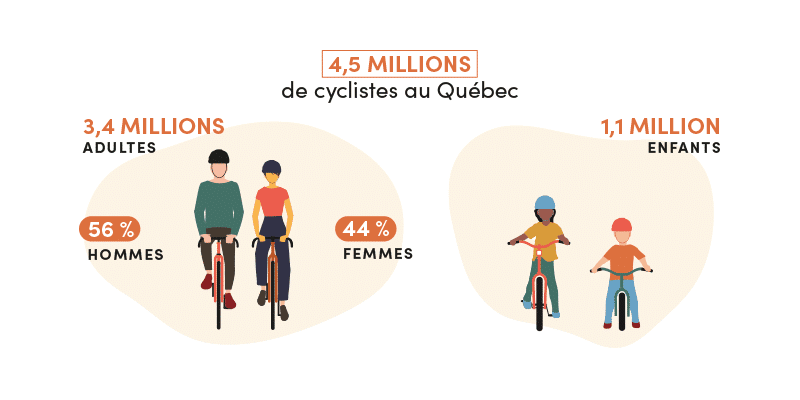
Unsurprisingly, the picture for 2020 is atypical. Due to telecommuting and confinement, the number of trips - all modes combined - has declined. At the same time, the past year has also seen a significant increase in new enthusiasts interested in the call of nature and the need to get moving. All in all, cycling has gained ground and the number of cyclists in Quebec is on the rise. Today, 4.5 million Quebecers cycle, including 2.7 million on a weekly basis. In this report, here are the elements that particularly caught my attention:
- Since 1995, the number of cyclists over 55 has almost doubled from 23 % to 42 %, which is excellent news. Regardless of age, it's interesting to note that cycling plays an essential role in maintaining a healthy, active lifestyle, and that more and more people are adopting it as part of their activities. And with the rise of the electric-assist bicycle, the future looks bright, as it will extend the cycling careers of people of all ages.
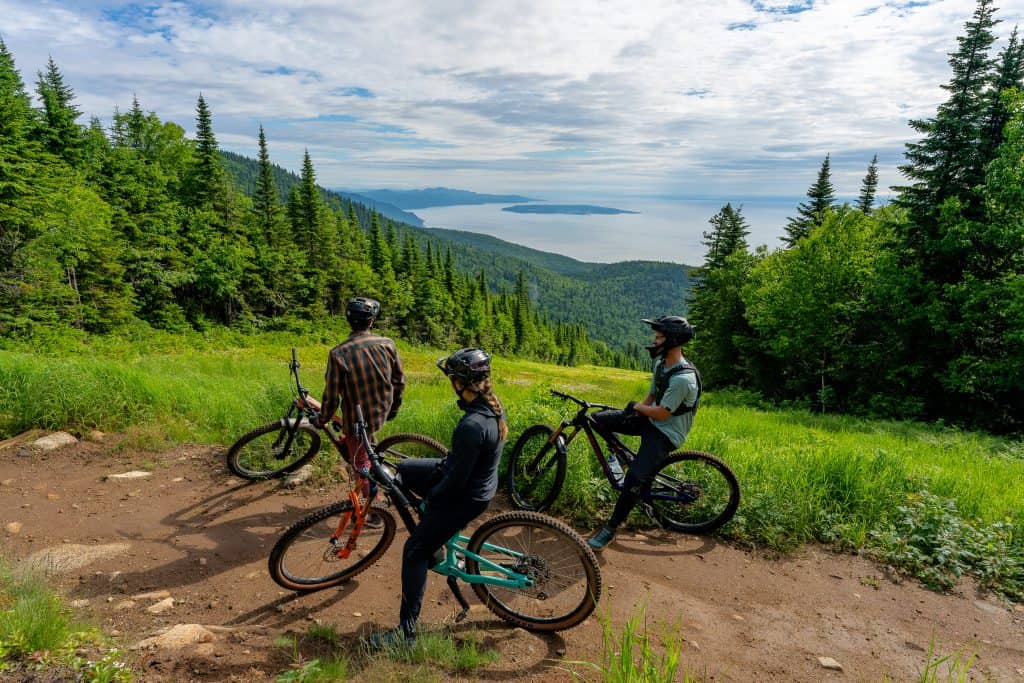
- More and more people are choosing to cycle away from asphalt. There are 1.1 million cyclists on gravel roads, forest roads and trails specifically designed for mountain biking. In fact, the study indicates that some 660,000 Quebecers choose mountain biking as a leisure activity, with some 2,600 km of trails in Quebec, including 575 km in the Capitale-Nationale region alone. The growth of this practice and the latest figures confirm that mountain biking also has the wind in its sails, and that we'll need to do more to support its expansion in the coming years.
- You can't attract flies with vinegar. Today, 61 % of bicycle trips are made on the cycling network. Quebec has some 10,600 km of bike paths. This network certainly contributes to safe cycling. Collisions have been falling steadily since 2015, with an overall decrease of 34 %. The appetite for bike lanes is great. Seven out of ten people would like to see the network extended in their municipality. It's worth noting that 62% of Quebecers live in a city with a sustainable mobility plan, including a bicycle component. In the run-up to the next municipal elections, there are a number of figures worth considering when drawing up candidates' platforms.
More than ever, the collection of reliable data is essential to building public policies that promote a better quality of life for all. Unfortunately, the Canadian census and regional origin-destination surveys are ill-suited to measuring active modes of transport such as cycling and walking. The publication of the State of Cycling in Quebec every 5 years is a step in the right direction to demonstrate to public authorities the importance of the growth in bicycle use and the benefits of planning facilities to encourage its use, for the health of our societies.
Jean-François Rheault
president and chief executive officer