









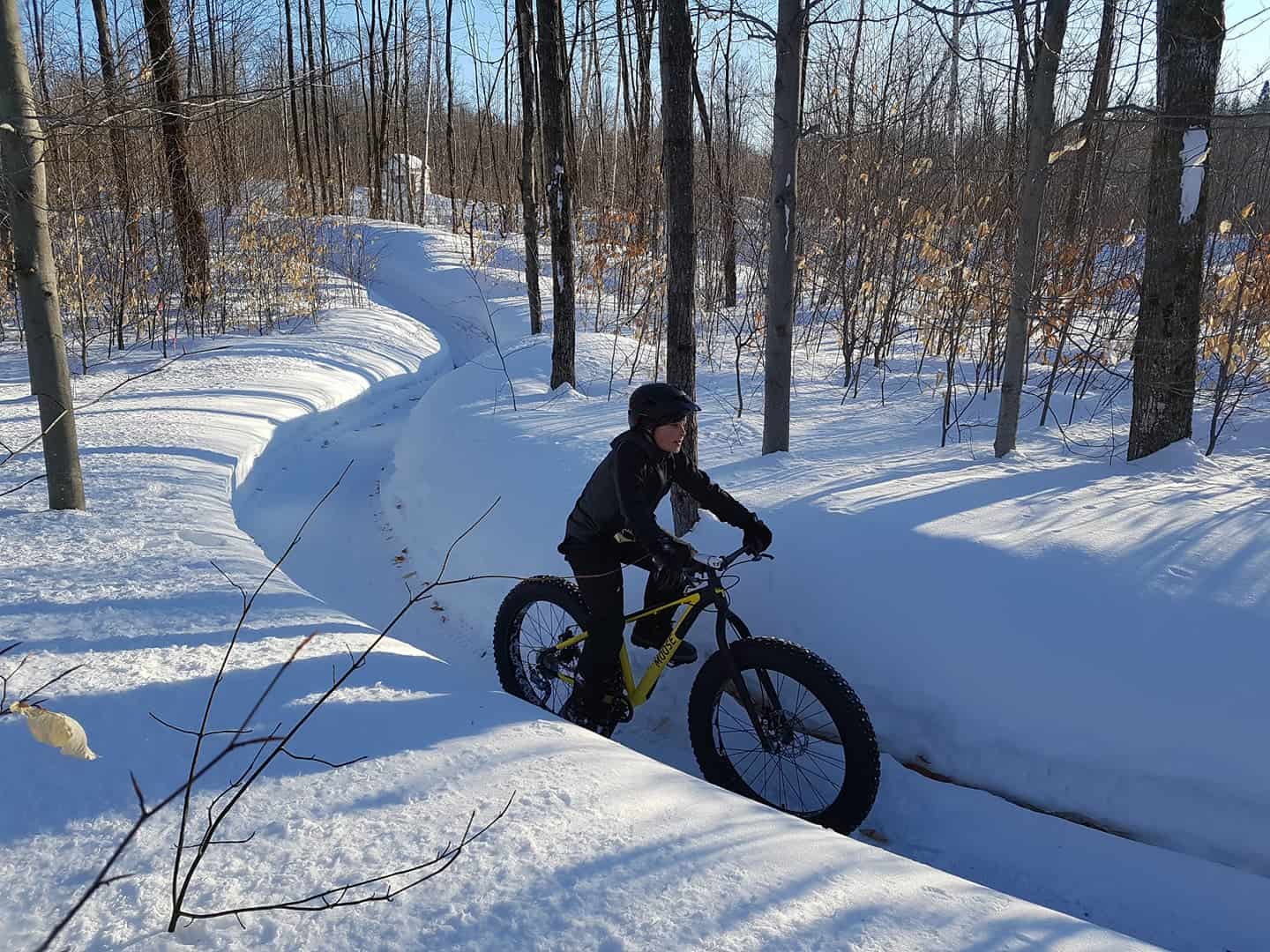
In winter, the trails used in fatbike are often the same as in summer, but access may also be granted to certain snowshoeing or even cross-country skiing trails. As this is a relatively new discipline, other users are not yet accustomed to your presence. It's up to you to fit in with the others!
Fatbike Code of Conduct
A few basic principles on the best practices to adopt when riding trails in winter, both in terms of facilities and cohabitation with other users.
1. Prepare your outing
Visit the mountain bike and fatbike trail directory to choose a destination and the sites of the networks you plan to visit, to check whether conditions are suitable (freshly fallen snow is detrimental to the experience; it needs to be compacted). You need to know your equipment well, and not overestimate your abilities. Check the weather forecast for the area where you plan to hike, and prepare accordingly. Carry a repair kit in case of breakage so you can get back to the starting point, and clothing options to protect you from the cold, especially during stops.
2. Don't ride on closed trails or where prohibited.
Whether to protect the environment or to avoid the risk of injury, a trail is closed for good reason. Riding on closed trails can be forbidden, dangerous or cause incidents that give a bad reputation to fatbike. But above all, never drive in classic cross-country ski tracks.
3. Don't drive on soft snow
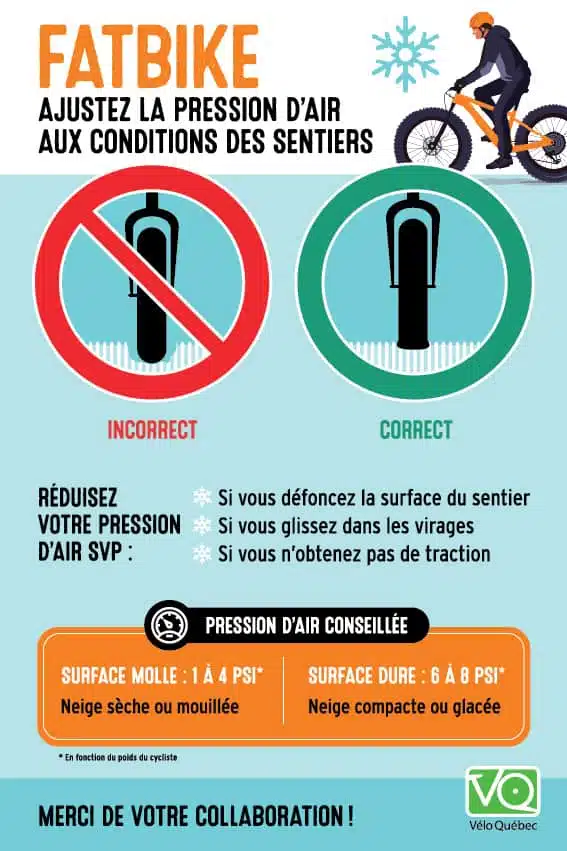
Make sure that the trail is passable and suitable for hiking. fatbike. Don't ride on a trail where the snow is too soft or very wet or soggy, as this will leave tracks that will make it difficult for future users to ride, especially when the snow has hardened with the return of cold weather. If you can't drive in a straight line, if your tires sink more than 2.5 cm (1 in.) or if you have to climb down a slight incline, it's time to go home!
4. Respect wildlife and the environment
Pay attention to the trail and its surroundings: drive in such a way as not to damage the trail surface, avoiding skidding and unnecessary wheel locking (Ride, don't slide). Don't litter or scare animals. If you repair your bike after a breakdown, always return the defective parts to the nearest garbage can.
5. Always drive on the path
Don't intentionally ride off-trail. Avoid taking a shortcut on an unmarked trail, as you could damage the ecosystem. (Keep singletrack single).
6. Drive slowly on busy paths
Ride slowly when trails are busy, so as not to endanger the safety of other users as well as your own. On beginner trails, respect the learning curve of the cyclists you pass, so that they too can have a good experience.
7. Drive carefully and remain courteous at all times.
When approaching other users on the trail, slow down and politely announce your approach. Be prepared to stop if necessary.
8. Leave room for other trail users
Fans of fatbike, The same trails can sometimes be used by hikers, snowshoers and cross-country skiers. As a cyclist, you must give way to hikers and skiers, respecting the principle of vulnerability. When you cross paths with other users, reduce your speed. They, too, are defenders of the forest and are looking for a positive experience. It's probably thanks to them that you have trails to ride on!
9. Do not perform any unauthorized work on a trail.
Make sure you have permission from landowners or land managers before taking any action. Unauthorized trail development can cause damage to the environment, injury to other users or even result in trail closure. If you wish to create a new section of trail or add an obstacle, suggest it to the person in charge of development or maintenance. If there's no reason for the absence of a trail in a given sector, any new improvement proposal will certainly be welcomed!
10. Get involved!
If you are concerned about trail access and would like to help the mountain biking community, please contact your local cycling or outdoor club. If you don't know who to contact, contact Vélo Québec.
These signs are taken from the Mountain Bike and Fatbike Signage Guide. Download the guide and the compressed file for a high-resolution version to install on your trails.


Reference tools
Safety on the ice
In winter, the temptation to ride on frozen rivers is strong. Take the time to inform yourself before venturing out.
Canadian Cross-Rouge
All rights reserved 2026
Vélo Québec
Conception de sites web : PAR Design, Agence Web