









During a trip to the Netherlands, I wondered what prompted the national train company to make bicycles available to passengers in the country's stations. After all, who doesn't own a bicycle in the Netherlands? A planning manager explained to me that to shave five minutes off a customer's train journey, he has to invest billions in rail infrastructure and equipment. On the other hand, by combining cycling with public transport, a customer can save 5 to 10 minutes per journey. And for a fraction of the investment!
The transport cocktail: a concept to be systematically integrated
The concept of transport cocktail is nothing new. 25 years ago, Michel Labrecque, then CEO of Vélo Québec, demonstrated the importance of combining public and active transportation, an efficient and economical approach. Since then, efforts have been made to encourage citizens to choose the right means of transport, at the right time. Applications such as Transit or Chrono are now available to help us plan our journeys more effectively.
In recent years, we've seen an acceleration in the number of major public transport projects, including the tramway in Quebec City and the Réseau express métropolitain (REM) in Montreal. When integrating these major investments, we feel it's essential to take into account access to these means of transport on foot or by bike, and to avoid at all costs making the solo car the only way to get to the stations.
The integration of active transportation must become a reflex in the development of public transit projects. We have to admit that this is still not the case today, and that the full potential of the transportation cocktail is far from being realized.
How can we promote the transport cocktail?
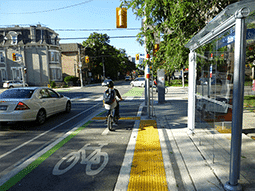
First and foremost, we need to facilitate access to stations for pedestrians and cyclists. Bicycles are still public transport's best ally: they can quickly cover the kilometers between stations and desired destinations.
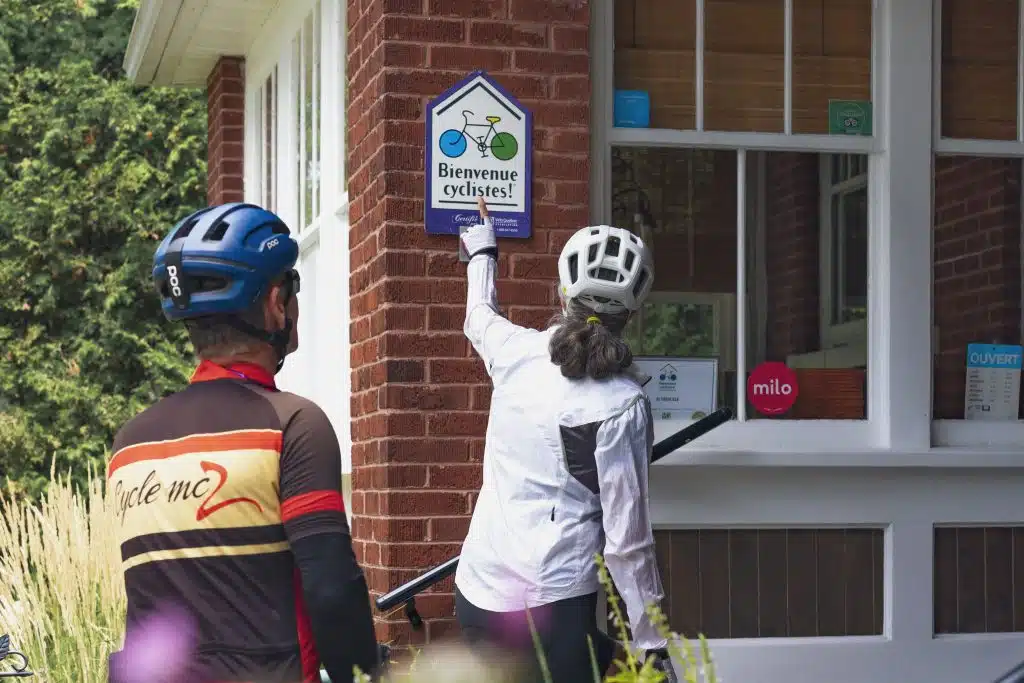
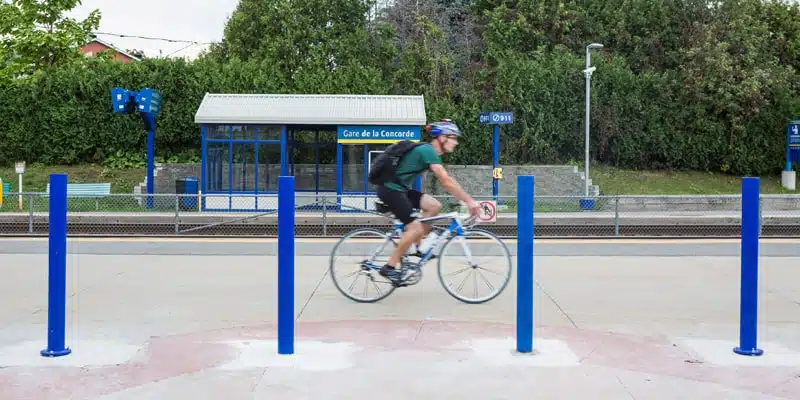
Another important element is the installation of bicycle parking facilities. Well-located, equipped, sheltered and easily identifiable thanks to good signage, they send out the message that it's efficient and pleasant to cycle to the station. What's more, the cost of providing bicycle parking is much lower than that of an outdoor car parking space, which ranges from 2,000 $ to 12,000 $.
Inspiring examples
The construction of a rail transit system requires significant development, and provides an excellent opportunity to create multi-purpose paths for walking and cycling. This is common practice elsewhere in Canada (e.g. in Vancouver and Ottawa on the Millennium and O-train lines) and in the United States. These trails provide access to stations, complement public transit and attract new users of sustainable mobility.
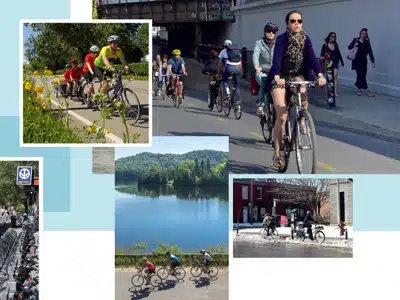
It's by thinking about cycling, and ensuring that active travel is always better integrated, that we'll be able to design the best public transport projects. Walking and cycling to and from public transport offer numerous health, environmental and economic benefits. They make it possible to integrate physical activity into daily travel, with zero emissions. What's more, passengers who arrive on foot or by bike generate significant savings compared to those who use a car, due to the costs associated with developing, managing and maintaining parking lots and landings.
In this context, do we have the means to do without cycling in the development of our structuring public transit projects?
Jean-François Rheault
president and chief executive officer