




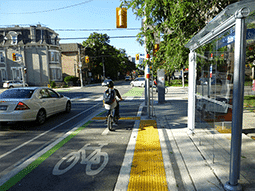


The month of September was full of inconsistencies: some shopkeepers pointed to the new bike lanes as an obstacle to business, some Montrealers saw bike lane construction everywhere, even though most of it had nothing to do with cycling, and «the damned cyclists who are given too much space» became the scapegoat for the «construction, traffic, congestion» amalgam. To tell you how distressing I found this social debate is an understatement. I felt as if I'd gone back 30 years, when progress in cycling was hard won.
And the facts?
The space
In Montreal, 78% of street space is dedicated to cars (parking and traffic), 20% to pedestrians and 1.5% to bicycles (source: Polytechnique Montréal).
Congestion: a question of the number of cars
In 20 years, 1.75 million cars have been added to Quebec's roads and cities (Statistics Canada). With half of Quebec's population living in the greater metropolitan area, imagine the pressure on the agglomeration! The streets of some cities, including Montreal, have reached a level of saturation where the slightest obstacle on the road turns into congestion, long before the creation of bicycle lanes in 2020.
The city of tomorrow
The resilient, efficient city of the 2020s and 30s will offer its residents, workers and tourists a wide range of travel options to reduce the pressure of solo driving, with an average of 1.2 people per car in Greater Montreal. If we combine the costs of congestion with our responsibility to act to limit global warming, it's clear that the future of our cities lies in more public transport and bicycle lanes, and fewer cars. It's not ideological, it's mathematical, it doesn't fit anymore!
By reducing the number of cars in the city through other mobility options, their number will decrease, leaving more room for those who don't have the choice of using a motorized vehicle to get around (e.g. delivery drivers, workers in certain sectors of employment, the elderly or those with restricted mobility, etc.).
Efficient, sustainable mobility in cities requires a transportation ecosystem that facilitates travel by foot, bicycle and public transit - in short, a win-win solution for the whole community, including those who must travel by car.
Suzanne Lareau
president and general manager