









2001 municipal elections in Montreal
With the «One Island, One City» project, Montreal has reached a crossroads in its history. The new municipal administration has more than one challenge to meet, particularly in terms of transportation. Gérald Tremblay's team has just taken office, and must now turn its commitments into reality. In an interview with Vélo Mag magazine, Mr. Tremblay was clearly sympathetic to the idea of greater bicycle use in the city. In order to turn this sympathy into an unwavering commitment from Mr. Tremblay and his team, Vélo Québec submits the following proposals for consideration.
Putting an end to stationary bikes
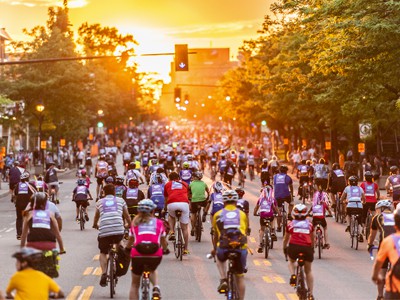
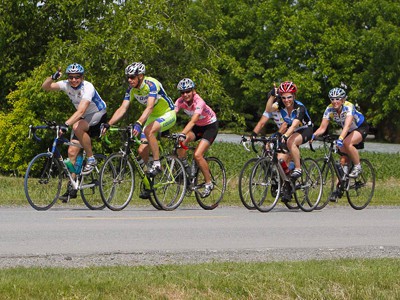
Cycling is extremely popular in Montreal. Nearly 9 out of 10 residents have ridden a bicycle in their lives. More than half a million Montrealers cycle at least once a week.
Our population's love affair with the bicycle and what it symbolizes in terms of quality of life now transcends borders. In fact, interesting cities, including Montreal, often have in common that they are tempting to walk or pedal. Montreal has more bicycle paths than many other places in the world. However, cities such as London and Paris, once thought to be hopelessly hostile to cycling, have decided to speed up the pace. Our lead will not last long if nothing is done to breathe new life into cycling facilities that date from another era.
In fact, over 90 % of Montreal's bicycle lanes were built between 1975 and 1985. The Drapeau-Lamarre administration, whose love affair with cycling was a well-kept secret, was, along with the Communauté urbaine de Montréal and the Ministère des Transports du Québec, the true architect of Montreal by bike.
Since then, the public has elected cycling mayors. These mayors have led administrations that have taken valuable steps to promote cycling, and each has produced its own draft policy. Each time, these projects have received the unanimous support of the cycling community.
And yet, despite strong feelings in favor of cyclists and cycling, none of these excellent cycling policies has gone beyond the project stage. Montreal's cycling network has been stationary for over 15 years.
Behind the scenes, we've often been told that the best initiatives suffer the axe of the motoring prejudices of traffic engineers, or are stifled by the inertia and lack of resources given to civil servants.
We've always accepted this kind of explanation, telling ourselves that Rome wasn't built in two days. Now that the Montreal machine has been humming along for too long, Vélo Québec has come to say that a change of gear is needed.
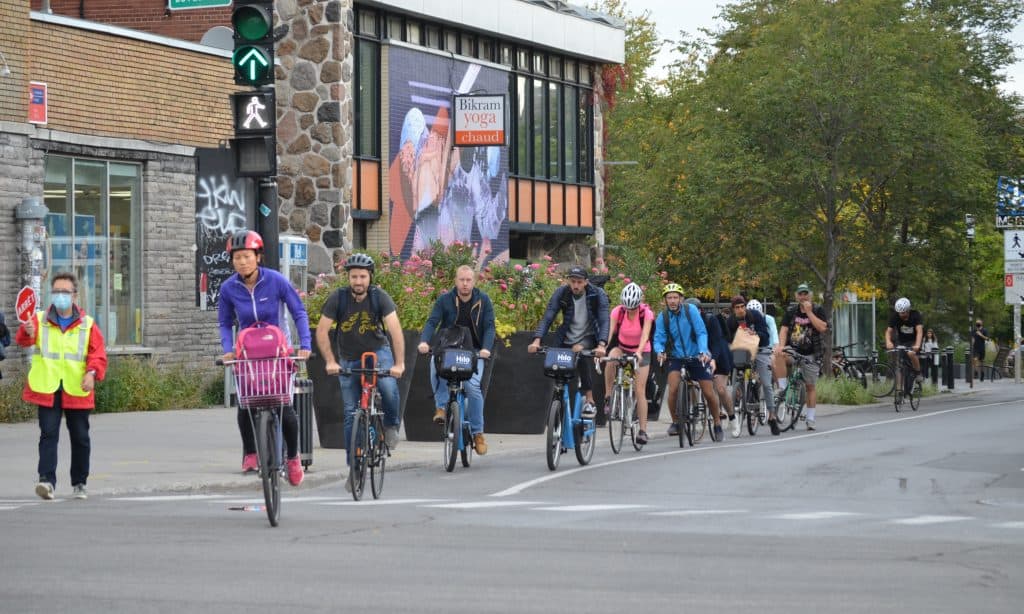
While the cycling network has made little progress, bicycle use has increased and even diversified. In addition to developing into the popular recreational vehicle that it is today, the bicycle has become a means of transport for more than 140,000 residents of the island of Montreal. In a central district like the Plateau Mont-Royal, some 10 % of trips are made by bike. That's a hell of a lot more, by the way, than can be observed in many European cities, where the average share of bicycle trips is around 5 %.
Cycling has gone from being a phenomenon to a part of everyday life in our city. Cyclists take their bikes out not only for the weekend ride or stroll, but also to work, to run errands, to visit friends or simply to enjoy a drink on a terrace. To meet demand, as the saying goes, the cycling network needs to be designed with these new, multiple uses in mind.
But since it hasn't increased, Montreal's network is clogged with cyclists, as well as a host of other friendly users: skaters, skateboarders, strollers, runners, wheelchairs, not to mention pedestrians who seem to find it more comfortable to walk side by side than on some sidewalks.
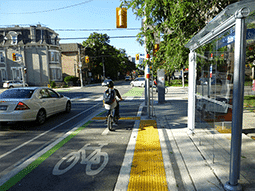
Having been designed for another era, Montreal's cycling network no longer corresponds to the needs of today's cyclists. We say we need to plan a new generation of bikeways. We need to move to a new category of paths that take us from one point to another by the best possible route, rather than detouring us through the city's many small streets and alleys.