










Major boulevards, freeways and marshalling yards often represent urban breaks that are difficult or even impossible to cross on foot or by bike. When preparing a major rehabilitation project for this type of infrastructure, why not take the opportunity to repair the mistakes of the past?
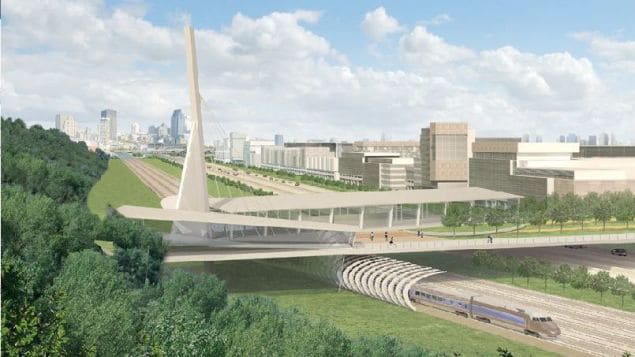
This was the plan for the rehabilitation of the Turcot interchange in Montreal, the largest transportation infrastructure project currently being undertaken by the Quebec government. The park slab, a sort of green viaduct, was originally planned to re-establish a safe and pleasant pedestrian and bicycle link between the neighborhoods on either side of the highway right-of-way: the Côte-des-Neiges-Notre-Dame-de Grâce borough, north of the Saint-Jacques cliff, and the Ville-Émard district in the Sud-Ouest borough. The park slab is no longer part of the plans.
This story takes place in Montreal, but could very well unfold elsewhere, where a bridge or expressway is being rebuilt or reconfigured. We may or may not agree with these major projects, but the idea here is that it's essential to systematically take advantage of any roadworks to see how we can re-establish the lost connections, on foot and by bike, between neighborhoods, boroughs and neighboring municipalities.
The cost of refurbishing Turcot and its approaches exceeds $4 billion. At the time of the initial estimates, the construction of the park slab was valued at around 40 M$, or 1 % of the total budget. When you consider that, in 2017, Quebec's five largest cities alone will invest more than 30 M$ in bicycle infrastructure, not counting some unusual major works[1], reintegrating the parkade into the Turcot project is a very reasonable requirement.
Suzanne Lareau
President and General Manager
[1] Vélo Québec. From Vélo Québec's commentary as part of Quebec's pre-budget consultations, 2017.