










Mountain bike trail design: guide and practical tools

A well-developed trail is a sustainable trail - physically, environmentally, financially and socially. To ensure the longevity and quality of mountain bike networks, good trail design practices are essential. A well-designed trail that respects the natural environment and is adapted to users' needs not only prevents erosion and ecological impacts, but also reduces maintenance costs, ensures cyclists' safety and promotes the social acceptability of projects.

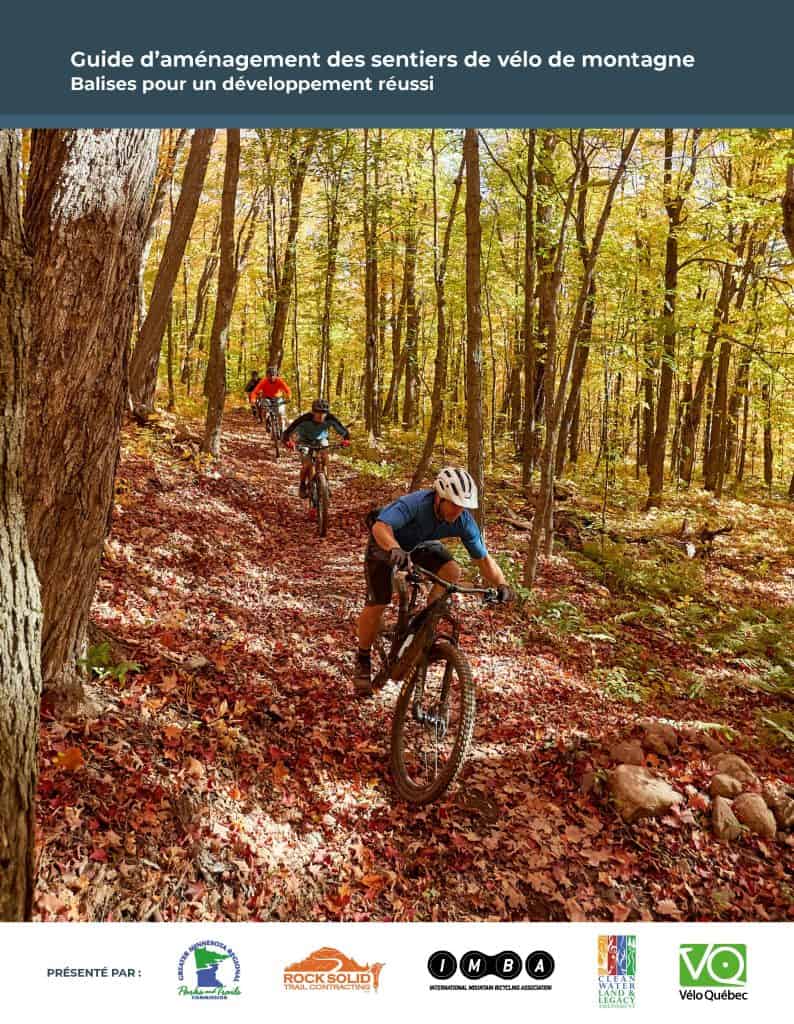
On this page, discover the Mountain Bike Trail Development Guide - a reference translated by Vélo Québec in collaboration with IMBA Canada - as well as a series of practical data sheets. These practical tools support you at every stage of trail planning, design and management, with a view to sustainable, responsible development.

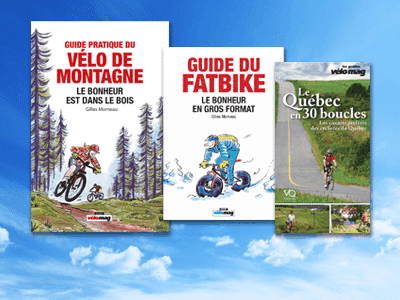
Le guide d'aménagement des sentiers de vélo de montagne (2024) is a French-language translation of the work by our colleagues at’International Mountain Bike Association (IMBA). It aims to describe the trail development process from start to finish, ensuring understanding and awareness of existing and recognized environmental and social best practices. 

This French-language edition was produced by Vélo Québec in collaboration with members of the Quebec mountain bike community and IMBA Canada. This document is made possible thanks to the financial participation of the Ministère de l'Éducation, as part of the Programme Sécurité Intégrité Québec (PSIQ). Consult it now!

This book complements the classification and signage published in 2023.
Complementary tools for safe, sustainable trail management


Following on from Mountain Bike Trail Development Guide, The technical data sheets enrich and enhance the structural elements already established. They provide targeted, in-depth information on essential aspects such as safety, risk management and trail management. Presented in the form of practical, accessible fact sheets, they are a complementary tool designed to support stakeholders in the planning, development and management of trails in a responsible and safe manner. The production of these fact sheets was made possible thanks to the financial participation of the Ministère de l'Éducation, as part of the Programme Sécurité Intégrité Québec (PSIQ).

Environmental sustainability of mountain bike trails


Developing a mountain bike trail also means protecting the natural environment. This fact sheet presents the ecological, regulatory and technical criteria essential to a sustainable approach. Preserve biodiversity, limit erosion and align your projects with ESG principles for a resilient and responsible network. 

Electrically-assisted mountain bikes (EABs)


Electric-assist mountain bikes are gaining in popularity in Quebec, among beginners and experienced riders alike. Offering greater accessibility to technical and remote trails, they make it possible to extend outings while reducing physical effort. However, its integration into trail networks requires careful management, particularly in terms of cohabitation, development and regulations. Find out more about the benefits, challenges and best practices for effectively managing the use of EVs in the mountains.

Mountain Bike Trail Closure Protocol


Temporary or permanent closure of mountain bike trails is essential to protect users and the environment. This protocol guides managers in risk assessment, informed decision-making and effective communication with cyclists. Find out how to apply best practices to maintain a network that is safe, sustainable and respected by all.

Inspection log and maintenance methodology


Regular maintenance of mountain bike trails requires a rigorous inspection log. Using digital tools and standardized data sheets, this method helps identify anomalies, prioritize interventions and increase infrastructure durability. Adopt proactive management to improve the safety and experience of trail users.

Mountain bike lexicon: understanding for better planning


A shared vocabulary is the key to clear communication between planners, managers and mountain bikers. This structured lexicon facilitates trail design, the transmission of best practices and the promotion of safety. An essential tool for the harmonious and professional development of the network.

Editable inspection sheet

×