











Montreal, Thursday, April 30, 2026 - Every five years since 1995, Vélo Québec has published L'état du vélo au Québec, a major study that identifies structuring trends and enlightening findings to guide decisions about the future of cycling in Quebec.
Today, we're delighted to present The State of Cycling in Quebec 2025.
This new edition highlights a number of key findings, the most important of which is the growing importance of cycling as a genuine mobility tool. Supported by public policies, facilities and initiatives facilitating its use on a daily basis, the bicycle is becoming an integral part of Quebecers' travel habits. In 2025, 4.54 million Quebecers rode their bikes, illustrating this trend within the population.
«The data in L'état du vélo au Québec 2025 clearly show that cycling is a credible and effective tool in the mobility kit of Quebecers. In addition to enabling people to get around and enjoy themselves, cycling helps improve the quality of life, health and vitality of our living environments. It also has a major impact on the local and regional economies,» says Jean-François Rheault, President and CEO of Vélo Québec.
Major trends in the 2025 edition
Bicycles as a mobility tool
The use of bicycles as a means of transport continues to grow. In 2025, 2.7 million people (adults and children) used their bikes as a means of utilitarian transport, a number that has more than tripled since 1995.
This recent growth is particularly visible in major urban centers such as Montreal and Quebec City, where the modal share of cycling has increased by more than 50 % over the past five years.
Beyond this growth, it's important to consider the profile of cyclists: 93 % have a driving license and 87 % own a car, illustrating that cycling is often a complement to the car.
That said, in major cities, the potential remains significant: up to 33 % of motorized trips could be made by bicycle, and up to 55 % with an electrically-assisted cargo bike.
Infrastructures that directly influence usage
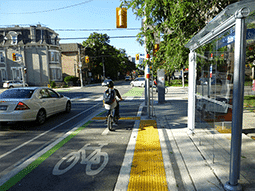
The development of cycling infrastructure plays a decisive role in the evolution of cycling practices. Today, Quebec has 11,550 km of bicycle lanes (x5 since 1995), including 4,900 km of infrastructure separated from motorized traffic (x3.5 since 1995).
Recent high-service networks, such as the Réseau Express Vélo (REV) in Montreal and the Corridors VivaCité (CVC) in Quebec City, are helping to reinforce the role of cycling as a utilitarian mode of transport.
«The data are unequivocal: infrastructure has a direct influence on usage. When we build safe, continuous and adapted networks, we see an increase in usage. Infrastructure is the most direct lever for influencing mobility,» points out Stéphane Blais, Director of Expertise and Research at Vélo Québec.
These facilities also play a key role for more risk-sensitive clienteles, such as women and children. However, this improvement in infrastructure is not yet fully reflected in riding habits.
Province-wide, cycling remains unequal (59 % men vs. 41 % women). Among young people, while cycling remains widespread (82 %), the frequency of use is declining, in line with a broader trend of declining physical activity among young people observed internationally.
Electrically-assisted bicycles on the rise
Electrically-assisted bicycles (EABs) are rapidly transforming cycling. As of 2025 :
● Nearly 1 in 3 bicycles sold is electric
● 900,000 people have used it
● 629,000 EVs are on the road in Quebec
By reducing the constraints associated with distance, terrain and effort, the VAE removes a number of obstacles to the practice of cycling and widens access to new clienteles.
A major economic and tourism driver
Cycling also makes a significant contribution to the Quebec economy.
Every year, cyclists spend $586 million on bicycles, related equipment and services.
In addition, the bicycle and accessory manufacturing industry in Quebec generates over $110 million annually, directly or indirectly supporting some 2,400 jobs.
Beyond these industrial and consumer spin-offs, cycling is also an important lever for economic development, particularly in the regions.
Cycling tourism alone generates $803 million in economic spin-offs, supports nearly 6,500 jobs and attracts some 320,000 tourists from outside Quebec every year.
Key levers for accelerating adoption
The results of the study clearly identify the main levers for increasing bicycle use in Quebec.
The development of safe, structured cycling networks remains the most direct way of removing the main obstacles to cycling, notably the feeling of insecurity.
This lever is all the more effective when combined with other measures, such as improving access to bicycles - especially electric-assist bikes and cargo bikes - implementing coherent public policies, and education and awareness-raising actions.
Together, these levers offer concrete potential for expanding and diversifying cycling throughout Quebec.
A rigorous approach to monitoring changes in practices
Produced by Vélo Québec every five years since 1995, L'état du vélo au Québec is the benchmark for data on cycling in the province.
The 2025 edition is based on a population survey of 4,500 respondents, as well as analyses carried out in collaboration with academic and institutional partners.
This continuity in data collection makes it possible to track trends over several decades and support public decisions on active mobility.
To consult L'état du vélo au Québec 2025 : www.velo.qc.ca/salle-de-presse/etat-du-velo/letat-du-velo-au-quebec-en-2025/
More data to come
More detailed analyses will be published progressively throughout 2026 on the Bicycle Observatory, which brings together all the scientific data and knowledge on cycling in Quebec and its individual and societal benefits: observatoire.velo.qc.ca
The 2025 data for the major participating cities in Quebec - Montreal, Quebec City, Laval, Gatineau, Sherbrooke, Lévis, Saguenay and Trois-Rivières - will be available this fall.
The State of Cycling in Quebec 2025 was made possible thanks to the financial support of the Quebec government and the municipalities involved.
- 30 -
About Vélo Québec
Vélo Québec's mission is to develop a cycling culture for everyone, everywhere in Quebec. A national recreational organization recognized by the Quebec government, Vélo Québec promotes the use of bicycles for recreation, tourism and active transportation, in order to improve the health and well-being of the population, contribute to the economic vitality of our regions and meet our environmental challenges.
With its unique and original expertise, Vélo Québec is a benchmark in the planning, development and management of cycling infrastructures. Its know-how is put to good use in the municipal sector and among players involved in the transition to sustainable mobility.
In addition to its events, trips, publications and technical expertise, Vélo Québec coordinates education and mobilization programs, and oversees the deployment and standardization of Route verte.
Vélo Québec is also a key interlocutor with various levels of government to identify needs and solutions for improving and increasing bicycle use.
Information
Vélo Québec
Public relations and communications
[email protected]
514 942-0743