









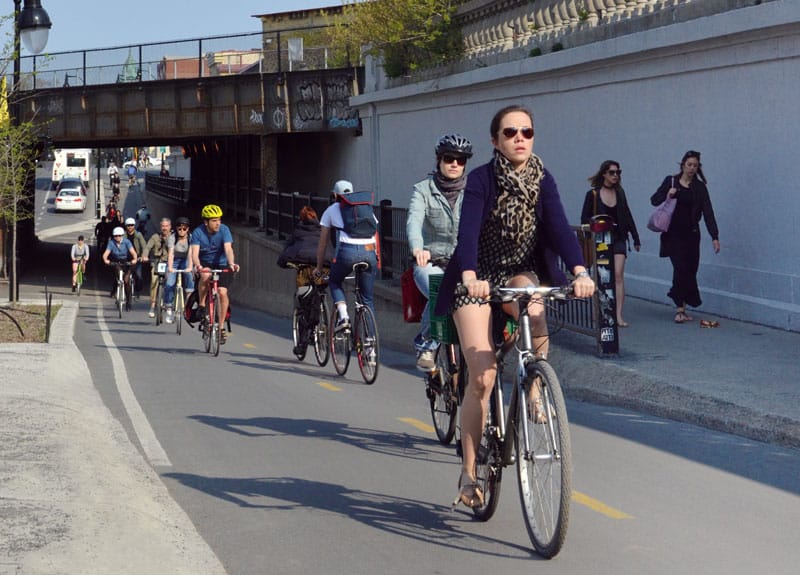
Today, thousands of Quebecers use bicycles every day as their main means of getting to work and school, for errands and outings. This reality is the result of many years of efforts to have the bicycle recognized as a genuine means of transportation. So, after promoting cycling as a recreational and touring vehicle, after fighting for bike lanes and access to the metro, Vélo Québec developed projects in the early 1990s and more intensively in the early 2000s to promote the use of bicycles for transportation purposes.
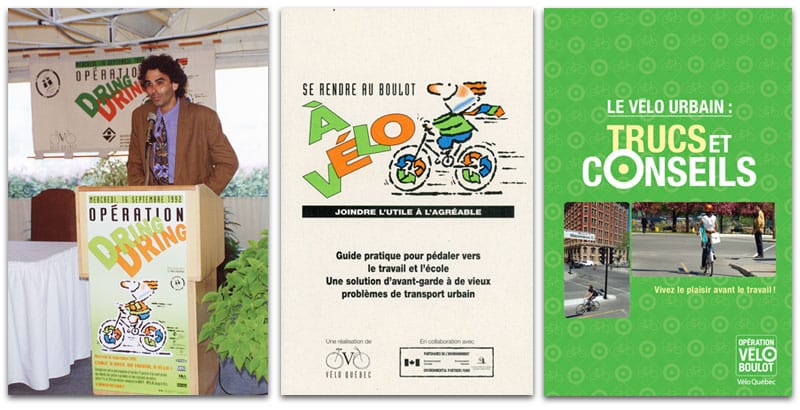
As early as September 1992, as part of the World Bike Conference held in Montreal, Opération Dring Dring offered people the chance to cycle to work. The event was repeated, notably from 2000 to 2002 under the name Jour V, then spread out over an entire year from 2003, henceforth under the name of’Operation Bike to Work. This will play a major role in encouraging the general public and businesses to choose cycling as a means of transport. Every year, the OVB team reaches out to hundreds of businesses - with a peak of 1,800 in 2011 - and gives some 30 workshops and talks in the workplace, in addition to carrying out some 20 appraisal visits to assess the need for bicycle parking. Every early June, the bike-to-work day, presented downtown during the Go vélo Montréal Festival, was also a resounding success.
While Opération vélo-boulot is aimed at adults, the On foot, by bike, an active city - first known as Mon école à pied, à vélo - is aimed primarily at children. And with good reason! Whereas in 1970, around 8 out of 10 students walked or cycled to school, by the turn of the century, only 3 out of 10 did so. Some schools even banned students from riding their bikes, deeming the experience too dangerous! In response to these aberrant bans, the program flourished, proposing a reduction in car traffic near schools and safe access for pedestrians and cyclists, as well as producing school travel plans and expert reports on bicycle parking. Since 2005, À pied, à vélo, ville active has been deployed in over 1,300 primary and secondary schools in 17 administrative regions of Quebec, reaching over 700,000 young people and their parents. Results: an increase in walking and cycling trips ranging from 4 to 18 % in the first year of program implementation.
According to Suzanne Lareau, President and CEO of Vélo Québec, all these efforts have slowly but surely borne fruit: «Around 2007-2008, we suddenly felt a boom in Montreal, an increase in the number of urban cyclists on a daily basis. At rush hour, bike paths became very busy. This phenomenon was accentuated in 2009 with the arrival of the popular Bixi, confirming Montreal's status as a city where people get around on two wheels. In another sign of the times, in the fall of 2013, all four Montreal parties running in the municipal elections took part in a debate on the place of bicycles in our society.
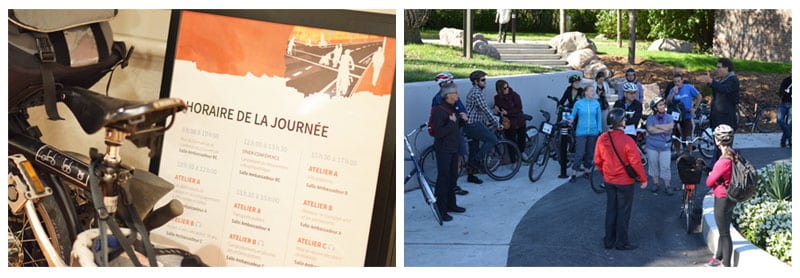
In June 2010 and May 2010, Vélo Québec organized september 2015 two symposia dedicated to active transportation, where urban planning and transportation professionals, public health and education professionals, municipal representatives, university researchers, consultants and committed citizens, cyclists and noncyclists alike, shared their approaches and experiences.
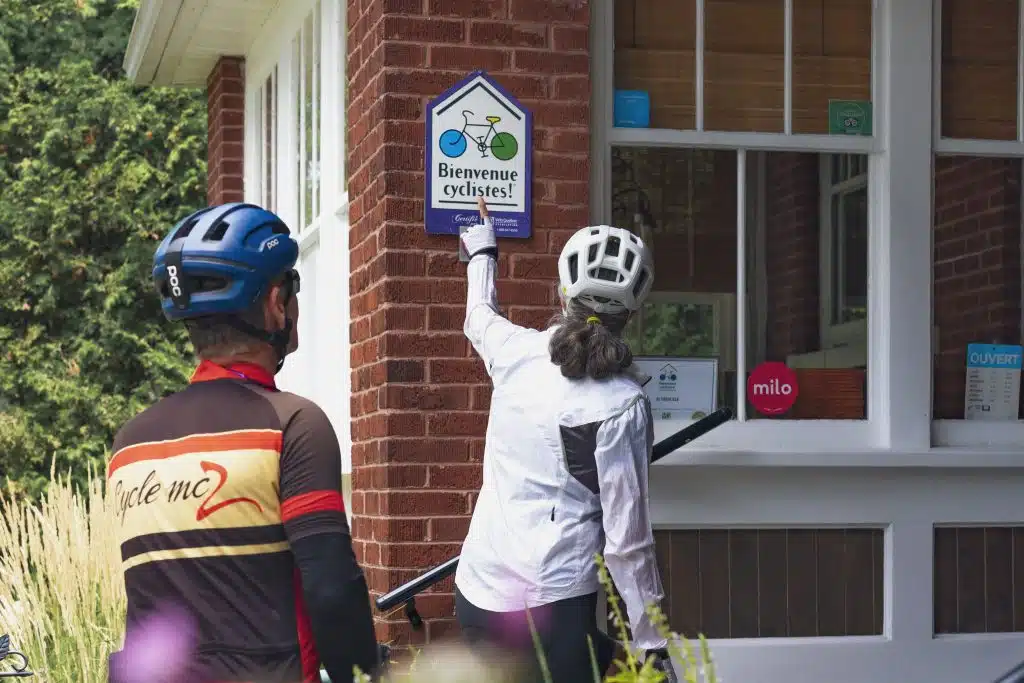
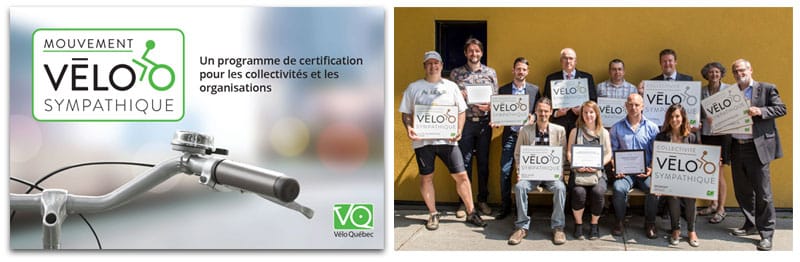
The 2015 colloquium saw the launch of the Bicycle-mympathetic movement which encourages communities and organizations to make cycling a real transportation and leisure option for all. It offers them tools and support to help them achieve these goals, and recognizes their actions by awarding bronze, silver, gold, platinum or diamond certification to communities and organizations that promote cycling. The first certifications were awarded in May 2016.
Of course, there's still a lot of work to be done to make cycling the means of transport for the majority of people. In this respect, the desired increase in travel, especially in urban areas, will remain closely linked to the development of adequate, efficient and safe infrastructures.