










Montreal, Monday, October 19, 2026 – In Montreal, cycling is firmly established as part of daily life: more than one million people rode bikes in 2025, and there is still considerable potential for growth. As part of its biennial conference, «Moving Forward Together—Keeping the Cycling Momentum Going,» Vélo Québec is unveiling today The State of Cycling in Montreal in 2025.
Since 1995, Vélo Québec has published a report every five years The state of cycling in Quebec, a large-scale study that identifies key trends and provides insightful findings to guide decisions regarding the future of cycling in Quebec.
Unveiled last April, the 2025 edition of The state of cycling in Quebec ...highlighted, in particular, the growing role of bicycles as a genuine means of transportation throughout the province.
To highlight the specific realities of Quebec’s major urban centers, Vélo Québec also analyzed data collected from 8 of Quebec’s 10 largest cities: Gatineau, Trois-Rivières, Sherbrooke, Lévis, Saguenay, Laval, Québec City, and Montreal.
Today, Vélo Québec is unveiling The State of Cycling in Montreal in 2025, which provides insight into the habits of Montrealers and trends in cycling in the city.
Major Trends in Cycling in Montreal in 2025
Montrealers are cycling
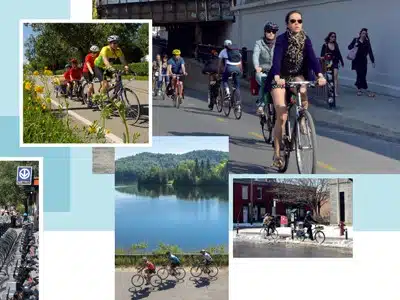
In 2025, 1.185 million people on the Island of Montreal rode bicycles, including 941,000 adults and 244,000 children. With 58% of the adult population cycling in 2025 (65% in the central part of the island), Montreal has the highest proportion of adult cyclists among the major cities studied.
In addition, 78 % of the island’s cyclists used bicycles for transportation, the highest proportion (by far) among the cities studied.
However, there remains significant potential for growth: 22 % of motorized trips could be made by conventional bicycle, and up to 46 % by electric cargo bike. Montreal is thus the area studied with the greatest potential for a shift to bicycling.
Bike-sharing makes cycling more accessible
The BIXI bike-sharing service is helping to make cycling increasingly accessible in Montreal. Since its launch in 2009, the network has expanded significantly across the island and now serves areas in both the east and west.
In 2025, 14 million BIXI trips were taken—four times as many as ten years ago—and 359,000 Montrealers used a bike-sharing bike. Since the winter of 2023–2024, the availability of bike-sharing services during the cold season has also helped make winter cycling more accessible.
Montreal, a cycling city
The popularity of cycling in Montreal is also driven by an ever-expanding and increasingly well-developed cycling network.
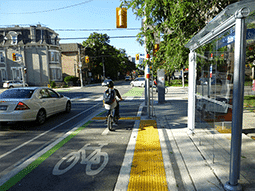
In five years, the island’s network has grown from 1,001 to 1,105 km, representing a 10 % increase. The increase is particularly pronounced for bike paths, which now total 530 km—an 85 % rise since 2020. Since 2019, the rollout of the Express Bike Network (REV) has also helped transform and organize cycling in Montreal.
A cycling culture supported by concrete actions
Montreal’s cycling culture is built on concrete actions. The 2023–2027 Cycling Vision calls for, among other things, the construction of more than 200 km of new safe cycling infrastructure, including the extension of various REV routes.
This culture is also supported by numerous organizations, programs, and associations that promote cycling and train new generations of cyclists. Since 2021, the Cycliste averti and Toutes à vélo programs, in particular, have introduced 13,000 elementary school children and 1,780 women to cycling.
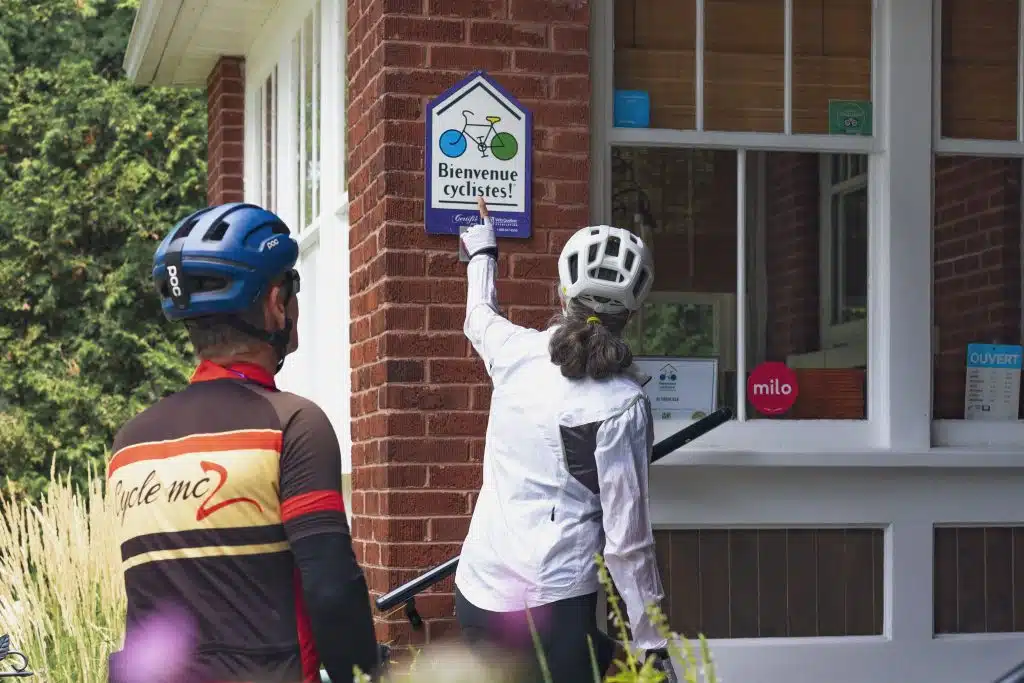
These efforts have been recognized with the “Vélosympathique” Gold certification, which the City of Montreal earned in 2024. Five boroughs have also earned Silver or Gold certification, demonstrating that this initiative extends to the local level.
A rigorous approach to monitoring changes in practices
Produced by Vélo Québec every five years since 1995, The state of cycling in Quebec serves as the go-to source for data on cycling in the province.
The 2025 edition is based, in particular, on a population-based survey of 4,500 respondents—including 900 Montrealers—as well as on analyses conducted in collaboration with academic and institutional partners.
In Montreal, 25 years of participation in The Condition of the Bike, combined with the installation of bicycle traffic counters and surveys of cyclists, make it possible to track changes in cycling patterns and better understand travel habits. The presence of numerous universities and research institutions on the island also helps document cycling trends through scientific studies tailored to the Montreal context.
To view The State of Cycling in Quebec 2025 and its Montreal edition: www.velo.qc.ca/salle-de-presse/etat-du-velo/letat-du-velo-au-quebec-en-2025/
More data to come
The 2025 data for Quebec's other major cities—Gatineau, Trois-Rivières, Sherbrooke, Lévis, Saguenay, Laval, and Quebec City—have already been released.
The State of Cycling in Quebec 2025 was made possible thanks to financial support from the Government of Quebec and the municipalities involved.
About Vélo Québec
Vélo Québec's mission is to develop a cycling culture for everyone, everywhere in Quebec. A national recreational organization recognized by the Quebec government, Vélo Québec promotes the use of bicycles for recreation, tourism and active transportation, in order to improve the health and well-being of the population, contribute to the economic vitality of our regions and meet our environmental challenges.
With its unique and original expertise, Vélo Québec is a benchmark in the planning, development and management of cycling infrastructures. Its know-how is put to good use in the municipal sector and among players involved in the transition to sustainable mobility.
In addition to its events, trips, publications and technical expertise, Vélo Québec coordinates education and mobilization programs, and oversees the deployment and standardization of Route verte.
Vélo Québec is also a key interlocutor with various levels of government to identify needs and solutions for improving and increasing bicycle use.
Information
Vélo Québec
Public relations and communications
514 942-0743