













Gatineau, Friday, September 25, 2026 – In Gatineau, cycling is gaining popularity. New data from The State of Cycling in Gatineau in 2025 reflect a trend that is becoming increasingly common in travel patterns and highlight significant growth potential.
Since 1995, Vélo Québec has published a report every five years The state of cycling in Quebec, a large-scale study that identifies key trends and provides insightful findings to guide decisions regarding the future of cycling in Quebec.
Unveiled last April, the 2025 edition of The state of cycling in Quebec ...highlighted, in particular, the growing role of bicycles as a genuine means of transportation throughout the province.
To highlight the specific realities of Quebec’s major urban centers, Vélo Québec also analyzed data collected from 8 of Quebec’s 10 largest cities: Gatineau, Trois-Rivières, Sherbrooke, Lévis, Saguenay, Laval, Québec City, and Montreal.
Today, Vélo Québec is unveiling The State of Cycling in Gatineau in 2025, which provides a better understanding of the habits of Gatineau residents and trends in cycling in the city.
Major Trends in Cycling in Gatineau in 2025
Cycling is becoming an increasingly popular mode of transportation
In Gatineau, cycling is playing an increasingly important role in transportation.
In 2025, 98,000 residents of Gatineau—69,000 adults and 29,000 children—used their bicycles for transportation. Gatineau is thus the largest city in Quebec among those studied with the highest percentage of children who use bicycles for transportation (69 %).
Furthermore, for the first time since Vélo Québec began compiling this statistic, commuter cyclists account for more than one in two adult cyclists (58 %), with their numbers having increased 2.3-fold over the past 15 years.
In addition to this increase in the number of cyclists, there has also been a rise in the frequency with which bicycles are used for transportation. Among adult commuter cyclists, 46 % do so several times a week from May through September—a 2.7-fold increase in the number of people over the past 5 years, the largest increase among the cities studied.
Significant potential for modal shift
The growth in this activity is accompanied by significant potential to replace certain motorized trips.
In Gatineau, 40 % of workers live less than 5 km from their workplace. According to the analysis of modal shift potential, 18 % of trips made by motor vehicle could be made by conventional bicycle. With an electric-assist cargo bike, this proportion could reach 42 %.
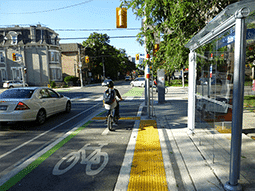
However, this potential can only be realized with high-quality bike infrastructure that is maintained year-round, shops and destinations accessible by bike, and secure parking areas—particularly those suited for cargo bikes.
A cycling culture supported by concrete actions
The growth in cycling in Gatineau is taking place against a backdrop in which the City and local stakeholders are launching a growing number of initiatives to promote its development.
Bicycle infrastructure is one of the key drivers for increasing bicycle use. In Gatineau, the bicycle network has grown by 18 % over five years, reaching 368 km—a trend that parallels the rise in bicycle use. A 160-km winter cycling network during the winter of 2025–2026 will also help maintain cycling activity during the cold season.
This commitment to making cycling a viable mode of transportation is also reflected in an approach that combines planning, infrastructure development, promotion, and education—notably through its Bicycle Network Master Plan, its Friendly Streets Policy, and its support for local organizations that promote active and sustainable modes of transportation.
The presence of an active community and the achievement of “Vélosympathique” Silver certification also demonstrate the commitment to fostering a cycling culture in Gatineau.
A rigorous approach to monitoring changes in practices
Produced by Vélo Québec every five years since 1995, The state of cycling in Quebec serves as the go-to source for data on cycling in the province.
The 2025 edition is based, in particular, on a population-based survey of 4,500 respondents, including 400 residents of Gatineau, as well as on analyses conducted in collaboration with academic and institutional partners.
This continuity in data collection makes it possible to track trends over several decades and support public decisions on active mobility.
To view Cycling in Québec in 2025 and its Gatineau edition: www.velo.qc.ca/salle-de-presse/etat-du-velo/letat-du-velo-au-quebec-en-2025/
More data to come
Data for 2025 for the other major participating cities in Quebec—Trois-Rivières, Sherbrooke, Lévis, Saguenay, Laval, Quebec City, and Montreal—will be available in the coming weeks.
The State of Cycling in Quebec 2025 was made possible thanks to financial support from the Government of Quebec and the municipalities involved.
- 30 -
About Vélo Québec
Vélo Québec's mission is to develop a cycling culture for everyone, everywhere in Quebec. A national recreational organization recognized by the Quebec government, Vélo Québec promotes the use of bicycles for recreation, tourism and active transportation, in order to improve the health and well-being of the population, contribute to the economic vitality of our regions and meet our environmental challenges.
With its unique and original expertise, Vélo Québec is a benchmark in the planning, development and management of cycling infrastructures. Its know-how is put to good use in the municipal sector and among players involved in the transition to sustainable mobility.
In addition to its events, trips, publications and technical expertise, Vélo Québec coordinates education and mobilization programs, and oversees the deployment and standardization of Route verte.
Vélo Québec is also a key interlocutor with various levels of government to identify needs and solutions for improving and increasing bicycle use.
Information
Vélo Québec
Public relations and communications
[email protected]
514 942-0743


