













Sherbrooke, Thursday, October 15, 2026 – In Sherbrooke, cycling is becoming increasingly important, both for recreation and for getting around. Cycling in Québec in 2025 highlights a growing practice and significant potential for further development.
Since 1995, Vélo Québec has published a report every five years The state of cycling in Quebec, a large-scale study that identifies key trends and provides insightful findings to guide decisions regarding the future of cycling in Quebec.
Unveiled last April, the 2025 edition of The state of cycling in Quebec ...highlighted, in particular, the growing role of bicycles as a genuine means of transportation throughout the province.
To highlight the specific realities of Quebec’s major urban centers, Vélo Québec also analyzed data collected from 8 of Quebec’s 10 largest cities: Gatineau, Trois-Rivières, Sherbrooke, Lévis, Saguenay, Laval, Québec City, and Montreal.
Today, Vélo Québec is unveiling The State of Cycling in Sherbrooke in 2025, which provides insight into the habits of Sherbrooke residents and trends in cycling in the city.
«The results speak for themselves: cycling is no longer just a leisure activity; it has become a mode of transportation used by tens of thousands of Sherbrooke residents. The data also shows strong potential for growth, particularly with the availability of electric-assist bicycles on the market, which make cycling even more accessible. To continue this transition, we must keep investing in the development of connected, safe, and efficient infrastructure. When someone can replace a car trip with a bike ride, the entire transportation network becomes more efficient, and the entire population benefits.»
– Geneviève La Roche, Chair of the Committee on Sustainable Mobility and Ecological Transition
Major Trends in Cycling in Sherbrooke in 2025
Recreational Cycling: A Growing Trend
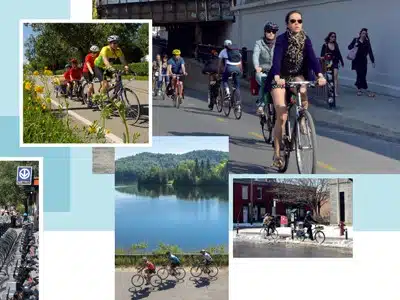
In Sherbrooke, mountain biking plays a significant role in recreational activities. In 2025, 29 % of Sherbrooke’s recreational cyclists participated in this activity, representing the second-highest percentage among the cities studied. In total, 13,000 residents rode on trails, an increase of 18 % since 2020. This can be attributed, among other factors, to the presence of numerous trails that are easily and quickly accessible to Sherbrooke residents.
Gravel biking is even more widespread: 44 % of Sherbrooke’s recreational cyclists participated in it in 2025, the highest percentage among the cities studied. In total, 30,000 people rode on gravel trails in 2025, a number that has more than doubled since 2020.
Recreational cycling is also very common among children. In 2025, 21,000 children in Sherbrooke—or 97 % of young cyclists—rode bikes for recreation, one of the highest proportions among the cities studied.
Significant potential for modal shift
In Sherbrooke, cycling for transportation purposes has seen significant growth. In 2025, 52,000 residents—including 41,000 adults and 11,000 children—used their bicycles for travel. Among adults, the proportion of utility cyclists rose from 38 % in 2010 to 60 % in 2025. Sherbrooke is thus among the cities studied where utility cycling is most widespread among adults.
However, there remains significant potential for growth. In Sherbrooke, 19 % of motorized trips could be made by conventional bicycle. This proportion could reach 42 % with an electric-assist cargo bike, placing Sherbrooke among the major Quebec cities studied with the greatest potential for modal shift.
Cycling: A Mode of Transportation to Share
Launched in Sherbrooke on July 4, 2025, the BIXI service allowed residents to enjoy bike-sharing through November. With 255 bikes distributed across 25 stations throughout the city, more than 42,000 trips were made in 2025, and 7,000 residents used a bike-sharing bike that year. This usage demonstrates a demand for this type of transportation in Sherbrooke.
The BIXI fleet consists of 80 % electric-assist bicycles (e-bikes). Electric assistance makes cycling easier, particularly by reducing the effort required to cover distances and climb hills—two major barriers to cycling.
A cycling culture supported by concrete actions
In Sherbrooke, the growth of cycling is driven by municipal initiatives and the involvement of numerous local stakeholders. With its Sustainable and Integrated Mobility Plan currently under development, the City aims to establish an action plan to be implemented over a 15-year period.
Many organizations and associations also help foster a cycling culture in Sherbrooke through promotional and educational activities. Several initiatives are specifically aimed at people who face greater barriers to cycling, such as women, children, seniors, and immigrants.
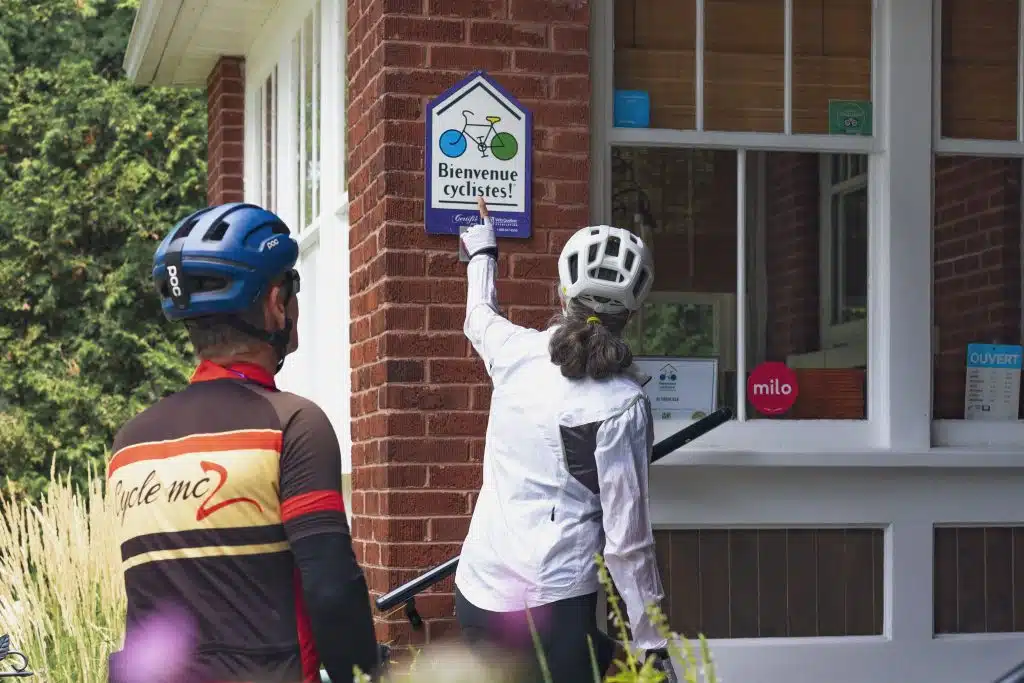
All of these initiatives contribute to the growth of cycling and enabled Sherbrooke to earn the bronze-level “Vélosympathique” certification in 2022.
A rigorous approach to tracking changes in practices
Produced by Vélo Québec every five years since 1995, The state of cycling in Quebec serves as the go-to source for data on cycling in the province.
The 2025 edition is based, in particular, on a population-based survey of 4,500 respondents, including 400 residents of Sherbrooke, as well as on analyses conducted in collaboration with academic and institutional partners.
Sherbrooke is participating in The Condition of the Bike for the past 15 years. This continuity in data collection makes it possible to track changes in cycling behavior and evaluate the effectiveness of the measures taken, which is a key step in the development of cycling. Furthermore, thanks to its university, the city benefits from numerous scientific studies tailored to the Sherbrooke context.
To view The State of Cycling in Quebec 2025 and its Sherbrooke edition: www.velo.qc.ca/salle-de-presse/etat-du-velo/letat-du-velo-au-quebec-en-2025/
More data to come
The 2025 data for Gatineau, Trois-Rivières, Lévis, Saguenay, and Laval have already been released. Data for the other major participating cities in Quebec—Quebec City and Montreal—will be available in the coming days.
The State of Cycling in Quebec 2025 was made possible thanks to financial support from the Government of Quebec and the municipalities involved.
About Vélo Québec
Vélo Québec's mission is to develop a cycling culture for everyone, everywhere in Quebec. A national recreational organization recognized by the Quebec government, Vélo Québec promotes the use of bicycles for recreation, tourism and active transportation, in order to improve the health and well-being of the population, contribute to the economic vitality of our regions and meet our environmental challenges.
With its unique and original expertise, Vélo Québec is a benchmark in the planning, development and management of cycling infrastructures. Its know-how is put to good use in the municipal sector and among players involved in the transition to sustainable mobility.
In addition to its events, trips, publications and technical expertise, Vélo Québec coordinates education and mobilization programs, and oversees the deployment and standardization of Route verte.
Vélo Québec is also a key interlocutor with various levels of government to identify needs and solutions for improving and increasing bicycle use.
Information
Vélo Québec
Public relations and communications
514 942-0743


